Custer County commissioners halt Captive Resources plan, direct staff to pursue Berkeley insurance option
Loading...
Summary
After a workshop on employee health coverage, the board voted to stop pursuing Captive Resources—citing offshore banking and capital concerns—and directed staff to move forward with Berkeley as an alternative, while flagging constitutional limits on county ownership interests.
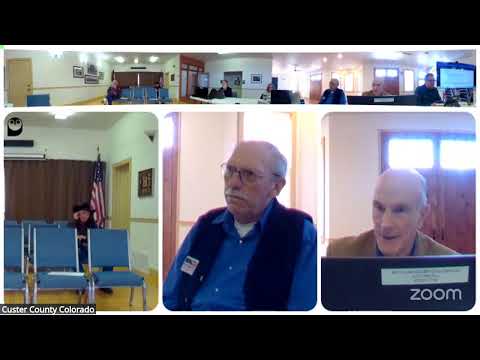
Custer County commissioners voted Jan. 14 to stop pursuing a proposed health-insurance arrangement with Captive Resources and directed staff to pursue an alternative captive insurer, Berkeley, that staff officials said better aligns with banking and constitutional constraints.
The board’s discussion, conducted as a workshop and public briefing, focused on four options presented by staff and outside advisors: remain with Captive Resources, attempt a standalone contract with HCC (which declined to quote), enroll with other captive providers such as Berkeley or Pareto, or buy a standalone commercial policy. Bob Smith, the county’s human-resources and risk-management representative, reviewed price, capital and collateral structures and said the Captive Resources plan would require both capital and collateral and involved banking and operational elements outside the United States.
"Captive Resources is wholly, as far as banking and operations, outside of The United States," Smith said, explaining why the arrangement raised additional administrative hurdles.
County attorneys and commissioners raised a separate legal concern: whether any option would require the county to buy equity or ownership interests in a private corporation. "The Colorado constitution prohibits counties from buying stocks in corporations," County Attorney Dan Slater said, asking whether alternatives would leave the county as a member rather than an owner.
Staff said Berkeley would not require county capital (ownership) and would hold collateral in a U.S. bank, while Pareto would require a capital buy-in and therefore could present constitutional issues. Staff cited an illustrative collateral figure of about $58,455 for Berkeley and overall capital/collateral totals in the tens of thousands; they also cited a $42,488 one-time startup figure associated with Captive Resources’ structure.
Commissioners debated contract timing and budget-cycle impacts: the Captive Resources contract structure would run on an Aug. 1 cycle (eight months plus three-month tail), while Berkeley’s 12/15 contract term would align with a Jan. 1–Dec. 31 budget year, staff said.
Chair Bill Campbell moved to amend the board’s prior direction to explicitly stop moving forward with Captive Resources and to direct staff to engage Berkeley for further due diligence and onboarding. The motion passed unanimously on a roll-call voice vote. Paul (Commissioner), Lucas (Commissioner) and Kanda (Commissioner) recorded aye votes.
The board’s action directs staff to begin paperwork and vendor engagement with Berkeley; staff said they would return to the board with any required contract documents, collateral mechanics (cash or letter of credit) and an exact schedule for payments. No change to employee benefits or member ID cards was indicated; staff said coverage and networks would remain unchanged during the procurement transition.
The board did not award a finalized contract at the meeting; the vote authorized staff to pursue Berkeley as the preferred alternative and to stop further work on Captive Resources. The county attorney said he would continue to evaluate constitutional and procurement implications before any binding payment or ownership decisions.
Next steps: staff will proceed with vendor engagement for Berkeley, confirm collateral/payment mechanics and report back to the commissioners with contract documents and any budgetary adjustments needed for formal approval.