
Regional trail groups offer Broadwater County a grant-ready trail planning toolkit and ask for letter of support
Get AI-powered insights, summaries, and transcripts
Subscribe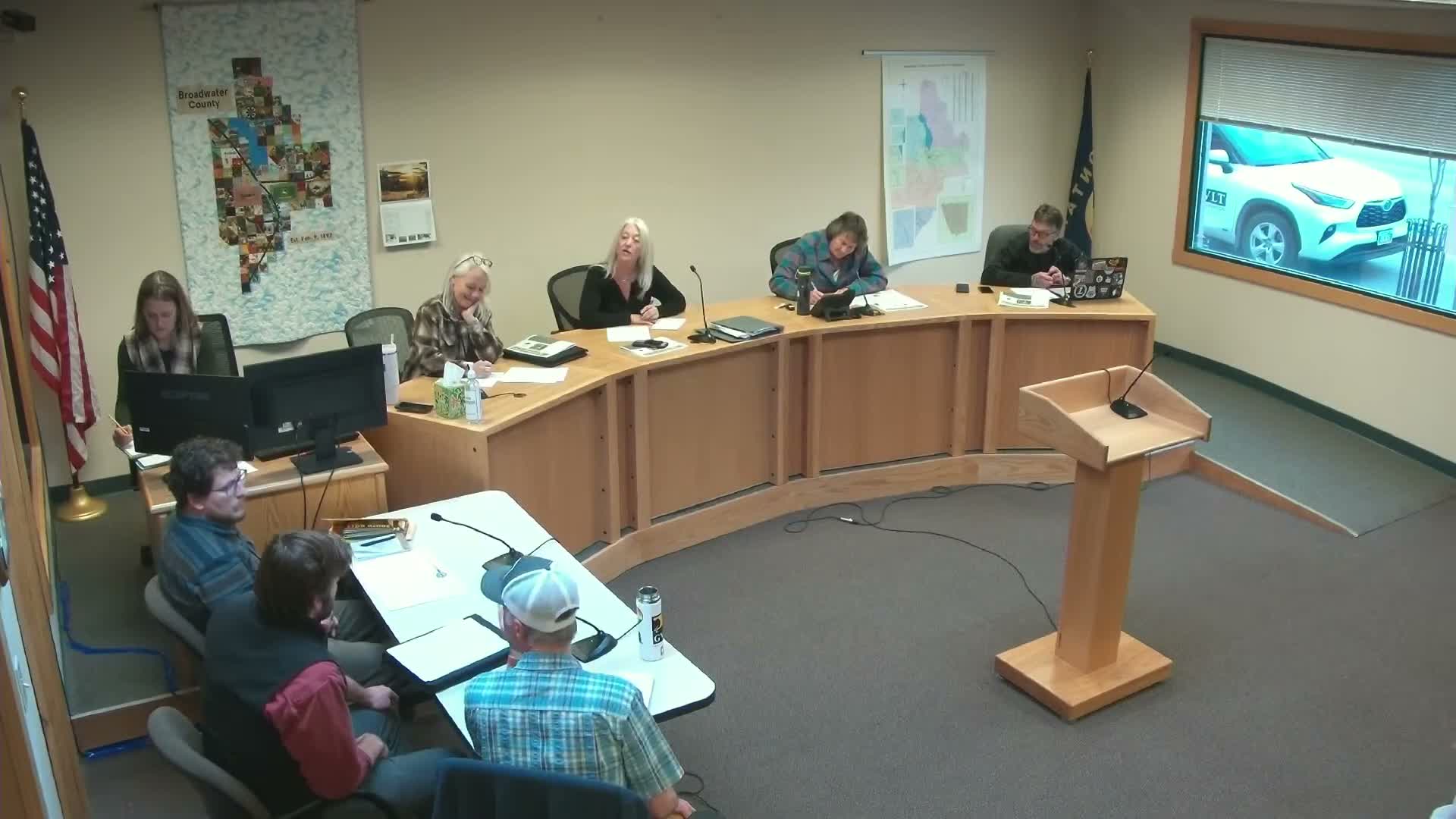
Summary
Representatives from Gallatin Valley Land Trust, Prickly Pear Land Trust and the Montana Trails Coalition visited the Broadwater County Parks & Recreation Board on Jan. 12 to offer planning templates, fundraising advice and a proposed pilot of a county 'trail toolkit' and requested letters of support for an urgent grant application.
Representatives of three Montana trail organizations outlined how small, visible projects and a grant-ready planning "toolkit" could accelerate trail development and maintenance in Broadwater County.
Tom Lang of the Montana Trails Coalition proposed a trail-planning toolkit that would include a menu of project types, cost estimates, signage packages and maintenance guidance, together with training and a pilot project. "We're gonna build a trail tool kit," Lang said, describing the kit as a way to produce grant-ready projects and training that small communities can use to apply for state and federal trail funding.
Matt Parsons, trails director at the Gallatin Valley Land Trust, emphasized that nonprofit land trusts often hold maintenance agreements with counties and other partners. "Gallatin County does not have a formal parks and recreation department," Parsons said, explaining his group enters maintenance agreements or, in some cases, holds fee title and partners with landowners or federal agencies to manage trails.
Nate Kopp of the Prickly Pear Land Trust described local fundraising and operating models, including volunteer crews, paid seasonal staff and contracts with groups such as the Montana Conservation Corps to supplement capacity. He recommended starting with small, clearly visible projects — a kiosk, short gravel loop, trash and dog‑waste stations — to build momentum and volunteer support.
Panelists reviewed common funding strategies: stacking local funds (city "cash‑in‑lieu" parkland funds, municipal bonds or county open‑space levies) with state grants such as Recreational Trails Program (RTP) or Trust Stewardship Program (TSP) grants (they noted $100,000 caps on some programs) to maximize leverage. Lang said the Trails Coalition planned to apply this cycle for planning funds and asked the county board to consider a letter of support; staff advised drafting letters promptly to route to the county commissioners for signature so they can accompany grant packets with imminent deadlines.
The groups also discussed mapping and digital tools (paper maps, Trailforks, QR codes that link to trail pages and simple issue-report forms), signage and wayfinding options, and the trade-offs among surfaces (gravel, asphalt, concrete) for maintenance and accessibility. They advised local leaders to match project scope and surfacing to community needs and maintenance capacity.
Next steps: the visiting groups left sample maintenance agreements, easement templates and maps and offered to help draft a letter of support and provide technical advice. The Trails Coalition asked Broadwater County Parks & Rec to consider serving as a pilot community for the toolkit and sign a short letter of support for its grant application.