
Laramie County School District #2 board backs annual registration verification after heated residency debate
Get AI-powered insights, summaries, and transcripts
Subscribe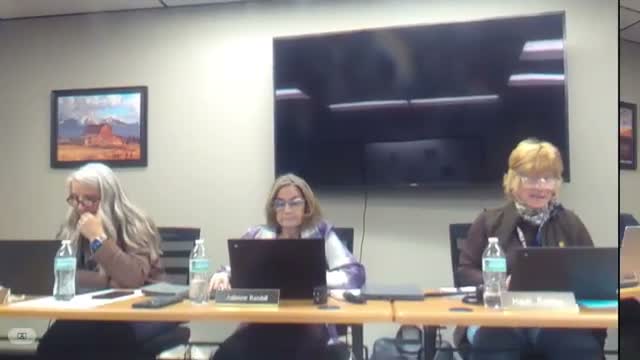
Summary
Board members agreed to add an annual electronic registration/verification requirement to the JEC admissions redline while deferring broader residency policing decisions, following an extended discussion about students who live near state lines and district capacity concerns.
The Laramie County School District #2 work session coalesced around adding an annual electronic registration and address verification step to its JEC admissions policy on Monday after board members debated whether residency enforcement or procedural changes were the district’s real problem.
Speaker 1 opened the discussion by noting Justin had drafted a redlined version of the JEC admissions policy to streamline registration and help building staff during enrollment. Speaker 3 said the draft largely formalizes current practice and shifts responsibility to parents to provide proof of residency rather than relying solely on what families type into PowerSchool.
Multiple board members pressed for clarity about how verification would work in rural areas. Speaker 10 and others warned that many local households use PO boxes or work on ranches and may not have typical utility bills, so the redline includes flexible verification options such as a signed statement or employer letter. “We’re still allowing for a little flexibility in local mechanisms…to meet local need,” Speaker 10 said.
Concerns about overcrowding and capacity surfaced: Speaker 3 said Burns Elementary is about 60–65% full, noting capacity varies districtwide and administrators currently manage enrollment and busing via policy JC and an out‑of‑district boundary waiver. The board discussed whether administrators should retain discretion to refuse transfers when a school is near capacity.
Members also raised a long-standing cross‑border issue: families who live on or near the Nebraska or Colorado lines but attend district schools. Speaker 3 noted state statute allows the district to set an out‑of‑state tuition amount but the board has not defined it. Several members recommended staff explore memoranda of understanding or conversations with neighboring counties and state education agencies to clarify options and possible tuition arrangements.
After extended debate on whether the district needed more policy language or better enforcement of existing policy, the board directed staff to present the JEC redline with the registration/verification item for action at a regular board meeting. Speaker 1 summarized the group’s direction: adopt the registration verification addition now and continue work on broader policy or procedural enforcement later.
The discussion closed with a request that the proposed revision be brought forward as an actionable item at a regular session and that any additional policy changes be offered as motions to amend at that time. The board did not record a formal vote on the admissions redline in the work session; members asked staff to refine the language and to report back, including whether cross‑state arrangements could be pursued.
Next steps: staff will present the JEC redline with the registration verification language at a future regular board meeting and return follow‑up information about possible intergovernmental options for out‑of‑state students.