
Sumner County officials outline multi-year capital plan, flag urgent HVAC and roof needs
Get AI-powered insights, summaries, and transcripts
Sign Up Free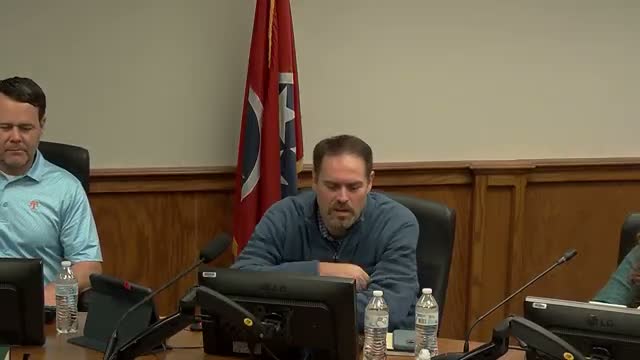
Summary
At a Jan. 6 study session, district leaders told the Southern County School Board they expect major capital work over the next 3–5 years — including HVAC replacements at older schools, a possible new Gallatin High School campus and roofing and athletic upgrades — and urged early planning and an RFQ for architects to shape any bond request.
Doctor Lincoln, the district's lead presenter, told the Southern County School Board on Jan. 6 that the district is balancing near-term repairs with longer-term capital projects and will ask the board to plan ahead for major investments. "For this current year, we're currently right now at about $4,100,000," Lincoln said, describing the district's current capital spending and the additional safety work completed over recent years.
Why it matters: Board members were urged to weigh whether to bundle large renovations into a single bond — as the district did in 2015–16 — or to pursue smaller, targeted projects. Lincoln said an earlier $72 million package of projects in 2015–16 set the district up to absorb enrollment growth but that aging buildings still require further work.
What was proposed and discussed: Lincoln outlined categories the district will ask the board to consider during retreat planning: safety enhancements (window film, door hardware), technology upgrades (districtwide phone replacement and network equipment), buses (including special-education routes), HVAC and roofing, and athletic facilities. He said safety enhancements alone accounted for “another, almost 1,200,000” in recent spending. The district also reported technology upgrades of about $1.2 million, which included the phone replacement program and ongoing networking equipment needs.
On specific campuses, Lincoln recommended: - Ellis Middle School (built 1966) needs more than cosmetic repairs and should be evaluated for major renovation. - Gallatin High School (built 1973) should be studied for a long-term solution; Lincoln said the board should consider whether a new campus in the city of Gallatin or an extensive renovation is the best path forward, and that a new high school typically requires roughly 60 acres for full athletic facilities. - Merrell Hyde (Merrill) High Magnet School: two mold-focused air-quality studies were run and returned 'clear,' Lincoln said; however members pressed to act sooner if HVAC failure risks student comfort or building integrity. - Station Camp feeder cluster: elementary and middle schools in the cluster are facing capacity pressures; board members discussed whether to add wings or pursue other enrollment management options. - Westmoreland Middle School gym roof: the district said it obtained contractor estimates and will seek bids to remove a newer roof and replace an underlying flat roof with the standard membrane; the number given in the presentation was transcribed as '$4.50' and the district said it will publish formal bid documents to establish an accurate bid amount.
Funding and next steps: Lincoln said the district has roughly $750,000 of unallocated capital on hand but that some of that total may already be earmarked for pending IT equipment purchases. He also told the board that the district had received about $817,100 from a liquidated hospital fund that will increase the allocation for SPED playgrounds. Board members and staff discussed the benefits of developing a clear scope and issuing an RFQ to select architects before committing to bond language; several members urged moving quickly on high-priority items and bringing more precise cost estimates to the board retreat.
Board response and action items: Several members pushed for taking early steps — including architect RFQs and targeted design work — so that projects can be packaged efficiently for potential future bonds. The board tentatively scheduled a retreat/study session for Feb. 3 to review priorities and asked staff to return with more-detailed cost estimates, master-plan recommendations for SPED playgrounds, roofing bid packages and timing for visitor bleacher replacement at White House High.
What wasn't decided: The board did not vote on bonds or project approvals at the Jan. 6 study session; members directed staff to develop scopes, collect bids and return to the board with proposals to consider at the retreat and upcoming voting sessions.
Sources and attribution: Quotations and factual claims in this article are taken from the Jan. 6 study-session transcript; direct quotes come from Doctor Lincoln, who led the presentation. The meeting did not include any formal votes on the projects discussed.
Next steps: Staff will return cost estimates and bid timelines at future meetings; the board will consider those materials at the retreat on Feb. 3 and in subsequent voting sessions.