Get Full Government Meeting Transcripts, Videos, & Alerts Forever!
Get email alerts on the Parking Management topic
No spam. Unsubscribe anytime.
Troutdale planning commission reviews downtown parking-management plan, raises lunchtime, enforcement and funding concerns
Summary
City staff presented a draft downtown Troutdale parking management plan focused on better using existing spaces, improved wayfinding, and a Sandy River shuttle pilot; commissioners pressed staff on lunchtime peak shortages, enforcement capacity, and how new parking would be funded. No formal action on the plan was taken; staff will return with final documents for counsel review.
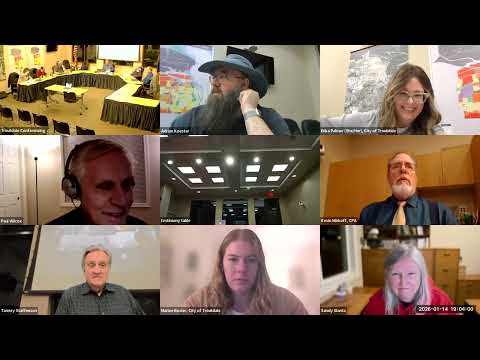
City staff presented a draft downtown parking management plan to the Troutdale Planning Commission on Jan. 14, outlining near-, mid- and long-term strategies intended to optimize existing supply and manage future growth while preserving downtown character.
Marley, the staff presenter, told commissioners the plan “shifts us away from a reactive to a proactive approach with the parking management” and described a technical appendix with occupancy and turnover data from Thursday and Saturday peak-day surveys conducted in July. Staff reported approximately 276 on-street spaces and roughly 395 off-street spaces in the study area and summarized findings that certain public lots (North Parking Lot, Mayor Square) reached 85–100% capacity on peak days.
The plan groups possible actions by function. Near-term measures identified include improved wayfinding and signage, a ‘how to park’ outreach program, short-term time limits where none exist, a parking ambassador, and use of an existing advisory board (the Town Center Advisory Board) to oversee implementation. Staff also described a planned pilot of a Sandy River shuttle this summer and recommended keeping enforcement complaint-driven in the near term while designing any paid-parking system to fund longer-term enforcement and equipment needs.
Commissioners pressed staff on several points during a lengthy Q&A. One asked for the source data behind staff’s statement that a 20-year planning horizon would show a roughly 60-space shortfall; staff said those calculations are in the final technical memo. Another commissioner said lunchtime availability appeared worse in practice than the noon snapshot staff displayed, and asked for a clearer daytime breakdown of demand and ‘‘spaces available per time-limit’’ to compute effective capacity. Staff confirmed those details appear in the full memo and reiterated the plan’s emphasis on monitoring and periodic updates.
Members also debated operational tradeoffs. Suggestions included changing some streets to one-way during events, removing on-street stalls on one side of narrow streets to preserve traffic flow, and adjusting time limits in specific blocks to increase turnover. Commissioners expressed concern that paid on-street meters for short visits (for example, lunch) could deter customers for restaurants; staff replied that a mix of time limits and paid options, together with clear wayfinding, is the intended approach.
On funding, staff said many near-term actions could be covered by the general fund but asked consultants to add more detail about sustainable funding options for new parking and for possible revenue approaches if the city pursues structured parking or wide-area paid parking. Staff noted that paid parking can underwrite enforcement and infrastructure, and that using private shared-parking agreements (for example, with outlet-mall operators) is an option though private lots would require negotiated agreements.
No vote or formal action on the plan occurred. Commissioners accepted prior meeting minutes with an amendment earlier in the agenda and later adjourned the meeting; staff said they will return with a final document for counsel review and that the commission’s next meeting is scheduled for Feb. 11, with a tentative public hearing for a Crunch Fitness application.
The presentation and discussion highlighted three practical next steps: staff will (1) provide the full technical memo data on time-of-day demand and the 20-year forecast, (2) return with clarified budget/funding options for near- and long-term actions, and (3) bring a final plan for counsel review and commission consideration at a future meeting.