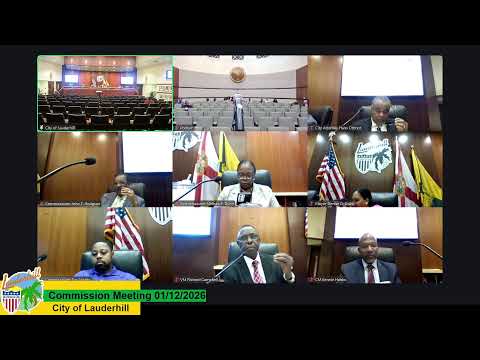
Lauderhill commission approves 233‑unit Lauderhill Mall apartment site plan over neighborhood objections
Loading...
Summary
The City of Lauderhill approved a site plan for 233 apartments and roughly 14,200 sq ft of commercial space at Lauderhill Mall outparcels after staff recommended approval; the decision passed 4–1 amid resident concerns about notice and gentrification.
Lauderhill — The City Commission voted 4–1 on Jan. 12 to approve a site plan to build two five‑story buildings and one eight‑story building on Lauderhill Mall outparcels, adding 233 dwelling units and about 14,186 square feet of commercial space to a 3.23‑acre site along NW 12th Street.
Staff presented renderings and a staff report saying the project meets site‑plan standards for the transit‑oriented corridor. Hope Calhoun, land‑use counsel for the applicant, told the commission that staff and the applicant met multiple rounds of development review and that the application includes required public notice and design waivers (warrants) documented in the backup materials.
Opponents at the meeting raised concerns about public notice and the potential for gentrification. Baron Harris, a nearby resident, said he did not receive notice and asked where the public meeting had been held; staff and the applicant said a meeting on Dec. 3 occurred at Saint George Park and that paperwork, postings and newspaper notice were completed. Community organizer Alan Brown warned the commission the project could accelerate gentrification in nearby neighborhoods.
Commissioner Dunn recorded the lone dissenting vote. After deliberation the clerk announced the motion to approve passed 4–1. The commission’s action covered site‑plan approval and associated warrant requests; staff said conditions in the approval and subsequent permitting will require compliance with parking, buffering and CPTED (Crime Prevention Through Environmental Design) recommendations.
The commission’s approval follows an earlier special‑exception review and staff memoranda showing multiple rounds of coordination with planning and engineering. Staff said the applicant will finalize building permits and that additional public hearings tied to related land‑use actions are scheduled as required.
Next steps: the applicant proceeds to building permits and any required utility and right‑of‑way coordination; staff will monitor conditions and the commission can revisit matters if required.