
Board directs staff to advance San Diego County socially equitable cannabis program under Option A; motion passes 3–2
Get AI-powered insights, summaries, and transcripts
Sign Up Free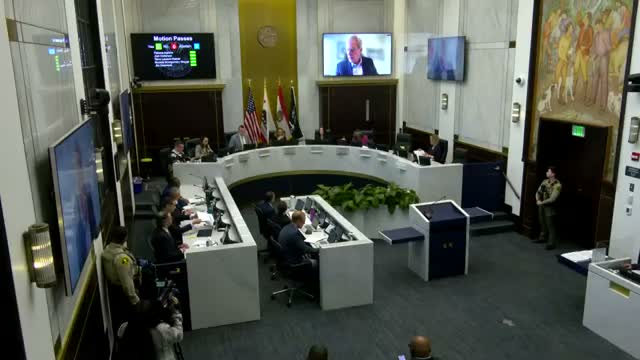
Summary
After testimony from dozens of residents, planning groups and social equity applicants, the San Diego County Board of Supervisors directed staff to advance the draft Socially Equitable Cannabis Program under Option A (600‑foot buffer aligned with state standards), with additional direction to return in June with regulatory‑code drafts relying on the state background check and to present a full decision in summer 2026. The motion passed 3–2.
San Diego County supervisors on Jan. 14 directed staff to continue developing the county's draft Socially Equitable Cannabis Program (SECP) using the staff‑preferred Option A, which aligns local buffer distances with the state's 600‑foot standard and preserves the widest set of eligible locations for social equity applicants. The board approved the direction on a 3–2 roll call after an extended public comment period.
Staff framed the request as policy direction rather than a final decision. "Today, staff will provide an update on the draft socially equitable cannabis program, or SECP, and request policy direction on three program decision points," county staff said in the presentation. Staff emphasized three decision points: land‑use options (buffers and sensitive uses), whether to allow on‑site consumption lounges and temporary cannabis events, and whether to continue developing a Community Equity Contribution Program (CECP).
The SECP development timeline and program design were described in detail at the hearing. Staff noted the draft program and PEIR evaluated multiple alternatives and found potential "significant and unavoidable" environmental impacts related to aesthetics, construction noise, odor, groundwater, water supply and transportation; staff said the final PEIR and responses will be published in spring 2026 prior to subsequent hearings. The presentation also described a proposed CECP that could provide community grants (staff described a framework that would allow businesses to apply for grants up to $5,000 per business with a matching component).
Public comment was intense and split. The clerk reported 59 requests to speak on the item (44 in person, 15 by phone), six group presentations, and 83 e‑comments filed in advance (57 in favor, 21 opposed, 0 neutral). Supporters — including social equity applicants and medical‑patient advocates — framed Option A as the only workable path to create accessible, regulated businesses and repair harms from prior cannabis criminalization. Robert Wood, who identified himself as a social equity applicant, said Option A preserves opportunity and access: "If we do something wrong with cannabis, if fentanyl comes into our cannabis stream, that's it. They know where it came from." (speaker Robert Wood).
Opponents — including several planning‑group chairs and rural community members — urged greater restrictions or no project, citing the draft PEIR's finding of potential significant environmental and quality‑of‑life impacts. Fallbrook and Valley Center planning‑group representatives urged prohibiting outdoor cultivation, eliminating consumption lounges and ensuring stronger odor and water protections.
After members debated possible changes (Supervisor Anderson asked staff to consider 1,000‑foot buffers for sensitive sites such as playgrounds and county parks in a friendly amendment), Vice Chair Montgomery Stepp moved to adopt Option A for the presented decision points and asked staff to return in June with regulatory‑code drafts that rely on the state background‑check process for operating certificates and to bring a full decision in summer 2026. "For me this really has always been about a moral obligation to repair harm," Vice Chair Montgomery Stepp said during remarks.
The roll call vote recorded Chair Pro Tem Maguire, Vice Chair Montgomery Stepp and Chair Lawson Rumer as voting yes; Supervisors Anderson and Desmond voted no. The motion passed 3–2. Staff said the "no project" alternative will still be provided to the board in the summer package; today's direction was intended to refine the options ahead of that decision.
Next steps: staff will prepare the requested regulatory‑code drafts for Board review in June and include the no‑project alternative in the summer hearing packet prior to any final action.