Get Full Government Meeting Transcripts, Videos, & Alerts Forever!
Get email alerts on the Wetlands topic
No spam. Unsubscribe anytime.
Titusville commission sends wetlands amendment to staff, asks city to confirm GIS can map wetlands across property lines
Summary
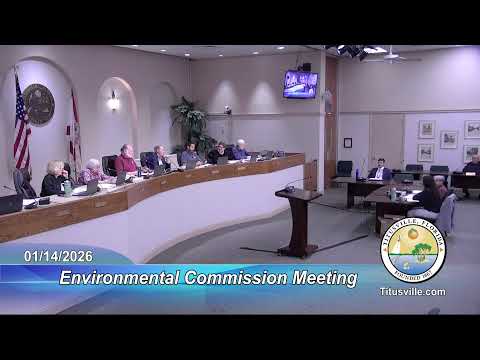
The Titusville Environmental Commission unanimously voted to send a proposed comprehensive-plan amendment addressing wetlands designation and conservation easements to city staff for technical review, and asked staff to confirm whether GIS mapping can show wetlands that extend across multiple parcels to determine the 5-acre threshold.
The Titusville Environmental Commission voted unanimously to send a proposed comprehensive-plan amendment addressing wetlands protections to city staff for review and to ask staff whether the city’s GIS can show when a wetland crosses multiple property boundaries and reaches the 5-acre threshold.
Commissioners invited Mary, identified in the meeting as a wetlands subject-matter expert, to present the draft amendment and explain its purpose. Mary told the commission the amendment “fixes the bugs” in the current future-land-use language that could allow applicants to remove wetlands five acres or greater from conservation land use, citing the Park Avenue Subdivision example and changes in how the St. Johns River Water Management District handles conservation easements. “We’re protecting ourselves from something like your attorney says is a problem,” Mary said, arguing the amendment would preserve the 1-unit-per-5-acres residential density restriction regardless of whether an easement remains in place.
Members expressed concern about smaller wetlands and legal complications. One audience member with a privately held conservation easement urged the commission to consider potential tax and litigation consequences if easements are altered, saying such issues “may want to sue somebody like the state” and urging care in how the city frames changes.
After discussion about technical details that remain unresolved for wetlands smaller than five acres, the commission moved—by motion and voice vote—to send the amendment with strike-through suggestions and the three added words referenced in the meeting to staff for comment. The motion passed unanimously.
Separately, the commission approved a second motion asking Lily (city staff) to ask GIS staff whether the latest GIS data and source files can show that wetlands extending beyond a single property boundary total five acres or more — that is, whether the city can disassociate wetland delineation from strict property-line calculations for the purpose of applying the 5-acre threshold. A member with GIS experience said the city can produce maps showing wetlands that extend across parcels and recommended staff clarify which source files the GIS team would use.
Mary urged the commission to treat land-use planning as distinct from permitting, noting past county attempts in the 1990s to remove conservation protections that were later rejected by state review. She suggested the commission concentrate next on revising the last sentence of future land use policy 1.16 0.4, which some members said could be read to defer the city’s planning responsibility to regulatory agencies.
The commission instructed staff to send the amendment to the appropriate city reviewers and to report back with GIS capabilities and recommendations at a future meeting. No final changes to the comprehensive plan were adopted at the meeting; the motions sent the draft to staff for technical and legal feedback and established follow-up tasks.
The commission’s actions were procedural steps to secure staff analysis before any formal transmittal to city council.