
District presents staffing guideline overhaul as enrollment dips; simulation shows possible FTE reductions
Get AI-powered insights, summaries, and transcripts
Subscribe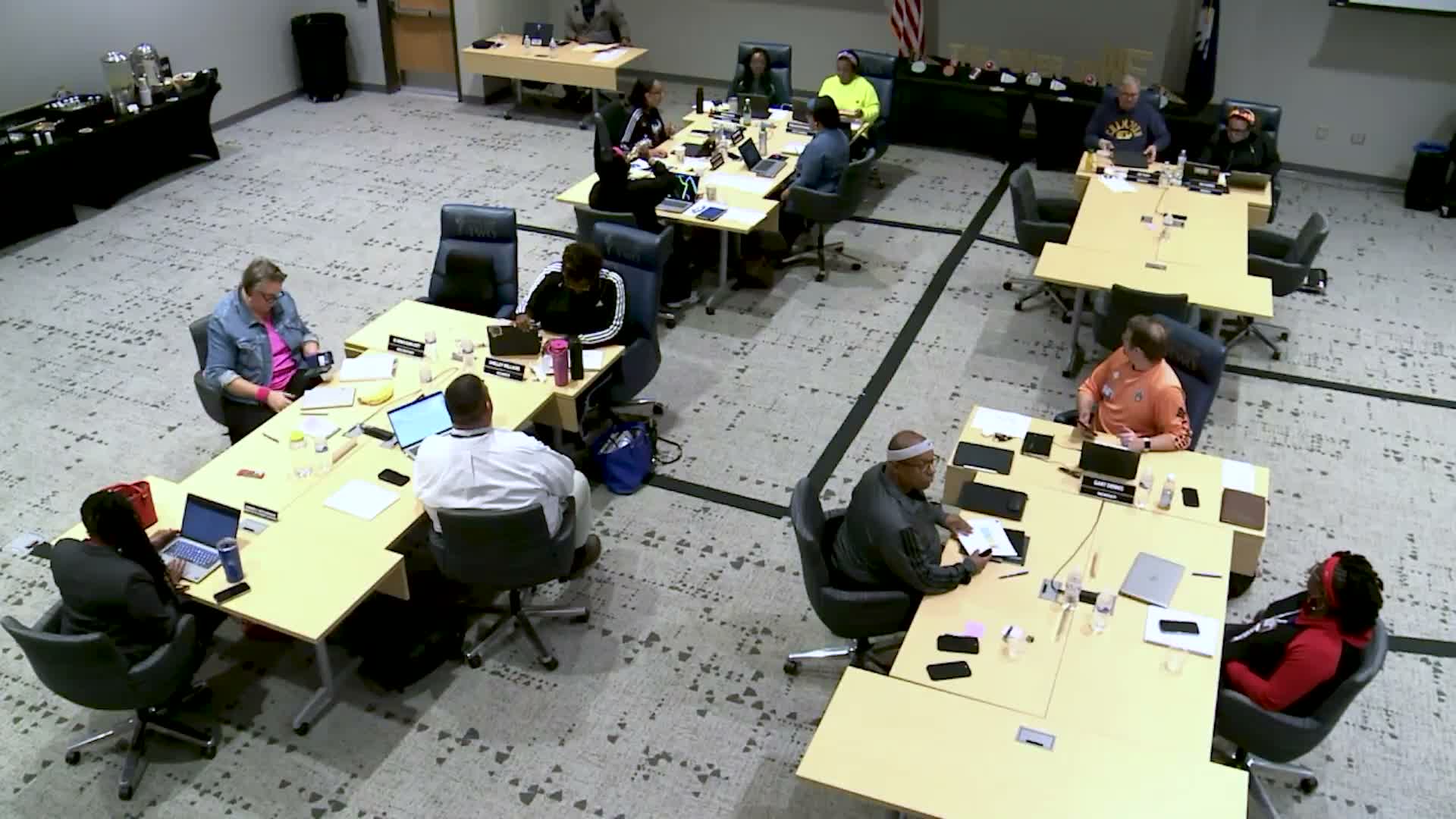
Summary
District leaders told trustees they expect continued enrollment declines and outlined proposed staffing guidelines that adjust student–teacher ratios by poverty band. A simulation of one school showed potential reductions of 2–8 teaching FTEs depending on enrollment scenarios; staff will finalize models and report back.
District administrators told trustees at the Jan. 8 work session that Richland School District Two has experienced an enrollment decline this year of roughly 350 students and could see further reductions driven by lower birth rates and new charter schools opening in the district. Staff presented a proposed update to long-unused staffing guidelines to align full-time-equivalent allocations across schools by grade band and by poverty level.
The recommended guidelines condense prior multi-chart ratios into a three-band poverty model (low, significant, higher) and assign student–teacher ratios that vary by grade and poverty. Examples presented: kindergarten through third grade on a 18–22 range depending on poverty; fourth and fifth grades would see larger increases (proposed moves from 20 to 24 in some bands). The presentation stressed that these ratios are used to allocate FTEs, not to mandate class-size maximums.
Staff simulated the effect at a representative school, Brilliant Elementary (57% poverty, 635 current enrollment). Under the proposed guidelines the school’s staffing allocation dropped in the simulation from 35 to 32 FTEs for the current year and could fall to as low as 27 FTEs in a modeled 2026-27 enrollment scenario — a net change of up to eight teachers compared with certain baseline scenarios. Staff also noted a technical rounding rule (round up at 0.3 or higher) used in the simulation.
Administrators cautioned that the special education staffing model is separate and governed by state and federal guidelines. They said next steps include finalizing staffing models, conducting further stakeholder meetings, sharing results with principals, refining simulations, and implementing a phased approach (initial staffing, May/June adjustments, and a final staffing in August when actual student counts are known). Staff emphasized the district may need to rely on fund balance, vacancy freezes, and temporary positions if state or federal funding declines.
Trustees pressed for further detail on projected revenue loss associated with charter student shifts (staff referenced an illustrative $25 million figure tied to a specific scenario), how many golden passes are in circulation, and how teacher movement and retention would be tracked; staff committed to return with more precise projections and a report for the next board meeting.