
House subcommittee hears bills to set federal wildfire response standard and improve readiness
Get AI-powered insights, summaries, and transcripts
Subscribe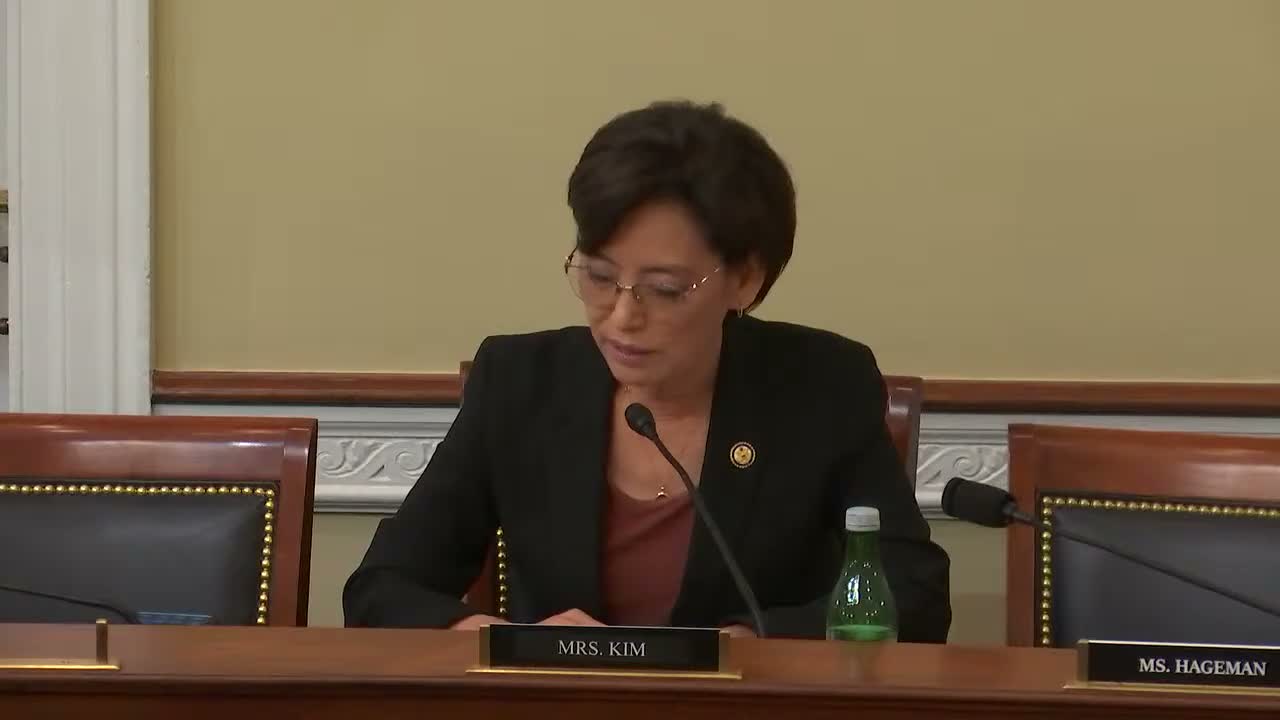
Summary
The House Natural Resources Subcommittee on Federal Lands heard testimony supporting HR 40 38, which would require the Agriculture and Interior departments to assess ignitions on federal lands within 30 minutes and deploy suppression assets within three hours; witnesses urged clearer federal-local coordination, improved resource visibility, and sustained year‑round readiness.
The House Natural Resources Subcommittee on Federal Lands on Wednesday examined HR 40 38, the Wildfire Response and Preparedness Act, which would direct the Departments of Agriculture and the Interior to establish a national standard to assess wildland fire ignitions within 30 minutes and, to the greatest extent practicable, deploy suppression assets within three hours.
Representative Young Kim (speaking for the bill) told the committee that ‘‘when federal response is delayed or inconsistent, the burden falls on the local fire departments,’’ and that a national benchmark would ‘‘give our federal and local firefighters and emergency managers the clarity they need to act fast.’’ (Representative Kim, opening remarks.)
John Crockett, deputy chief for the National Forest System at the U.S. Forest Service, testified that USDA ‘‘supports the intent’’ of HR 40 38 and welcomed engagement with sponsors on implementation details, while noting that operationalizing a numeric national standard will require technical work across agencies. Crockett said the Forest Service and Interior are already coordinating more closely under the administration’s wildfire priorities. (John Crockett, oral testimony.)
Pat Russell, fire chief of Anaheim Fire & Rescue, told members that ‘‘our greatest chance of success comes from a rapid, well‑resourced initial attack’’ and recommended a national standards‑of‑cover framework that would identify minimum staffing, aerial and ground asset availability, and year‑round readiness tailored to regional risk. ‘‘Early commitment, early containment protects firefighters, saves lives and preserves property,’’ Russell testified. (Pat Russell, oral testimony.)
Members pressed witnesses on operational questions. Rep. Cliff Bentz asked about a Forest Service figure that 98% of fires on the agency’s lands are suppressed in the initial attack; Crockett clarified that the 98% figure references fires on Forest Service lands that are put out during initial attack and acknowledged workforce pressures but pointed to recruitment and hiring goals the agency has pursued. Rep. Kim and others emphasized that clearer federal dispatching, unified resource visibility across federal, state and local inventories, and faster ordering of contracted aviation and crews are critical to making a time standard meaningful.
The legislation would also require joint reports to Congress on federal coordination and readiness. Witnesses urged that any statutory standard be paired with investments in dispatch capacity, year‑round staffing, and systems that make federal and non‑federal resources visible and quickly deployable.
The subcommittee took no formal action on HR 40 38 at the hearing. Members asked witnesses to supply additional technical details in writing and signaled willingness to work across the aisle to refine operational language before markup.
What’s next: Committee members may submit questions for the record; sponsors and agencies will continue technical conversations on implementation.