Get AI Briefings, Transcripts & Alerts on Local & National Government Meetings — Forever.
House Veterans Affairs subcommittee presses VA to finish disability rating overhaul by 2026
Summary
The House Veterans Affairs subcommittee heard testimony that VA plans to finish a holistic update of the VA Schedule for Rating Disabilities by fiscal 2026, but GAO, researchers and veteransadvocates warned progress has been uneven, data gaps remain and greater transparency is needed for credible implementation.
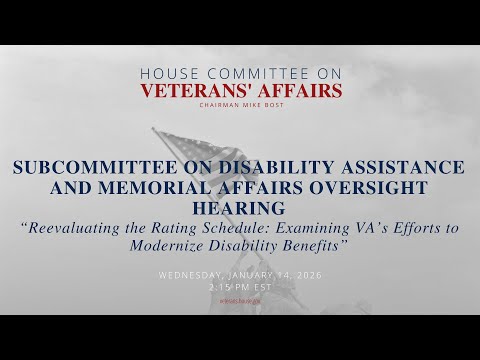
Chairman Littrell convened the House Veterans Affairs subcommittee hearing on VA efforts to modernize the VA Schedule for Rating Disabilities (VASRD), telling witnesses that the schedule "was created in 1945" and that the overhaul affects veterans' monthly compensation and must reflect modern medicine.
Nina Tan, executive director of Compensation Service at the Veterans Benefits Administration, told the panel that VA established a modernization plan in 2009 and has completed updates to 11 of the 15 body systems. "We anticipate publishing the final rules for all 4 body systems in 3 rule makings by 2026," Tan said, describing the updates as "point forward" and stressing that implementing new rules requires training, claims-processing changes and coordination across VA offices.
GAO Director Elizabeth Curta said VA has taken positive steps but warned that four body systems remain incomplete and that VA has not updated the earnings-loss information that underpins rating calculations. "VA has struggled to stay current with needed updates to the rating schedule," Curta said, noting the issue remains on GAO's high-risk list and that removal will depend on demonstrated capacity and progress.
Committee members pressed VA officials on why the work has taken so long and whether modernization will reflect injuries common to post-9/11 veterans, including traumatic brain injury, toxic exposures and complex mental-health disorders. Dr. Ulya Sokol, a medical officer in compensation services, said the mental-health portion is "in the final stages" and is being aligned with the DSM-5 multidimensional approach; she told the committee VA expects to publish that final rule by the end of fiscal 2026.
Members also raised implementation risks: internal review bottlenecks, multi-office clearances and limited public research on how ratings translate to earnings loss. Philip Armour, a labor economist, told the panel modern earnings-loss studies are feasible "in months and years instead of decades" but said data access and transparency are the main constraints. Dr. Kai Hunter of Iraq and Afghanistan Veterans of America urged VA to involve veteran service organizations earlier and to include quality-of-life measures and women's experiences in studies.
No formal votes or decisions were taken; members said they would continue oversight and press VA for follow-up. The committee ended the hearing without a firm, committee-level finding on whether the VA will meet the 2026 target but said it would remain "on standby" to verify the agency's progress.