
Council advances revised clear‑cutting rules after extended debate over bonds, buffers and 'site‑ready' land
Get AI-powered insights, summaries, and transcripts
Sign Up Free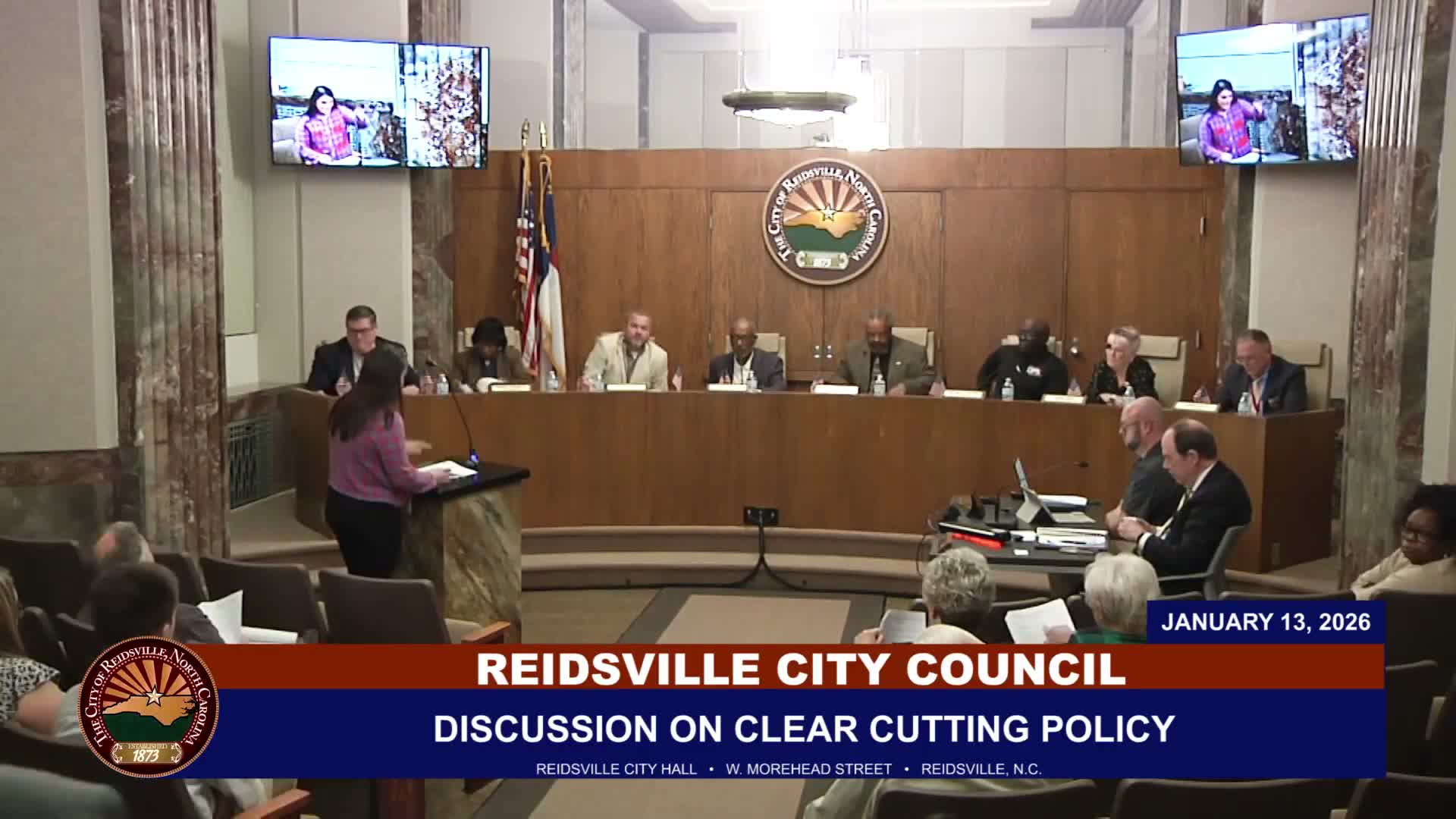
Summary
Council voted to pursue an amendment that reduces buffer requirements and allows limited clear‑cutting with developer bonds (3 years for residential, 5 years for commercial) if development approval is obtained; members pressed staff on bond calculation, enforcement and potential takings concerns.
Reedsville — The City Council voted Jan. 13 to move forward with an amendment to the city’s clear‑cutting policy after an extended discussion about bonding, buffer reductions and when cleared parcels must be replanted.
Planning Director Drew Bigelow presented the proposed ordinance changes, which would: lower required tree buffer zones in many cases from 50 feet to 25 feet; allow residential landowners to clear property fully if they obtain development approval within three years (residential) or five years (commercial), subject to a bond to guarantee replanting of required buffers if development does not proceed; and maintain exemptions for forestry activity conducted under state forestry management plans.
Councilmembers pressed staff on procedural and substantive issues: how bonds will be calculated and when they would be released, whether bonds would be site‑specific and based on professional forester estimates, and the risk that planting required buffers later could render a parcel not 'site‑ready' and reduce marketability. "When people invest hundreds of thousands of dollars to take this to market...then we're going to take that money and go back in and destroy the work that was done," one councilmember said, arguing the policy could deter investment if bonds are not handled transparently.
Bigelow said the bond amount was intentionally not specified in the draft because it must be site‑specific and may rely on a forester’s estimate for the species and density required. He described staff practice of accepting a forester’s cost estimate to determine the bond in prior cases.
Members also raised legal and practical concerns about enforcement and potential takings if the city were required to use bond funds to replant years after trees were removed. Bigelow pointed out the ordinance retains provisions that deny building permits for three years if required buffer trees were removed illegally, and that certain forestry activities taxed under present‑use value would remain exempt.
After line‑by‑line discussion, a motion to pursue the amendment process was made, seconded and adopted; council directed staff to continue refining language and bring clarifying detail about bond calculation, enforcement triggers and ties to development approvals.
What’s next: Staff will return with language clarifying bond determination, timelines for bond release, and enforcement procedures before subsequent readings.