
Judge grants Matthew Steven Martinez six-year deferred adjudication with strict treatment and monitoring conditions
Get AI-powered insights, summaries, and transcripts
Subscribe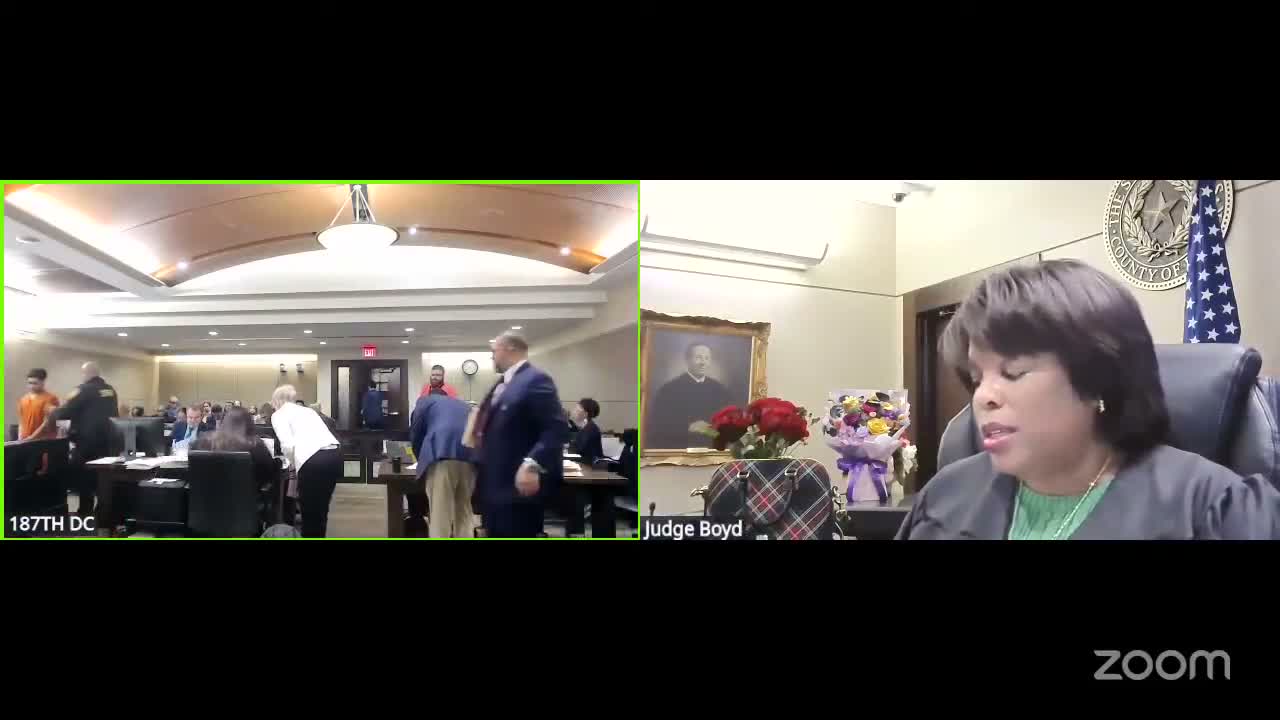
Summary
The 187th District Court accepted a plea and ordered Matthew Steven Martinez to six years of deferred adjudication with SCRAM monitoring, 60 sober meetings in 60 days, 100 hours of community service (reducible with program completion), a $2,000 probated fine and work/driver restrictions.
The 187th District Court accepted a plea agreement from Matthew Steven Martinez and placed him on six years of deferred adjudication, imposing conditions the judge said are designed to keep the defendant in treatment and protect the public. The court ordered random urinalysis tests, continued SCRAM monitoring and required proof of employment within 45 days. The judge also ordered 60 sober-meeting attendances to be completed in 60 days, 100 hours of community service (with 50 hours credited after completing a DWI education course and the remainder satisfied by a live victim-impact panel), and a $2,000 fine that was probated.
Judge (presiding) told Martinez the court would allow outpatient treatment and requested probation to arrange supportive services and case management: “If you ever think you're gonna drink, pick up the phone, call probation,” the judge said, directing the defendant to use probation as a gateway to additional help. Defense counsel and probation agreed that Martinez should be monitored and assisted in securing a placement in an in-state facility if necessary. The court additionally limited employment roles that involve working with minors or as a home-health caregiver and required an affidavit of no driving unless a vehicle is fitted with an ignition interlock.
The plea was entered by stipulation of testimony; the court reviewed the exhibits presented by the state and accepted the defendant's waiver of live testimony. The judge emphasized that communications with probation would be essential to Martinez’s success, and warned of consequences for noncompliance, including possible revocation and incarceration. The court excused the parties after instructing probation to coordinate required evaluations and monitoring.