
Napa County board urges Westlake and Teamsters Local 853 to resume bargaining with priorities on wages and health care
Get AI-powered insights, summaries, and transcripts
Subscribe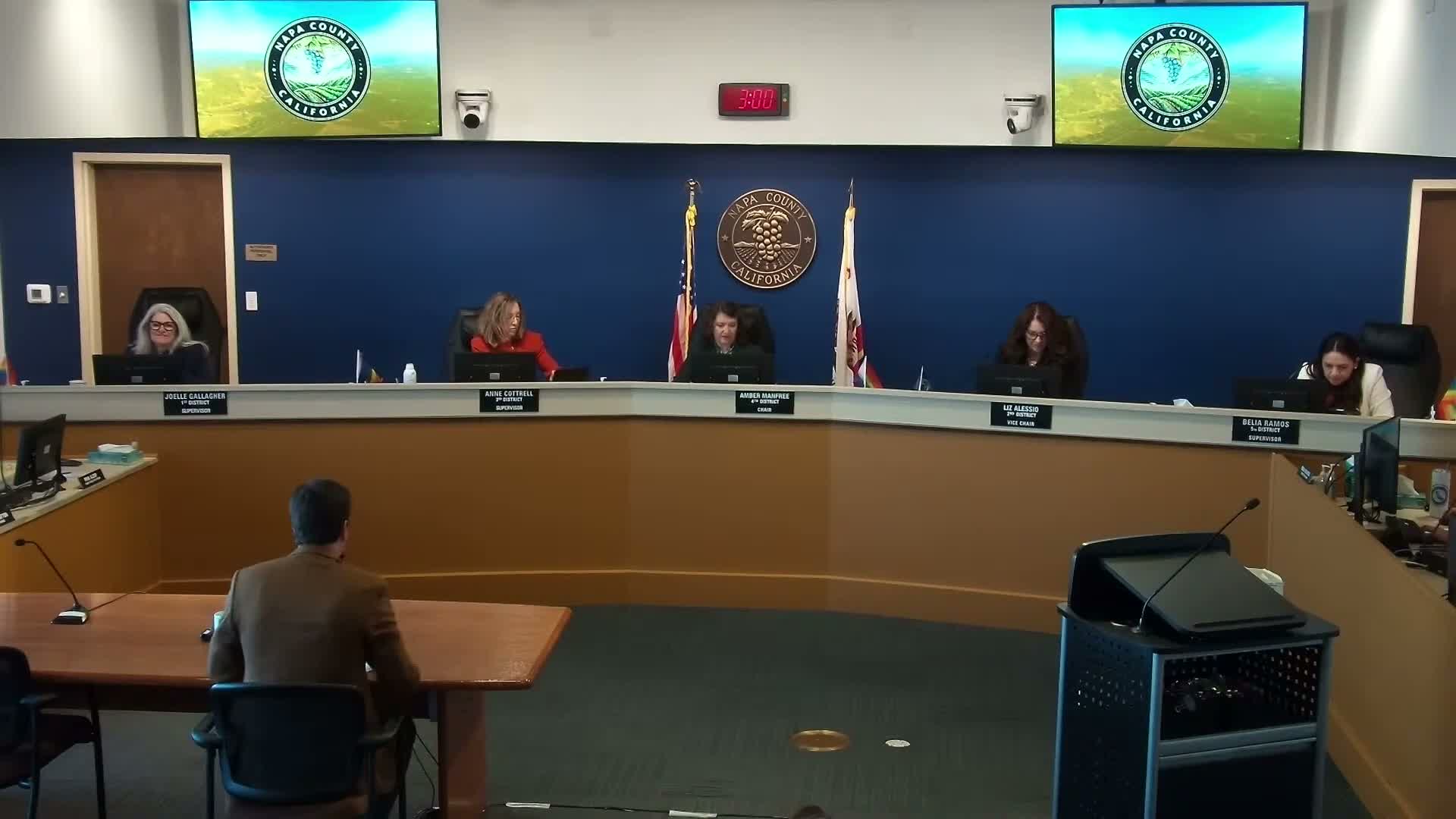
Summary
After public testimony, the Napa County Board of Supervisors unanimously adopted amended language urging Westlake Royal Stone Solutions and Teamsters Local 853 to bargain in January toward a contract with fair wages, periodic cost-of-living adjustments and meaningful employee health-care choice.
The Napa County Board of Supervisors on Jan. 13 adopted an amended statement addressing the economic and community impacts of a nearly six-month labor strike at Westlake Royal Stone Solutions involving members of Teamsters Local 853.
Andrew Mize, the county legislative and policy analyst, presented a draft statement prepared after a referral from the board. The draft described the strike’s local economic impacts and noted that a substantial majority of the affected Teamsters members live in Napa County.
Supervisor Joel Gallagher said he wanted stronger language in the resolution’s operative paragraph and proposed amending it to urge both sides to resume bargaining at January sessions and to work toward a contract that includes "fair wage terms, reasonable periodic cost of living adjustments in employee wages, and access to meaningful choice in employee health care." Gallagher moved the amendment; Supervisor Anne Cottrell seconded the motion and the board adopted the amended statement unanimously.
Mize framed the item as an advisory board statement urging the parties to seek resolution and noted the board's concern for both workers' livelihoods and the county’s economic stability. The adopted language does not direct county enforcement or mandate settlement terms; it is an expression of the board’s expectations and priorities for a negotiated agreement.
Why it matters: The labor dispute involves a major employer and affects county residents who are union members. The board’s statement is intended to encourage local negotiation and public accountability while signaling the county’s priorities to state and regional partners.
Next steps: Staff will publish the adopted statement and notify relevant parties; any future county action would depend on additional referrals from the board or changes in the dispute’s local impact.