Get Full Government Meeting Transcripts, Videos, & Alerts Forever!
Get email alerts on the Community Partnerships topic
No spam. Unsubscribe anytime.
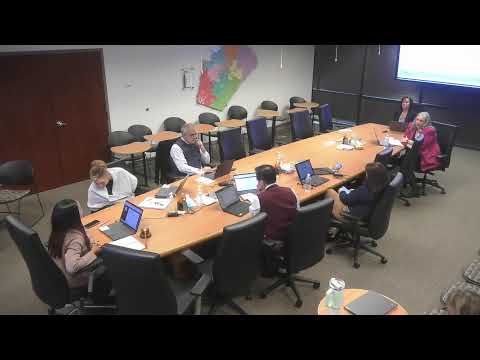
Wake County Schools reviews staff-only mapping tool that lists community partners; 156 partners accepted
Summary
District staff demonstrated a community mapping initiative launched April 2024 that catalogs community partners, reports 156 accepted partners from roughly 175 submissions, and is currently accessible only on the Wake Connect staff network; committee members raised questions about vetting, filtering and outreach to towns to boost participation.
Wake County Schools staff demonstrated a community mapping initiative designed to make it easier for district staff to find and connect with organizations offering goods and services for students and families. The initiative, launched April 2024, has received about 175 submissions; staff have accepted 156 partners onto the map after vetting each profile.
Dr. Brooksy Sturtevant, identified in the meeting as the district's community partnerships coordinator, reviewed the submission process and the tool's features: partners submit an organization profile with classification (business, nonprofit, faith-based or foundation), a brief description, keywords, contact information and service-area details. Staff review submissions before approving them for the map. "When they submit their profile, it doesn't automatically go on," Sturtevant said, describing a manual vetting step.
The mapping interface includes a central map, filter controls on the left and a right-hand list of organizations; icons show whether a partner is open to new relationships (green) or not accepting partnerships at the moment (burgundy). The presenter noted built-in dashboard metrics and a downloadable, filtered spreadsheet export for staff use. Access to the mapping tool is currently restricted to staff on the Wake County Public Schools network via Wake Connect; broader public outreach occurs through a separate community newsletter and other communications.
Committee members pressed on several operational issues: how for-profit businesses are classified and whether the tool could become flooded with solicitations, how filters and GIS boundaries behave (selecting a municipality sometimes excludes organizations that say they serve all of Wake County), and whether staff should work with towns and municipalities to encourage more partners to join. Several members suggested technical fixes (GIS/filter improvements) and broader outreach to ensure established providers (for example, Boys & Girls Clubs and libraries) appear in the database.
Sturtevant described complementary work the district is doing: a community partners advisory group (referred to in the transcript as "bridal 18" or "triple 18") that meets periodically to provide input, a community newsletter distributed to subscribed partners, a partnership toolkit for staff, and a Canvas course for asynchronous staff training that awards CEUs. The presenter said the mapping initiative helped the district conduct outreach events, such as community tours and backpack giveaways, and offered staff an internal resource to find low-cost goods, services and volunteer options.
Next steps: staff will pursue technical tweaks to filtering and GIS layers, consult tech services about managing contact information exposure, expand outreach to bring more partners onto the map and circulate a finalized summary of the mapping demonstration to committee members.