Get Full Government Meeting Transcripts, Videos, & Alerts Forever!
Get email alerts on the Professional Development topic
No spam. Unsubscribe anytime.
Ad hoc committee narrows board professional-development goal to ‘acquire and document strategies’
Summary
Committee members revised Goal 1 for the board's professional development plan to focus on acquiring and documenting strategies that support student achievement through community resources, partnerships and educational opportunities, and agreed to use a shared spreadsheet and periodic check-ins to measure progress.
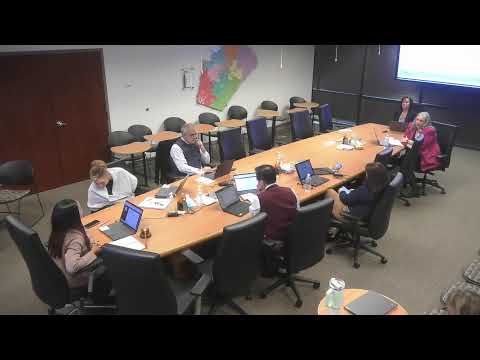
The Wake County Schools ad hoc committee on board professional development agreed on a more concise, measurable formulation of its first collective goal: board members will acquire and document strategies to increase student achievement through leveraging community resources, partnerships and educational opportunities.
The change, discussed at the committee's third meeting, replaces vaguer language about "increasing understanding" with a focus on tangible learning outcomes and documentation. Speaker 4, who led the drafting session, previewed a shared Google spreadsheet where members will record strategies, the resource or initiative, evidence of impact and cost or cost-savings estimates. "Board members will acquire strategies to increase student achievement," said Speaker 6 during the discussion, summing up the preferred phrasing.
Why it matters: committee members said the revision makes the goal measurable and easier to assess. Participants recommended that documenting strategies and their evidence be the primary metric for the committee's professional-development objective, rather than attempting to measure student outcomes directly as part of the PDP goal.
Members debated what counts as "community resources" and "partnership outcomes." Several argued that resources should include a range of supports — organizations, businesses, municipal assets, volunteers and programs — and recommended leaving the term broad during the research phase. Speaker 7 warned that "partnership outcomes" needs a clearer definition if it is to be used as a metric; committee members responded by recommending that the measurable element be whether members can name strategies and document evidence, not that the board itself deliver those outcomes.
The committee discussed how to track and surface promising strategies. The group favored an asynchronous reporting tool with optional ratings or "thumbs-up" flags and regular synchronous reviews. Options discussed included midyear and end-of-year check-ins, with more immediate discussion when items attract sustained interest from multiple members. "If something gets four or five thumbs up, that's a clue that we need to look at it immediately," Speaker 7 said.
Next steps: staff will make technical tweaks to the shared tool, finalize the wording developed in the meeting and circulate it to the full board. Committee members agreed to develop individualized PDP goals based on the collective work and suggested bringing the finalized language back at a work session for broader board discussion.
The committee did not take a formal vote; the meeting concluded after staff outlined the next steps and technical follow-ups.