
Utah Parents United urges tougher curbs on classroom tech, backs App Store Accountability Act
Get AI-powered insights, summaries, and transcripts
Sign Up Free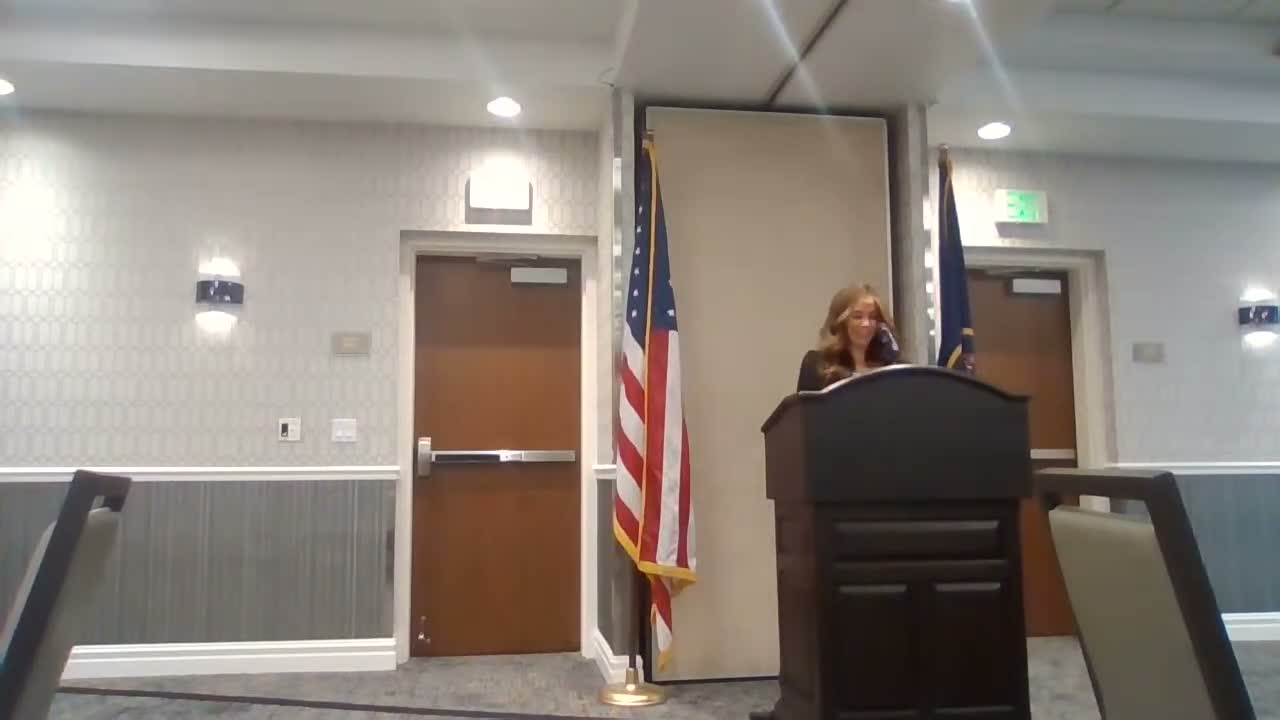
Summary
At a Washington County Republican Women luncheon, Corinne Johnson of Utah Parents United outlined the group's 2026 priorities: defend Prop 4, expand parental controls over app access with the App Store Accountability Act, press for statewide tech standards (SAFE Act), favor analog-first classroom policies (BALANCE Act), and boost K–3 literacy funding.
Corinne Johnson, founder and president of Utah Parents United, told members of the Washington County Republican Women on Jan. 17 that her group will press lawmakers this session to rein in classroom technology and expand parents’ legal recourse against apps that harm children. "Parents can take action against social media companies for harming their kids," Johnson said, describing provisions of the App Store Accountability Act that she said will let parents place children under their accounts and, if necessary, bring lawsuits against app makers.
Johnson framed the measure as parent-led regulation, saying it will prevent children from signing contracts with apps and require parental verification through adult account information rather than separate digital IDs. "You’ll never have to upload your driver’s license," she said, describing it as a distributor-style approach similar to age checks for tobacco.
She also described two bills she said will be introduced or advanced this session: the SAFE Act, which Johnson said would create a single statewide data-privacy agreement for school software and give parents a private right of action against vendors that violate it, and the BALANCE Act, which she said would make analog learning the preferred default in classrooms while allowing districts limited local flexibility. "SAFE creates a regulatory framework so everybody has to sign the same DPA," Johnson said. "BALANCE says analog is the preferred method of learning in Utah classrooms."
On funding, Johnson warned that education spending on technology and capital projects has risen while enrollment declines and test scores have stagnated. Citing a recent press conference and a neuroscientist she named, she urged attention to K–3 literacy and said state leaders are proposing retention-style interventions to improve third-grade reading levels. "Only 50 percent of third graders are reading at grade level in the state of Utah," she said, describing a goal of higher literacy rates tied to parental engagement.
In a question-and-answer segment, members raised an 'attendance bill' and asked whether attendance policy should be punitive. Johnson argued for focusing on classroom engagement and participation rather than strict truancy enforcement, and mentioned two policy options legislators are exploring: a bell-to-bell cell-phone policy (restricting phones during the school day) and grading that rewards in-class participation.
On Internet access and filtering in schools, Johnson said students regularly find ways to bypass filters and that policy proposals under discussion include limiting device connectivity to downloadable, education-only content or locked AI databases. "It's the Internet that's the problem," she said, urging parents who oppose full connectivity to contact House and Senate education committees.
Johnson attributed the organization's legislative work to parental organizing that began during the COVID-19 era and said Utah Parents United represents a parent network and communications infrastructure (website, social media, newsletters) intended to mobilize families statewide.
The presentation concluded with an offer to continue questions after the meeting and with organizers asking members to sign initiative packets in the hall for related legislative efforts.