
White County schools weigh CMTA facilities audit that promises energy savings
Get AI-powered insights, summaries, and transcripts
Sign Up Free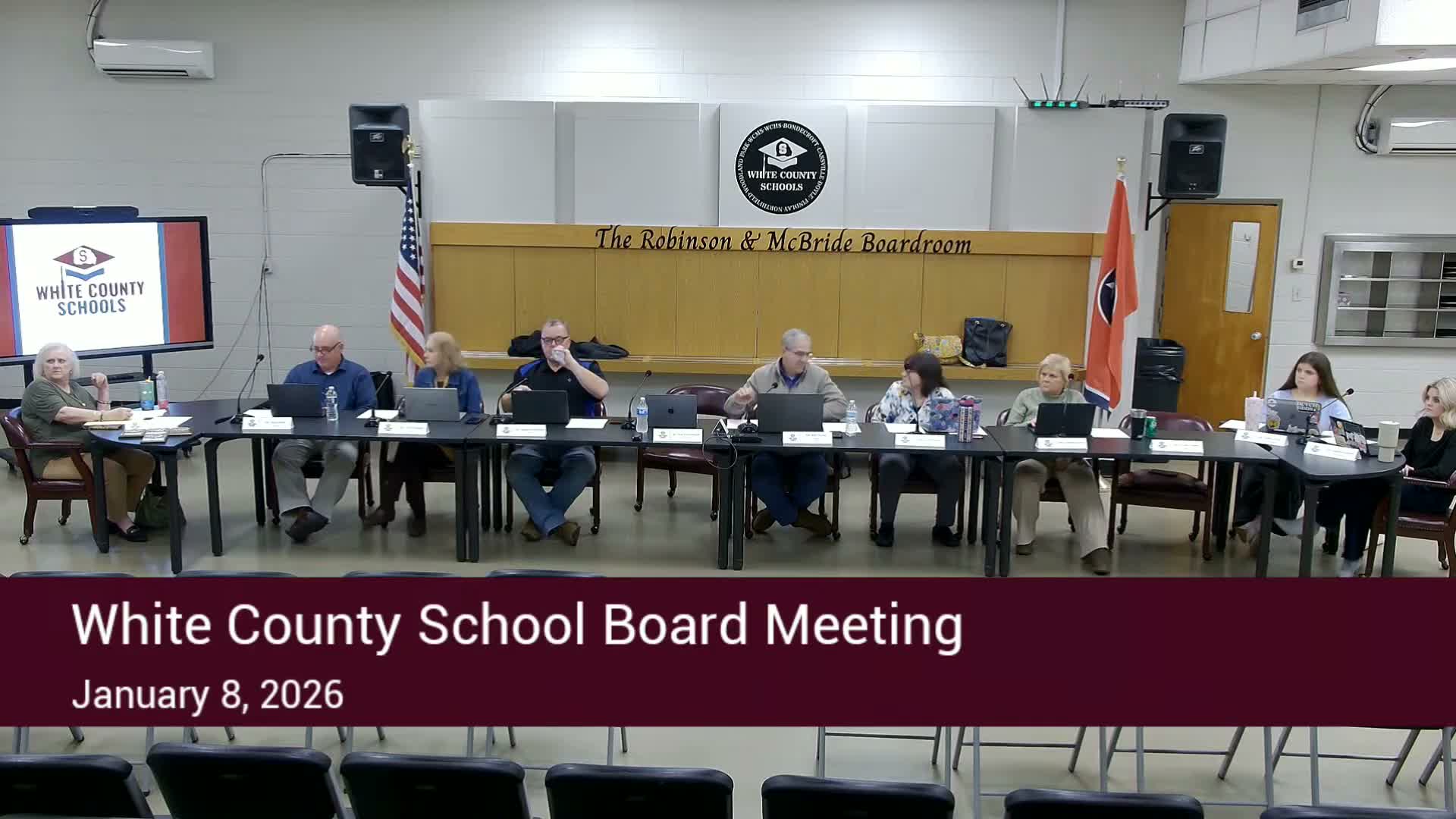
Summary
Maintenance staff presented CMTA’s proposal to survey every school, catalog equipment and utility usage, and identify energy projects funded by guaranteed savings; board members asked about contract terms, project prioritization and attorney review before approving work.
White County’s maintenance team presented a proposal from CMTA on Jan. 8 to conduct a districtwide facilities survey and energy-usage baseline aimed at identifying efficiency projects that would pay for themselves over time.
Mister Alley, who introduced the maintenance report, said CMTA would perform a two-to-three month discovery phase to inventory heating, cooling and other equipment, analyze utility bills and recommend projects. Alley described CMTA’s business model as reinvesting realized energy-cost reductions into capital improvements. "If they save you $300,000, they're gonna turn that $300,000 for improvements into your building," Alley said as an example of how the company frames potential savings. Alley also told the board that CMTA does not require an upfront payment for the initial discovery and that the company “guarantees savings, and if they don't hit the savings, they pay for it.”
Board members pressed for limits and choice. A member asked whether the district would be obligated to complete every project CMTA identifies; Alley answered the district retains final say on priorities and is not forced to implement every recommendation. The maintenance presenter and several board members said any contract terms or guaranteed-savings language would be brought back to the board for review and approval before work begins.
Timing and procurement questions remained. Alley said discovery work (bill analysis and equipment photos) could begin soon and extend into spring; when asked whether a binding contract was required to start discovery, Alley said he had not yet asked that question and that contract terms would be returned to the board. Members asked the board attorney to review any policy or contract language setting dollar limits or reimbursement rules before a policy change (policy 2804) is finalized.
The board did not approve a contract at the Jan. 8 meeting. Members expressed interest in the approach and asked staff to return with detailed scopes, cost/guarantee language and the timing for any required board approvals. The director noted the district had used an outside firm 12 years ago for a similar assessment and kept that report for capital planning, but emphasized no obligation to hire CMTA if the board chooses not to proceed.