Lakota board names officers, approves calendar and routine governance items
Summary
At the organizational meeting, trustees nominated and confirmed Miss Casper as board president and Mister Horton as vice president, approved meeting dates and multiple routine governance items including appointments for OSBA and Butler Tech representatives and adoption of the district tax-budget framework.
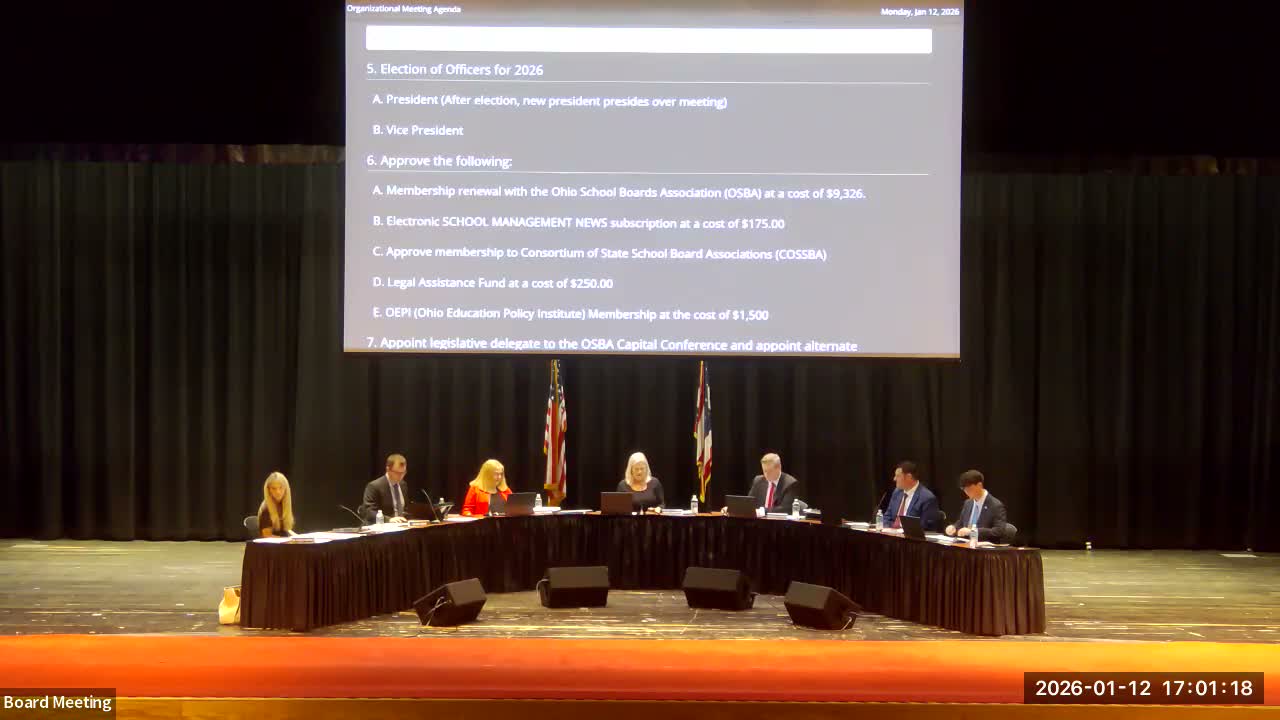
The Lakota Board of Education held its organizational meeting Jan. 12 and completed routine governance business for 2026: trustees confirmed leadership and appointed delegates, approved the board calendar and voted to adopt several standard resolutions.
Trustees nominated and confirmed Miss Casper as board president for 2026 and selected Mister Horton as vice president. The roll-call votes recorded unanimous support for the nominations during the organizational procedure used for elections, and both appointees accepted their roles.
Board members approved a consent block of routine items — including membership renewals for the Ohio School Boards Association and associated services — after a short discussion about the cost-effectiveness of attending the COSBA conference (this year in Louisville). Trustees agreed it would be worth trying the closer conference despite missing early registration deadlines.
The board appointed Mister Wynne as the district’s OSBA delegate and Mister Argo as the alternate, and later approved Mister Wynne to serve as the district’s Butler Tech representative for the three-year term previously held by Miss Schaefer; Doctor Whiteley said staff would notify Butler Tech of the change. Trustees also approved a series of administrative resolutions required by state code, including a tax-advances resolution and authorization for the treasurer to pay bills and invest funds as appropriated.
The board approved revised 2026 meeting dates after staff proposed moving several meetings two weeks later to create a more regular two-week cadence between meetings. Doctor Whiteley noted an administrative deadline if the board wishes to place a facilities measure on the May ballot: supporting paperwork would need to be submitted by Feb. 4.
Other actions at the meeting included approval of a workers’ compensation stop-loss contract (two-year term) that staff said will save about $15,000 per year and authorization to engage a capital-planning services contract to develop a 10-year capital and maintenance plan.
What’s next: The board recessed for a listening session and agreed to continue discussion of master facilities, policy public-comment procedures and the timing of any ballot decision at upcoming meetings.