Get Full Government Meeting Transcripts, Videos, & Alerts Forever!
Get email alerts on the Master Facilities topic
No spam. Unsubscribe anytime.
Lakota board weighs two master-facilities options, both priced at about $289 million
Summary
Superintendent Doctor Whiteley presented two revised master-facilities options (labeled C1 and D1) that aim to reduce class sizes and improve safety; both were shown at a roughly $289 million price point, prompting debate over phasing, busing, timing and how to re-engage the community before any ballot decision.
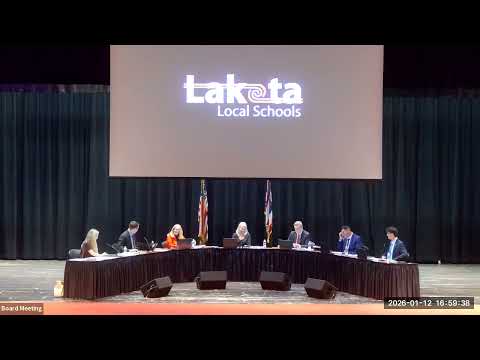
Superintendent Doctor Whiteley told the Lakota Board of Education on Jan. 12 that community feedback and a district survey make clear four priorities: smaller class sizes, safety and security, fewer transitions between grade bands, and flexible learning spaces. "If you look at the feedback… those things still hold true," Doctor Whiteley said, introducing two options under consideration for a potential ballot proposal.
Doctor Whiteley described option C1 as a plan that would renovate both high schools and junior highs, convert remaining elementary and early-childhood sites to K–5 configurations, and decommission several buildings. "It's 289,000,000," he said when asked for the price of the C1 package. He said that C1 would deliver the grade-band continuity and class-size relief many parents prioritized but would also require community engagement about building locations and busing logistics.
The district’s architectural team and demographic consultants presented option D1 as a closely related alternative with the same price point but a different junior-high approach: D1 would maintain four junior highs with targeted new construction for two aging campuses while preserving more existing junior-high sites. Doctor Whiteley said D1 may offer different operational savings and tradeoffs but that both options were designed to respond to the top community priorities identified in outreach.
Trustees pressed staff on several recurring concerns. Transportation and student time on buses drew numerous questions: Superintendent Whiteley said average bus rides now run about 30 minutes and that routing efficiencies would change under each configuration, but he recommended district routing analysis before drawing firm conclusions. Board members also raised questions about sequencing and cost escalation: Tom, the district’s architect, said construction costs rise about 4 percent per year on average and that delaying work can add roughly $12 million in cost per year for a project of this scale.
Trustees debated whether to return to voters with a single revised plan, a phased approach, or more limited, targeted asks (for example, one new elementary school or select renovations). Trustee discussion ranged from urgency about deteriorating buildings to concerns the community had not fully engaged with the alternatives that now carry lower price points than last year’s $506 million proposal. "We heard loud and clear from our community that 506,000,000 was not an acceptable price point," Doctor Whiteley said, arguing the new options attempt to respond to that feedback.
Board members asked staff to prepare more granular information on routing, exact site footprints, operational savings estimates, and the implications of a May versus November ballot timeline. Doctor Whiteley noted that paperwork to appear on a May ballot would have to be completed by Feb. 4, creating an aggressive schedule if the board decides to pursue that timeline. Trustees agreed to continue discussion at their next meetings and to add timing and financing implications to the agenda.
What’s next: Staff will return with routing analyses, more detailed cost breakdowns, and options for phased asks or alternative frameworks for engaging the community before the board makes any final decision about placing a plan on the ballot.