Get Full Government Meeting Transcripts, Videos, & Alerts Forever!
Get email alerts on the School Improvement topic
No spam. Unsubscribe anytime.
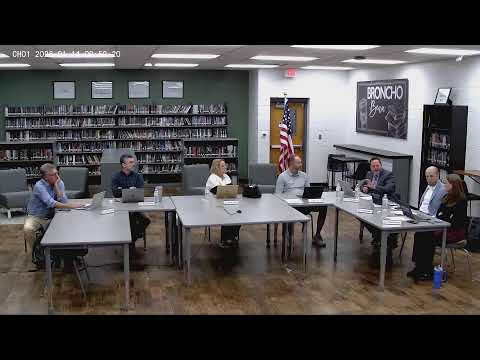
Bethany schools report early gains from MTSS, daily intervention blocks and 'Bronco Best Days'
Summary
Middle, elementary and high school leaders told the board that a mix of MTSS, a 20-minute 'Elevate' block, elementary 'focus time', 'Bronco Best Days' incentives and high-school 'brick and mortar' sessions have reduced behavior incidents, tardies and failing grades in initial results.
School leaders and staff presented multi-tiered improvement plans across the district and shared early outcome data.
At the middle school, administrators described a Multi-Tiered System of Supports (MTSS) framework that uses benchmark and STAR screener data to target interventions. Staff described "Elevate," a daily 20-minute protected block (10:45–11:05) before lunch used for targeted interventions, weekly guidance lessons and accountability checks. Presenters said the middle school recorded about 134 behavior incidents in 2024–25 involving roughly 160 students and that the goal of the initiative is to reduce those incidents by delivering tiered academic and behavioral supports in small teams.
Elementary staff updated the board on "Bronco Best Days," a quarterly incentive program that requires attendance, limited tardies, no ISR/suspensions and academic accountability to earn a school celebration day. Presenters said one cohort's failing grades fell dramatically in one semester (cited a drop from 13 failing instances to 1 in a tracked group) and that chronic absenteeism and tardies have declined after the program began. The elementary team also described a daily focus time (45 minutes reading, 30 minutes math) used to pull 'bubble' students into targeted instruction.
At the high school, administrators described the 'brick and mortar' period launched Oct. 29 for credit recovery and targeted remediation. Presenters reported 32 different students failed English at some point during the semester but only two remained failing at semester end; in math, 14 students failed at some point and two remained failing at the end. High-school staff gave a small-group example in pre-calculus and geometry: five of six students who attended brick-and-mortar interventions passed subsequent math assessments, and one geometry student moved from failing for eight weeks to passing after targeted tutoring and sessions.
Presenters emphasized teacher collaboration, weekly data-review meetings and the role of interventionists and counselors in Tier 3 supports. Board members asked about scheduling trade-offs and how the district will align schedules across buildings; staff said they are already refining schedules for shared teachers and will continue quarterly data review and a year-end stakeholder survey to evaluate and adjust programs.
Evelyn Hawken, who identified herself during the high-school report, told the board five of six students in a targeted pre-calculus group passed their next exam after small-group intervention.