Citizen Portal

Rep. Brian Mast urges backing Iranian protesters, says 'regime change is coming'

House Foreign Affairs Committee ยท January 14, 2026

Get AI-powered insights, summaries, and transcripts

Subscribe
AI-Generated Content: All content on this page was generated by AI to highlight key points from the meeting. For complete details and context, we recommend watching the full video. so we can fix them.

Summary

In a television interview, Rep. Brian Mast said the United States should back Iranian protesters and warned that regime change in Iran is likely; he cited evacuations from regional bases, economic strain and heavy government repression as reasons for decisive U.S. action.

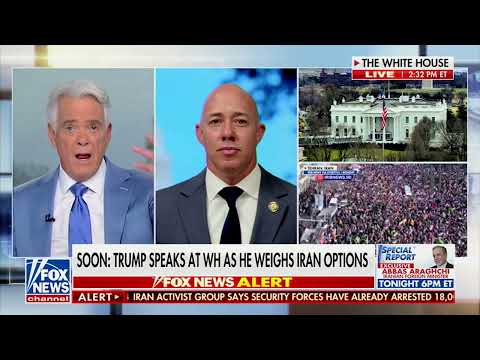
Rep. Brian Mast, the Florida congressman the host identified as chairman of the House Foreign Affairs Committee, told a television interviewer that the United States should back Iranian protesters and that "regime change is something that is coming." The comments came amid reports of U.S. evacuations of personnel from some Middle Eastern bases and growing unrest inside Iran.

Mast said the Iranians "are taking it seriously" and argued U.S. rhetoric matters: "What he says he will do, he will do, and we should be backing up the Iranian people who are looking for a free and fair and democratic Iran instead of the dictatorial regime that they've been under for so many years." The host had earlier noted that U.S. forces were reportedly being evacuated from bases including Al Udeid Air Base in Qatar and referenced a recent operation described on air as "Operation Midnight Hammer." Mast linked those moves to Tehran's perception of U.S. intent.

Describing the unrest inside Iran, Mast characterized recent protests as "organic" and "revolutionary," saying they were "the likes of which we have not seen in 47 years." He told the interviewer that Iran faces severe economic strain and gave an example of currency weakness: "if I brought a $1 bill to a currency exchange, they'd have to give me about 1,200,000.0 Iranian real back," which he used to illustrate broader fiscal pressures that, in his view, weaken the regime.

Mast asserted that the government is responding with increased brutality and said "several 100 government officials are dead" in the unrest, a figure he presented as part of his argument about the scope of the crisis. He also dismissed a foreign official's account (described by the host as coming from an interview to be aired with Brett Baer) that recent unrest was "terrorist style attacks" fomented by outside actors, saying the protests are indigenous.

On U.S. policy options, Mast described recent presidents' approaches as calculating specific missions rather than large-scale ground invasions, and said decisions weigh what obstacles need removal and what is the "safest and most effective way" to create opportunities for Iranian citizens. He referenced senior U.S. policymakers by name while discussing how options are weighed.

The interview closed as the host previewed a White House event where the president might comment on the situation. "Well, we'll see, what if anything the president's got to say," the host said before thanking Mast for appearing.

The interview consisted of an exchange about the extent of unrest in Iran, how the U.S. should respond, and whether evacuations of personnel from regional installations signal imminent further escalation. Mast's claims about casualty figures and the causes of the unrest were presented as his assertions to the interviewer.