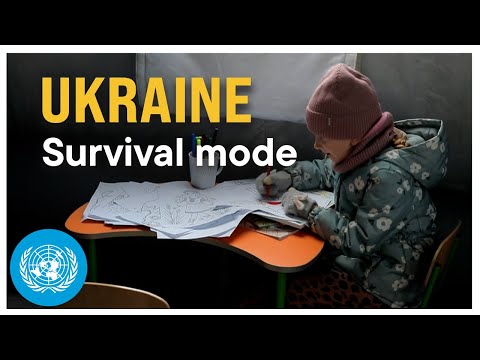
Speakers describe deepening winter hardship in Kyiv; local chef’s food-truck highlighted as relief effort
Loading...
Summary
Speakers described severe winter conditions in Kyiv, long outages from attacks on energy infrastructure, and an improvised food-truck response by a chef from Chernihiv; several numerical claims in the remarks were unclear in the transcript and are noted as such.
Speaker 1, an unidentified speaker, said Kyiv residents are taking improvised measures to stay warm as winter bites, including "stuffing even soft toys to their windows" to block the cold and that temperatures were "minus 15" and could fall further. The speaker framed the situation as part of a prolonged humanitarian crisis: "Nearly 4 years into this, relentless war, children's lives are still consumed by thoughts of survival and not childhood, unfortunately."
The same speaker referenced a rise in verified child casualties, saying there was an "11 percent increase in verified child casualties during 2020, 5 comparing to the previous year." The transcript's phrasing made the exact time period and numeric reference unclear; the article reports the claim as stated and does not infer a corrected date or figure.
Speaker 2, an unidentified speaker, said attacks on energy infrastructure are producing "long periods without electricity, heating, water, and food," linking damage to critical services with heightened winter risk. The speaker highlighted a local response they had observed in Chernihiv: "We've just met with Oleg, who is a chef from Chernihiv and who a year ago started this initiative to kit out a a normal truck," and quoted the chef as saying he had "cooked in this truck half 1000000 meals." The numeric phrasing in that quote was unclear in the transcript; this article records the chef's statement as spoken and does not convert or confirm the figure.
Speaker 2 closed by pledging ongoing support for the initiative: "We will try and do our best to support this kind of work for as long as it's needed." The remarks combined a description of urgent needs — cold temperatures, disrupted utilities and risks to children — with an on-the-ground example of local aid.
No formal votes, motions or legal authorities were referenced in the transcript provided. The remarks are presented as first-person accounts from unnamed speakers and an on-site relief worker; numbers and dates that were garbled in the record are quoted exactly and identified as unclear rather than being corrected or assumed.