UN council briefing warns of rising hunger, collapsing health services and detained aid staff in Yemen
Loading...
Summary
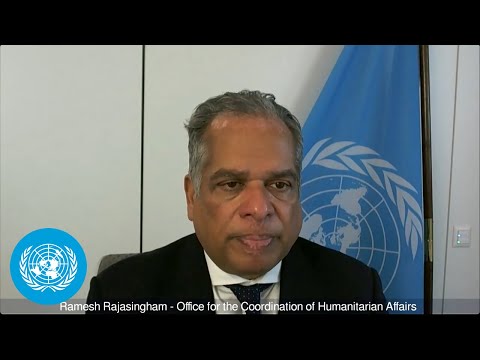
Representative Raja Sengham told the Security Council that Yemen’s humanitarian situation has worsened, citing detained UN and NGO staff, escalating food insecurity affecting roughly half the population, and widespread health facility closures; he urged members to press for releases and increase funding.
Representative Raja Sengham briefed the United Nations Security Council on the deteriorating humanitarian crisis in Yemen, saying access for aid workers is contracting even as needs rise and funding has not kept pace. He warned the situation is driving large-scale hunger, the collapse of basic health services and increased risk of infectious disease spread.
"The result is that millions of Yemenis are not receiving the aid they needed to survive," Raja Sengham said, adding that "the continued detention of [UN] staff continues to severely restrict critical humanitarian work." He reiterated "the secretary general's call for the de facto authorities to rescind the referral of UN colleagues to special criminal courts and to work in good faith toward the immediate release of all detained personnel of the UN, the nongovernmental organizations, and the diplomatic community." The briefing contained both a reference to "70 UN staff" detained and later an appeal to release "73 UN workers," a numeric discrepancy Sengham did not explain in his remarks.
Sengham described sharp declines in food security and nutrition. "More than 18,000,000 Yemenis or half the population will face acute food insecurity next month," he said, and warned that "tens of thousands" could face catastrophe. He told the council that at least 1,000,000 more people are hungry than a year earlier and that nearly half of children under age five are acutely malnourished.
The briefing also cited damage to health infrastructure: Sengham said more than 4,450 health facilities have closed across both DFA-held and government-controlled areas because of funding cuts, and that by 2025 fewer than 60% of the health facilities still operating were fully functional. He said an estimated 2,300 clinics risk losing funding, leaving millions without access to lifesaving care.
Where access has permitted, humanitarian partners have maintained services, Sengham said. He noted that the World Food Programme "has maintained food assistance in two-month cycles, reaching almost 3.5 million people in late 2025," and that coordinated cash responses in Marib helped flood-affected families recover; during recent flooding, more than 27,000 families received emergency assistance within weeks. He added that vaccination campaigns reached roughly 2.2 million children in DFA-held areas and about 1.4 million children in government-controlled areas with polio vaccines.
Sengham urged the council to take three steps: press for the immediate release of detained UN, NGO and diplomatic staff; step up funding to meet urgent needs; and preserve the unity that has historically guided council action on Yemen. He closed by emphasizing the need to remain "pragmatic and patient about the challenges ahead and firm in defending the humanitarian values that guide us." No formal vote or decision was recorded during or at the close of this briefing.
The council did not announce specific follow-up measures during the briefing; Sengham’s appeals signal areas for potential diplomatic pressure and donor mobilization in the weeks ahead.