
Mentor board votes 4–1 to place 4.9‑mill operating levy on May ballot after public comment
Get AI-powered insights, summaries, and transcripts
Subscribe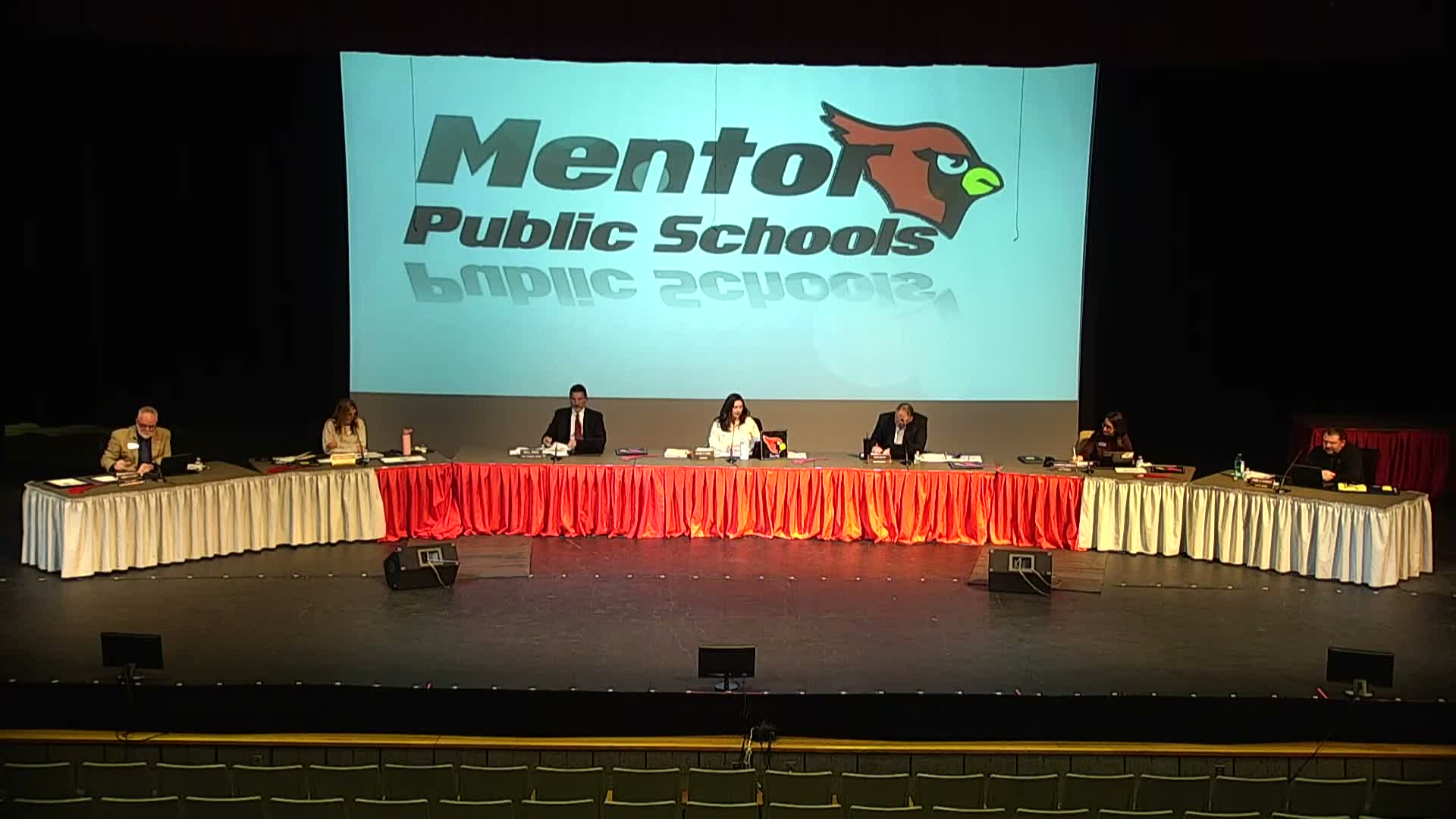
Summary
After multiple public comments urging support and extended board debate about cuts and state funding, the Mentor Exempted Village Board of Education voted 4–1 to approve a resolution declaring necessary a 4.9‑mill operating levy for the May ballot; the CFO said it would generate roughly $13.5 million annually.
The Mentor Exempted Village Board of Education voted 4–1 on Jan. 13 to approve a resolution declaring it necessary to place a proposed 4.9‑mill operating levy on the May ballot.
Board members approved the resolution after more than an hour of public comment from residents and students and extended discussion among board members about whether the district had exhausted internal cuts. The roll call was 4 Yes, 1 No; Miss Iaplo cast the lone No vote.
Why it matters: The district says the levy would fund day‑to‑day operations — staffing, transportation, safety, maintenance and utilities — and is intended to maintain current programs and class sizes as state funding and other revenues decline. “This is to maintain our current programs and services,” the district’s chief financial officer said in his presentation, adding the levy would “generate $13,500,000 approximately annually.” The CFO also estimated the impact on an average Mentor home (tax year values used by the district) at about $415.12 per year, or roughly $34.59 per month.
Public comment: Multiple speakers urged the board to put the levy before voters. Parent Megan Schonick described rising classroom sizes and said smaller classes “allow our staff to address students who need early interventions” and declared, “Our students are worth the investment.” Student speakers and other residents similarly urged support, saying local funding preserves counselors, intervention specialists and programs.
Opposition and board deliberation: One board member said levies should be a last resort and asked the board to pursue additional cuts to non‑classroom spending (for example, membership and administrative compensation items raised during the meeting) before asking voters for more money. Other board members and district leaders countered that the district has already implemented multi‑year reductions and that changes in state funding and voucher policies have increased reliance on local levies. Members emphasized transparency about past cuts and described the levy as necessary to avoid deeper reductions that would affect students.
What passed and what happens next: The resolution requests that the Lake County Auditor make required certifications under Ohio Revised Code sections 5705.03 and 5705.21 so the board may place the levy on the May ballot. If the auditor’s certifications are returned and the board moves forward with the second required resolution, the levy would appear for voter consideration in May; if not passed in May, the board may again seek votes in November.
Votes at a glance: - Resolution declaring it necessary to levy an additional 4.9 mills for current expenses: Passed, 4–1 (Miss Iaplo voted No). - Consent agenda items (minutes, curriculum revisions, textbook adoptions, employment of legal counsel, surplus equipment sale, personnel matters): Approved by unanimous votes as recorded in the meeting minutes (multiple motions carried 5–0).
Context and funding details: District officials said this is the first operational levy the district has asked for in 10 years and contrasted it with the district’s prior permanent‑improvement levy. The CFO reported the district’s projected operating deficit (approximately $274,000) and explained the levy term is expected to be at least six years. The board and administration repeatedly framed the proposal as maintaining existing services rather than funding new programs.
Next steps: The board will await the county auditor’s certifications and would need to pass a second resolution after certification to finalize the levy request. The district also said it will continue public outreach and provide further financial updates at future meetings.
(Reporting notes: Quotes and attributions come from speakers during the Jan. 13, 2026 Mentor Exempted Village Board of Education meeting.)