Get Full Government Meeting Transcripts, Videos, & Alerts Forever!
Get email alerts on the Stop Data topic
No spam. Unsubscribe anytime.
SFPD says stop-data errors down to 'sub 5%'; procurement underway for new collection system
Summary
SFPD briefed the Police Commission on Jan. 14 that errors in stop-data collection have dropped to 'sub 5%' after checks and reminders, nine of 15 audit recommendations are marked complete, and procurement for a new system aims for a Q1 cutover; the Public Defender's Office praised the data as the first positive set since DGO 9.07.
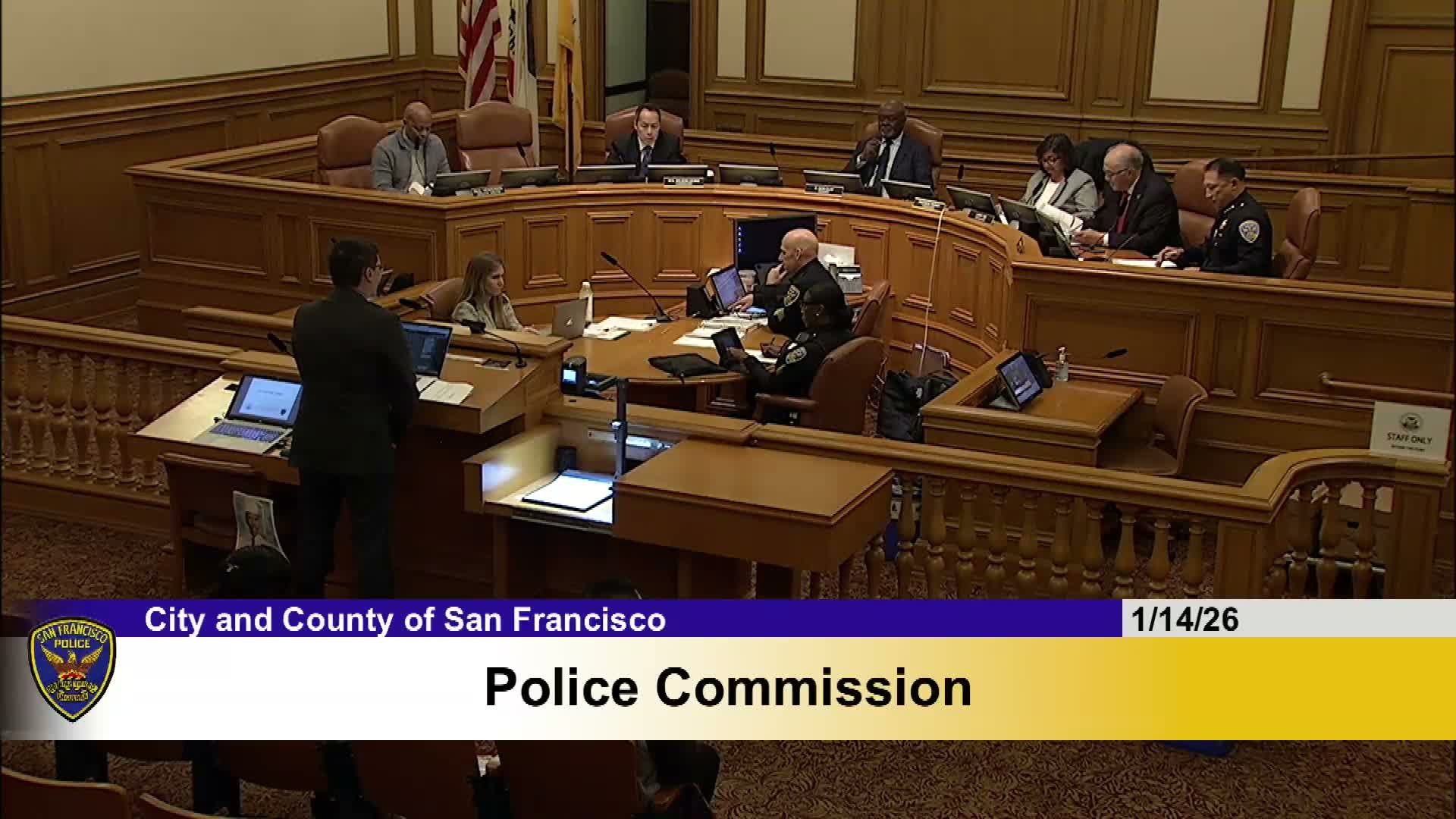
San Francisco — Jason Cunningham, a program manager in SFPD’s Scribe Strategies Division, told the Police Commission on Jan. 14 that the department has implemented routine publication of stop data to Data SF and SFPD dashboards, and has reduced the rate of data-entry errors "to sub 5%" through automated reminders and data checks.
Cunningham said the late-2024 stop-data audit included 15 recommendations; as of the 2025 reporting period the department considers nine closed and six still pending. He said three pending items relate to communications and training that SFPD is pausing until it completes a planned software change, and that the other three depend on features that may be present in the new system. On procurement and timeline, department staff said a Q1 cutover is the intent if the Office of Contract Administration (OCA) process proceeds on schedule.
Why it matters: Accurate stop-data are central to assessing racial disparities and compliance with local policy DGO 9.07, which restricts pretext stops. Zach Dillon, a policy analyst at the Public Defender’s Office and representative of the Coalition to End Biased Stops, told commissioners that the share of Black drivers stopped for nonmoving violations fell from more than 35% before DGO 9.07 to about 20% in the most recent quarter, calling it “the first positive set of data we've seen.”
Commissioners raised questions about the nature of remaining errors. Cunningham described the typical problems as “combo errors” where interface logic does not consistently show or hide fields as intended; he said those are systemic software issues rather than officer-entry mistakes. Procurement staff and an assistant chief said vendor requirements will include minimum standards and that the county-level procurement process will determine the cutover date.
The commission will track the department’s procurement and the DPA’s ongoing audit verification work. A written follow-up on error-type specifics was requested for the audit record.