Get Full Government Meeting Transcripts, Videos, & Alerts Forever!
Get email alerts on the Ems Operations topic
No spam. Unsubscribe anytime.
SFFD reports surge in ambulance handover delays; citywide summit planned
Summary
SFFD reported APOD delays nearly doubled in December to 916 incidents, a rise the department said led to a 100% increase in 'medic-to-follow' events; chiefs have scheduled a hospital coordination summit and plan operational follow-ups.
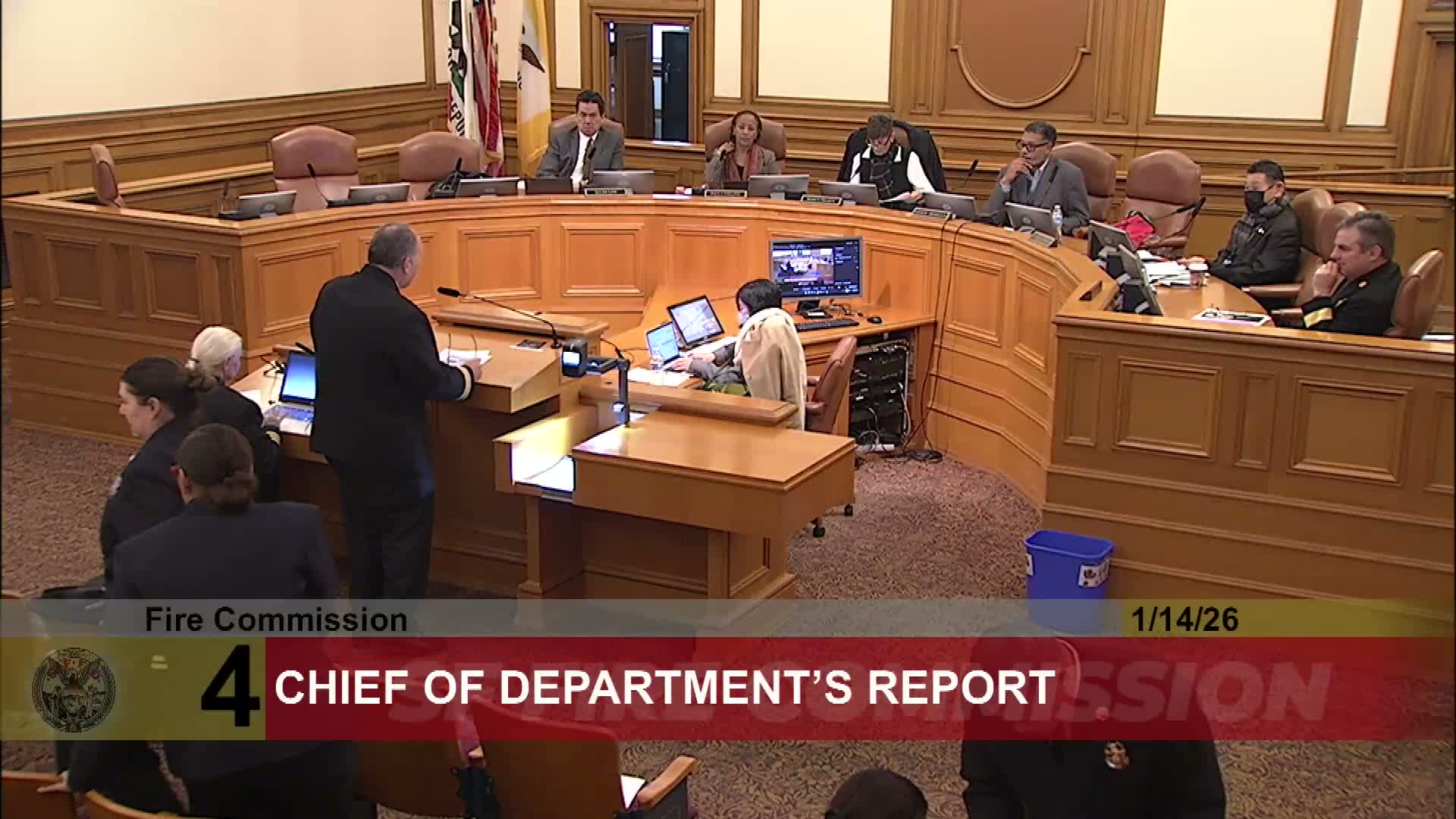
San Francisco Fire Department EMS leaders told the Fire Commission on Jan. 14 that ambulance patient‑off‑load delays (APODs) spiked in December, producing a marked operational strain that requires systemwide coordination.
"We went from 493 APOD delays in November to 916 in December," Tony Malloy said, noting that the increase corresponded with a more than 100% jump in medic‑to‑follow events. Malloy said the department has scheduled a citywide summit (tentatively in March) with hospitals and local EMS authorities to coordinate solutions and reduce handover times.
Malloy said most APOD delays last 30–60 minutes but more than 160 exceeded an hour; December's 90th‑percentile APOD time rose to 39 minutes. He said the department is arranging combined meetings with hospitals and local emergency medical services to align on throughput and capacity.
The EMS report also noted clinical metrics: Narcan administrations were down in December to 176 documented instances and overall cardiac arrest and resuscitation attempts were in line with annual averages. The department additionally reviewed a cable‑car MCI in December with 15 patients triaged and 12 transported to hospitals.
Community Paramedicine staff reported more than 1,600 responses in December (an average of roughly 52 per day); 17% of CP dispositions went to hospitals, 24% to alternate destinations and 58% remained in the community. Leaders described ongoing efforts to connect high utilizers to permanent supportive housing and alternate destinations to reduce ED transports.