
Schertz‑Cibolo‑Universal City ISD reviews bond options; board prioritizes safety, systems and stadium items
Get AI-powered insights, summaries, and transcripts
Subscribe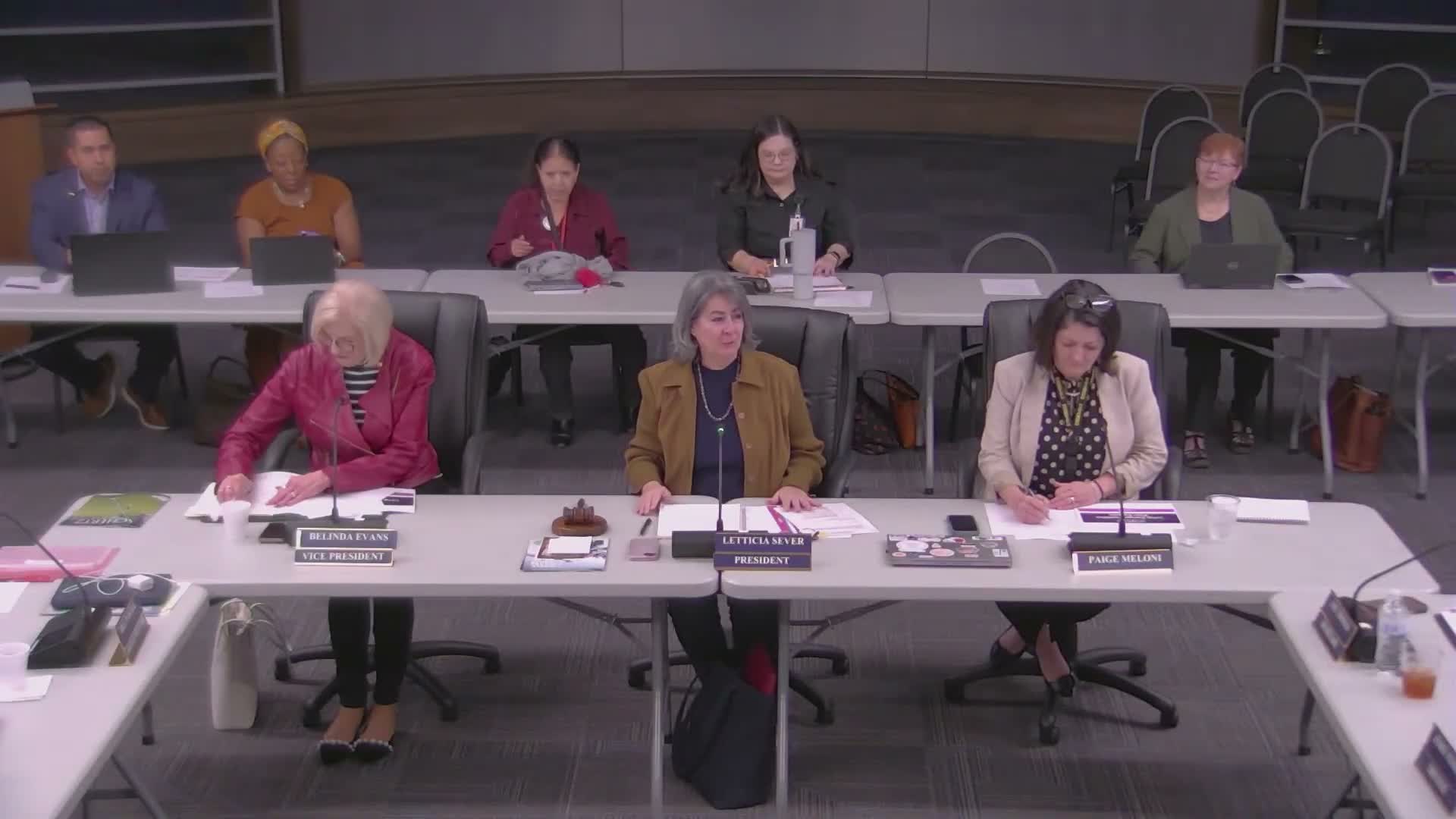
Summary
At a Jan. 8 workshop, district staff reviewed a community advisory committee package totaling about $255 million and outlined a district bond capacity of roughly $295 million. Board members pushed four priorities — a junior‑high refresh, PA and sound systems, and secure vestibules/parking — and set a timeline for voter education if the board calls an election.
Schertz‑Cibolo‑Universal City Independent School District trustees spent a Jan. 8 workshop reviewing the community advisory committee’s recommended bond package and weighing additional projects the board wants to prioritize if voters approve a May election.
District staff presented the Long‑Range Facilities Plan and polling results gathered from 300 likely voters, who expressed broadly positive impressions of the district and similar support for bond amounts between $220 million and $300 million once project details were explained. "We've got over $500,000,000 worth of needs," Mr. Mosley said, summarizing the districtwide backlog and why the committee and board must choose projects within available capacity.
Why it matters: the district’s consulting and finance staff told trustees the legal framework changed after 2019 and requires certain project types to be placed on separate propositions (for example, stadiums with seating greater than 1,000 and technology devices). That structure affects how bond dollars can be packaged and how any savings may be reallocated.
What the CAC recommended and what the board prioritized: the community advisory committee presented a recommended project list totaling about $255,000,000. The board identified four projects with strong support in its internal ranking: a refresh for Adobe Junior High (linked with concerns at Dobie), upgrades to the PA/announcement system (identified as a safety priority), replacement of gym/cafeteria sound systems, and a secure vestibule plus additional parking at Marion Dulford Learning Center to reduce perimeter access and improve supervision. "They presented a final project recommendation, to our board, and that project recommendation totaled at $255,000,000," Mosley said.
Finance and capacity: district finance staff said a combination of fixed and limited variable‑rate bonds is allowable under the district debt policy and that current market assumptions yield a bond capacity of about $295,000,000. "We feel comfortable at the $2.95 (million) capacity," Mister Moy explained, while noting that interest‑rate changes, state tax compression, or property‑value shifts can reduce capacity.
Other candidate projects discussed: trustees also reviewed smaller maintenance and security items staff recommended considering if contingency or bond savings materialize: building sealants, district‑wide rekeying (except recently upgraded sites), exterior wayfinding signage, fencing upgrades to replace chain link, bottle‑filling stations, turf replacements at multiple campuses (which staff said could be included under stadium propositions when eligible), parking reconfiguration at Clemens High School to move student parking outside the campus perimeter, and paving/resurfacing priorities at selected sites.
Scope and tradeoffs: board members asked staff about scaling options and whether some equipment and maintenance items might better fit an M&O funding stream or a future VADER (maintenance‑focused) election. Mosley said some scope reductions are possible on selected projects, but critical items identified by the CAC (CTE, fine arts, major renovations) should remain aligned with the CAC’s stated goals.
Timeline and next steps: staff laid out a schedule of follow‑up actions and education: bring a draft bond package to the January regular meeting, host campus open houses (tentatively Jan. 24), consider calling the election on Feb. 12, carry out voter education Feb. 13–May 1, begin early voting April 20 and hold the election May 2 if called. Staff emphasized legal limits on district staff advocacy once an election is called and advised trustees on permissible private advocacy.
Administrative notes: administrators requested items 7A and 9A be pulled from the consent/regular agenda; the chair then called for a motion to adjourn and a trustee moved to adjourn (second and vote not recorded in the transcript). The board will receive a revised draft bond package and order of projects for consideration at upcoming meetings.