Get Full Government Meeting Transcripts, Videos, & Alerts Forever!
Get email alerts on the Regulatory Reform And Local Impacts topic
No spam. Unsubscribe anytime.
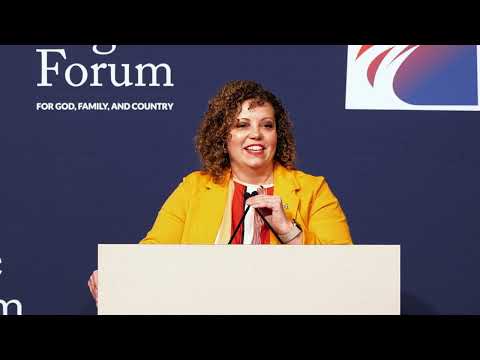
Congresswoman Celeste urges regulatory rollbacks, cites three newly signed laws at Utah Eagle Forum
Summary
At a Utah Eagle Forum meeting, Congresswoman Celeste advocated shrinking the regulatory state, highlighted three laws she helped pass (a mine‑reclamation liability change, transfer of federal parcels in state parks to Utah, and authorization to hold federal court in Moab and Monticello), and answered audience questions about IRS casework, public lands and outside political influence.
Congresswoman Celeste told attendees at a Utah Eagle Forum meeting that the incoming administration and a supportive Congress offer a narrow window to reduce what she described as an overgrown regulatory state. "We don't need all the government we're paying for," she said, framing her message around regulatory reform and oversight.
Celeste said she had three bills signed into law in her first year. She described one as a "Good Samaritan hard rock mine reclamation" law to provide limited liability for third parties who want to clean up long‑abandoned mines, saying the change removes a legal barrier that has hindered reclamation projects. She also said Congress passed a law transferring certain federal parcels inside Utah state parks to the state so Utah can manage them locally; she expressed frustration that agencies were beginning National Environmental Policy Act (NEPA) reviews on those transfers and said she plans to introduce legislation exempting mandated transfers from NEPA to avoid "2 to 5 years and millions of dollars" of delay. Finally, she noted a law now permits federal court proceedings to be held in Moab and Monticello to reduce travel burdens for residents in parts of Utah.
Why it matters: Celeste argued codified laws are harder to reverse than executive actions. She pointed to recent Supreme Court decisions affecting administrative deference and said the alignment of the courts, Congress and the executive branch presents an opportunity to make regulatory changes more durable.
In a question‑and‑answer session, Celeste urged constituents with agency problems — including IRS rebate or VA benefit issues — to contact her office's caseworkers for help. On public‑lands concerns from attendees, including references to Grand Staircase and Lake Powell management, she said she expects many outgoing administrative actions to be undone quickly by the incoming administration, and that legal remedies such as a writ of mandate could be considered if agencies refuse to follow congressional direction.
The forum included several pointed audience statements. One attendee alleged long‑running "chemtrails" were poisoning the area; Celeste did not endorse the claim and offered to follow up with a Tennessee contact mentioned by the attendee. When asked about an allegation that members of Congress have an "APAC handler," Celeste replied, "I do not have an APAC handler. I do work with APAC, and I do support Israel, but nobody tells me how to vote. I answer to the people in the 2nd District." Her remarks closed with a call to codify policy through legislation and to use appropriations and committee work to achieve longer lasting changes.
Celeste repeatedly framed the next two years as an urgent window for action and said regulatory and appropriations work would be key to achieving her priorities. She offered to take questions until she ran out of time and ended the session after fielding multiple audience concerns.