Get Full Government Meeting Transcripts, Videos, & Alerts Forever!
Get email alerts on the Elections topic
No spam. Unsubscribe anytime.
Utah Republican Party chair says privacy rules impede outreach, pledges to run again
Summary
At an Eagle Forum meeting, Tom, chair of the Utah Republican Party, warned that privacy provisions and SB 54 restrict party access to voter data, complicating caucus outreach and signature verification; he described legislative efforts (HB270, HB300), reported party fundraising gains, and said he will seek another two-year term.
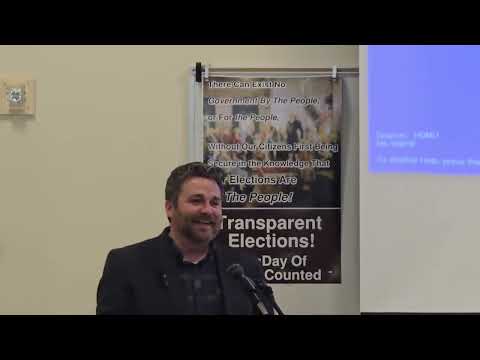
Tom, chair of the Utah Republican Party, told an Eagle Forum audience that state privacy rules and current election law have left a sizable portion of voter registration records inaccessible to parties, hindering outreach and verification efforts.
"About 30–40% of our voter registration lists are private," Tom said, calling that an "unintended consequence" of privacy protections enacted roughly a decade ago. He said the redaction of names and details makes it hard for parties to invite members to caucus nights, recruit candidates and verify signatures on petitions.
Tom described multiple legislative efforts this year to address those issues. He said HB270 aimed to roll back some redactions so parties and candidates could verify signatures and access relevant registration details; the bill advanced in February but ultimately fell short and was killed. Tom also said HB300 in its original form took a significant step forward but was watered down in committee.
Tom said he pushed sponsors of a signature-verification bill by "Senator Wing Harper" and Rep. Paul Cutler to allow political parties — not just candidates or their designees — to view unredacted signature-petition packets. "As soon as I saw that the party was left out, I went and engaged with the sponsors," he said; he described that change as progress if the measure becomes law.
On the impact of SB 54, Tom said the statute effectively creates a mandatory alternate path to the ballot (the signature path) and obliges parties to recognize primary results produced under state-administered procedures. He said that limits the party’s ability to make its convention process the sole mechanism for nominating candidates without changing state law.
Tom also gave figures about party operations: he said the party raised about $2.2 million in the past two years, increased its email list from roughly 14,000 to about 140,000 addresses, and now employs three paid staff. Responding to questions about personal cost, he said serving as chair was unpaid and that he and his wife covered substantial out-of-pocket expenses — he said their costs exceeded $100,000 over the last two years.
He defended the accuracy of Utah elections while urging more transparency: "If you don't have transparency ... the facts are the facts, and they are transparent for anybody to look at and verify," he said. He called for daylight around verification practices — including signature and postmark procedures — and said he is working with outside experts and the Trump administration to brief the legislature on needed adjustments to voter registration rolls.
Tom announced he will run for another two-year term as party chair and asked delegates for support, saying he does not intend to run for a third term. He closed by urging Eagle Forum members and volunteers to engage more people in the political process.
The meeting concluded with brief announcements about recordings and where the event will be posted online.