Get Full Government Meeting Transcripts, Videos, & Alerts Forever!
Get email alerts on the Food Safety Agriculture topic
No spam. Unsubscribe anytime.
Michigan committee hears testimony on bills to allow direct sale of raw milk
Summary
The House Committee on Government Operations heard testimony on bills (referred to in the transcript as house bills 52 17–52 19) that would permit dairy farmers to sell unpasteurized milk directly to consumers. Proponents cited consumer choice and small‑farm relief; members raised food‑safety, inspection and labeling concerns.
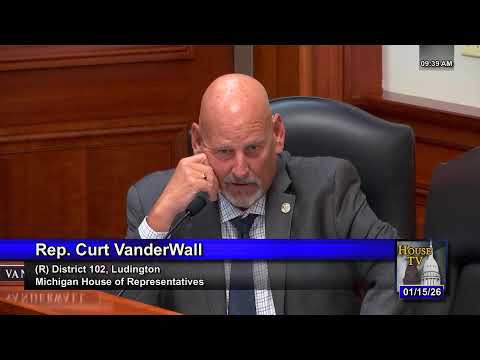
LANSING — The House Committee on Government Operations on [date not specified in transcript] heard testimony on legislation described in the transcript as "house bills 52 17 through 52 19" that would allow dairy farmers to sell raw, unpasteurized milk directly to customers.
Proponents, including producer-advocates and witnesses who identified themselves as small‑farm operators, told the committee that direct sales would expand consumer choice and help small family farms compete. "Raw milk contains the compounds that we need to digest lactose," testified Ashley Armstrong of Armstrong Farms, adding that raw milk also carries "bioactive heat‑sensitive compounds" such as lactoferrin she said support gut and immune health.
Rep. [name given in transcript as] Maddox opened the hearing and framed the bills as a consumer‑choice and small‑farmer issue. Witnesses described existing herd‑share arrangements used in Michigan and said the bills would create a simpler direct‑sale path that could allow farmers to sell milk, cream, butter and cheese without the current barriers to retail licensing and inspection for value‑added products.
Committee members pressed witnesses on safety and oversight. Representative Fitzgerald cited Centers for Disease Control and Prevention (CDC) data, saying that "from 1998 through 2018, there were 202 outbreaks linked to drinking raw milk, and that those actually caused 2,600 illnesses and over 200 hospitalizations." Witnesses who spoke for producers responded that properly managed small farms can maintain sanitary conditions and that voluntary protocols such as those of the Raw Milk Institute are used by some producers to monitor coliform counts and standard plate counts.
Rick Hitchcock of Onocomstead, who said his farm participates in the Raw Milk Institute, described on‑farm controls: "Milk must be cooled rapidly, ideally in a cooling tank that maintains a temperature below 40 degrees," he said, adding that farms send routine testing results to the institute and follow cleaning, cooling and testing practices to keep bacterial counts low.
Proponents and several witnesses told the committee the existing herd‑share policy adopted in 2013 provides a pathway for some consumers to obtain raw milk, but they said it is restrictive for both consumers and producers. A witness who identified herself as "Chelsea" said herd shares do not allow certain value‑added products and described the cost and scheduling burdens of USDA inspection and retail licensing on small producers.
The committee also discussed labeling and consumer disclosure. Witnesses said producers typically provide contracts or five‑page notices for herd‑share members and that direct‑sale proposals could include clear labeling advising consumers of CDC guidance and potential risks. On shelf life, a producer said farms jar milk with the production date and use a two‑week rule‑of‑thumb for refrigerated storage.
Several industry and government organizations were recorded as "not wanting to speak in opposition" on committee cards read into the record, including the Michigan Farm Bureau, Dairy Farmers of America, the Michigan Department of Agriculture and Rural Development (MDARD), the Michigan Dairy Foods Association and Michigan Milk Producers Association. The clerk also noted more than 100 individual supporters had submitted cards in favor.
The hearing produced no recorded vote on the bills. Chair Bergoglund closed the session after testimony and committee questioning; the transcript does not record a committee decision or next step.
What’s next: The transcript does not specify a timeline for committee action. If the bills are scheduled for markup or a vote, the committee would typically announce that at a later meeting.