
North Kingstown budget committee previews FY27 school budget with large staffing ask and revenue uncertainties
Get AI-powered insights, summaries, and transcripts
Subscribe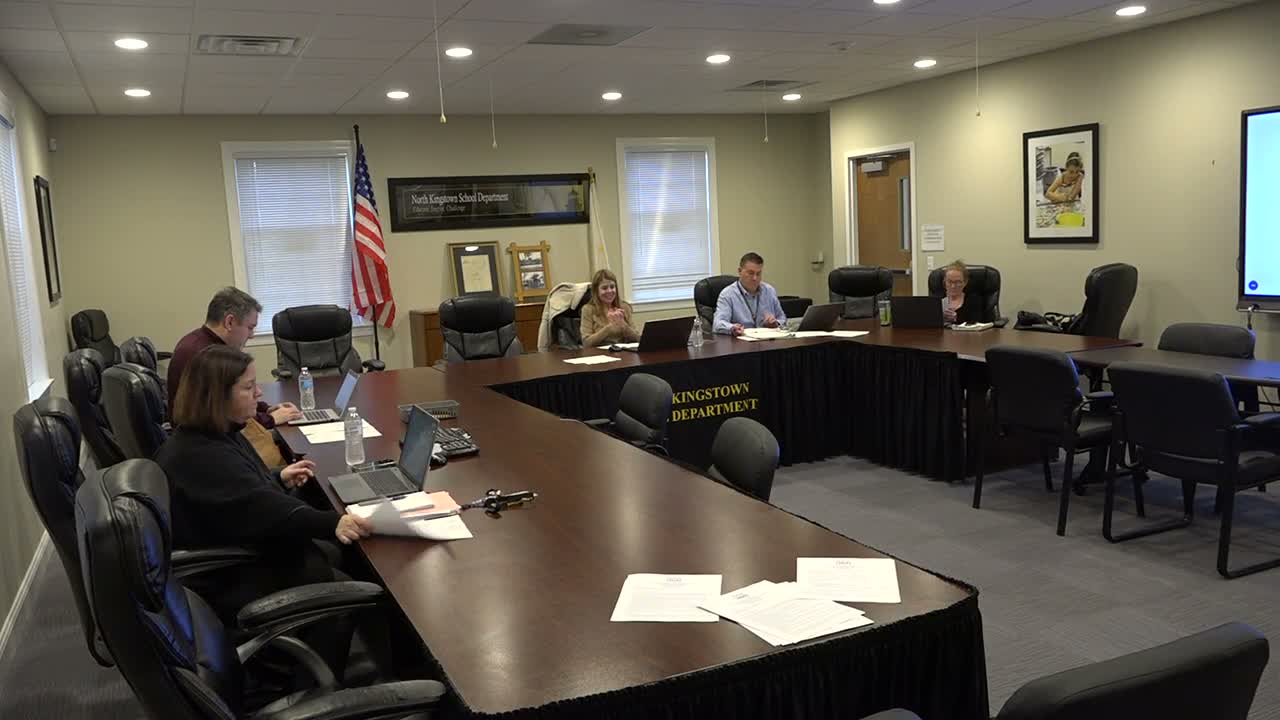
Summary
The advisory committee reviewed FY27 budget drivers on Jan. 12, emphasizing a proposed package of about 30 staffing requests, a recommended 10% health-care increase, uncertain state aid and tuition revenues, rising student-services costs and possible migration of federally funded curriculum into the operating budget. The committee approved minutes and asked staff to supply detailed narratives and energy-supplier options to the school committee.
North Kingstown’s Budget and Finance Advisory Committee met Jan. 12, 2026, at the Central Administration Conference Room to review draft budget drivers and the superintendent’s FY27 planning guidance. Leslie Powell, the district’s director of finance, opened the presentation and cautioned that “any talk of revenue is still very high level because we do not have our state aid numbers” as well as final tuition and transportation passthrough figures.
Powell laid out the revenue-side uncertainties that will affect the FY27 draft. The district is projecting a modest change in tuition-generating students from other local education agencies (an approximate five‑student net change year over year), but several key revenue inputs remain incomplete: state aid totals, Career & Technical Education (CTE) tuition projections, transportation reimbursement estimates and final health‑insurance figures. Powell said she had used conservative assumptions to avoid overestimating revenues.
On preschool revenue, Powell said a programmatic change in FY26 moved a peer‑model configuration to a full‑day, self‑contained program that eliminated roughly 24 tuition seats and reduced projected preschool tuition revenue by about $40,000 compared with the prior year. The district is evaluating options including adding classrooms or increasing tuition for fee‑paying seats, but Powell said she would not assume those revenues until program decisions and enrollment are final.
Powell recommended budgeting $450,000 for investment earnings in FY27, down from $475,000 in the prior budget, reflecting caution about possible falling interest rates while also noting cash‑on‑hand and monthly cash‑flow patterns affect realized earnings. She also said Medicaid billings now include additional billable services and recommended a conservative 3% increase in Medicaid revenue assumptions.
Personnel and benefits were central to the discussion. Powell said contract negotiations could change teacher salary estimates and noted ESP (education support professionals) have a 2% increase already factored into personnel costs. She proposed a 10% increase for health‑care costs in the FY27 budget to avoid last‑minute shortfalls, citing prior actual increases near 11% and the potential for employees to shift from individual to family plans.
The administration flagged a large staffing request — about 30 positions across administrative, instructional and student‑support roles. Powell said directors were asked to provide narratives and supporting data and that the administration will standardize those narratives so the school committee can evaluate tradeoffs. Committee members asked for capability‑focused descriptions and alternatives (part‑time roles, consultants, temporary audit support) and requested a combined staffing list showing grant‑funded versus operating positions and FTEs.
Student‑services costs are rising. Powell said out‑of‑district placement costs and DCYF placements increased, noting a $22,000 rise in per‑student DCYF costs since the budget was set for FY26; she projected about a $400,000 increase in student‑services spending for FY27 if current trends continue. The Running Start dual‑enrollment program with CCRI was also discussed: last year the district paid roughly half the tuition for 34 students (about $200,000), and Powell said CCRI agreed not to raise tuition for the coming year; the district may use caps or wait lists if enrollment exceeds budgeted capacity.
Powell reviewed technology and curriculum priorities. She recommended restoring recurring technology items — student Chromebooks, teacher laptops and cybersecurity — into the operating budget rather than relying on fund balance year after year. On curriculum, Powell said replacements (for example, new middle‑school social‑studies materials) and platform changes would increase costs and asked the committee to decide whether to buy full adoptions now or phase costs over multiple years.
Committee members raised the broader point that several programs currently funded by federal Title grants (Title I, II, III), including GEMSnet, have been funded long enough to warrant discussion about migrating them into the operating budget if they are now structural and align with the strategic plan. Powell said she placed the migration question on the agenda to spark that discussion but did not intend to add grant items to the operating budget without broader committee direction.
On capital and fleet, Powell previewed a separate capital request that will go to the town council (materials referenced an amount shown as “$7.67” in slides; Powell clarified that figure is not part of the operating budget). She also noted multiple schools requested desks, chairs and fixtures and that the furniture-and‑fixtures budget will be significantly higher than last year to begin cycle replacements.
Administrative next steps and committee directions: members asked for standardized, advance documentation. Powell agreed to supply (1) position narratives with fiscal impact, (2) a combined list of employees showing fund source and FTE, (3) energy supplier rates and options and (4) to place budget documents in a shared folder for committee review ahead of the school‑committee presentation. The committee passed a motion requesting the administration bring information about the district’s electricity and gas suppliers, current costs and FY27 options to the school committee.
Votes at a glance: The committee approved the minutes from the Dec. 1, 2025 meeting by voice vote; it unanimously approved the motion directing administration to report on electricity and gas supplier options; it also approved scheduling logistics related to upcoming budget workshops. The meeting adjourned after procedural scheduling motions.
What’s next: Powell will deliver standardized narratives and the requested supplier and staffing documentation before the school‑committee presentation next week; the school committee will consider the superintendent’s recommended budget and the advisory committee’s guidance at its upcoming workshops and votes.