Get AI Briefings, Transcripts & Alerts on Local & National Government Meetings — Forever.
Regional building official outlines electric‑ and solar‑ready rules as Woodland Park moves to adopt state 2021 energy code
Summary
Pikes Peak regional staff told the Woodland Park Board of Review they will adopt the unamended 2021 International Energy Conservation Code with model electric‑ready, solar‑ready and EV‑ready provisions effective June 30 to avoid a more restrictive low‑carbon code; staff described compliance pathways and options for builders.
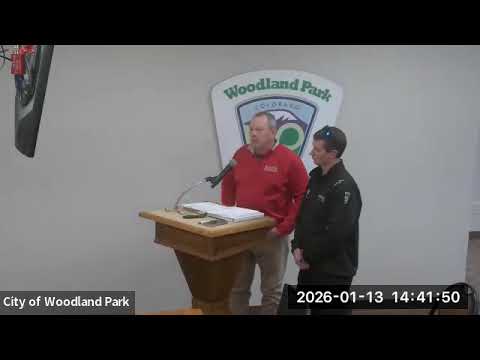
John Welton, deputy building official for the Pikes Peak Regional Building Department, briefed the Woodland Park Board of Review on the region’s plan to adopt the state minimum energy code (the unamended 2021 International Energy Conservation Code) and to implement the model electric‑ready and solar‑ready provisions on June 30 to avoid an automatic move to a more restrictive model low energy and carbon code.
Welton said the adopted approach preserves as many compliance pathways for builders and homeowners as possible: jurisdictions will implement the 2021 IECC as the state minimum while allowing builders to pursue alternative material and method (AMM) requests to use the 2024 energy code where advantageous. He emphasized that adoption of the state code will require regional staff to be familiar with both 2021 and 2024 compliance pathways because some builders may choose the newer standard administratively.
What the new rules require: Welton summarized three mandatory elements that will affect new construction and some permits. Electric‑ready provisions require plans to show provisions for future electric appliances where fuel appliances are installed (builders must document proposed future electrical loads; the code does not mandate minimum feeder sizes for most residential circuits). Solar‑ready provisions require plans to identify solar‑ready roof zones (areas over 70 square feet oriented in specified compass directions) with no roof penetrations in those zones and pathways for wiring from the panel to the roof. EV‑ready rules require each single‑family home and attached single‑family unit to include one identified EV‑ready space with a minimum 40‑amp, 240‑volt feeder and breaker terminated within 3 feet of the spot; commercial requirements vary by building size and occupancy.
Industry and board concerns: Board members and local builders raised concerns about distribution capacity, practical impacts for small neighborhoods, and whether mandated wiring might be rendered obsolete by rapidly changing technologies. Welton described technical mitigation options such as load‑management devices, smart breakers and programmable panels, and said utilities and elected officials are the appropriate forums for larger capacity and infrastructure questions.
Why the region is taking this path: Welton explained the region’s adoption of the 2021 state minimum (effective midnight June 30) is intended to avoid a more restrictive, amended state standard the department views as less flexible. He said builders can still use 2024 compliance pathways through approved administrative requests when appropriate.
Next steps: Welton said the regional office will notify building stakeholders, and that plan‑review and administrative processes will be updated to reflect the change. Board members offered the board’s meeting space for potential training sessions; no formal local ordinance vote was recorded in this meeting since the action is an administrative adoption of the state minimum code.