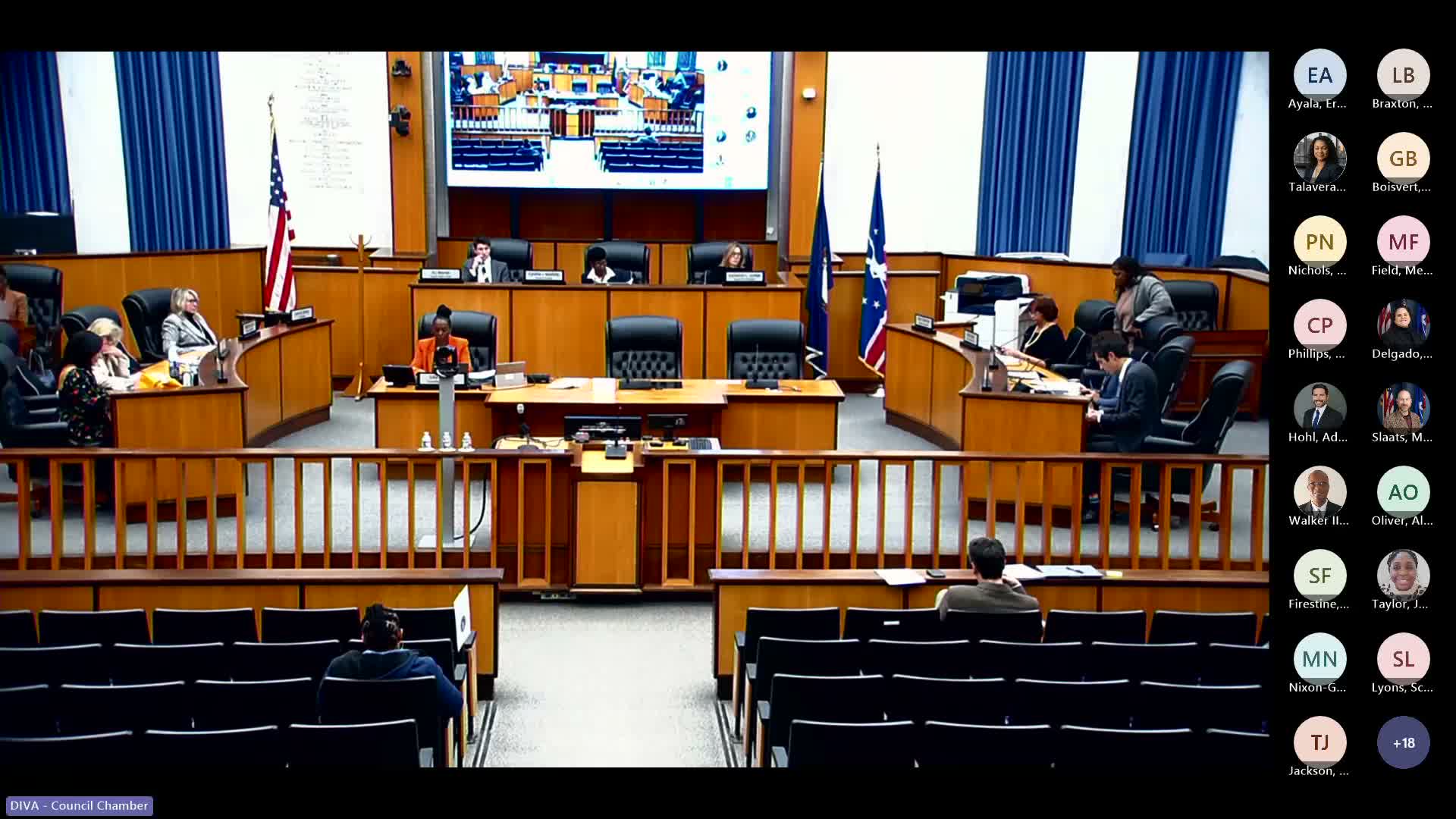
Richmond council reviews janitorial and security contract analysis, asks for wage and contract details ahead of budget

Richmond City (Independent City) City Council (informal meeting) · January 12, 2026

Loading...

AI-Generated Content: All content on this page was generated by AI to highlight key points from the meeting. For complete details and context, we recommend watching the full video. so we can fix them.

Summary

City administration presented analysis comparing updating contracts versus bringing janitorial and security services in‑house, estimating roughly $1.1 million in annual janitorial cost increases under a $20/hour wage standard and substantial one‑time and ongoing HR, training and equipment costs if services were internalized. Council requested contracts, current pay data and a deeper committee review before budget decisions.

The Richmond City Council received an analysis on whether to update existing janitorial and security contracts or transfer those services in‑house, and asked the administration for detailed contract and wage data to inform the mayor's budget.

Administration presenter Mr. Donald told the council the most feasible option is to update existing contracts because contracting provides a fixed, predictable cost. He said raising contracted janitorial workers’ wages to a $20 an hour living‑wage standard would increase annual janitorial costs from roughly $3.8 million to about $4.9 million — an increase of about $1.1 million — and that bringing services in‑house would add further startup and recurring costs. He listed possible one‑time or initial in‑house expenses — vehicles (a van and three SUVs estimated at a little more than $150,000), initial supplies (a little more than $400,000), and uniforms (about $35,000) — and said supervision, HR capacity, benefits and collective‑bargaining coverage for roughly 227–230 new positions would further raise costs.

"When you raise the wages, some of those benefits and the eligibility goes away," Mr. Donald said, urging the council to consider ancillary impacts such as changes to Social Security, Medicaid and other assistance that affect workers' net income. He also cautioned that armed security increases liability and insurance costs because of required training and certifications.

Council members pressed for more detailed evidence. Councilwoman Gibson asked for the actual current salaries of contracted workers and copies of the contracts so the council can compare present take‑home pay to the proposed $20 hourly benchmark. "If we've set the bar at $20 an hour as that living wage, I think it's important for us to know these contracted employees that are making below that — what are they making?" Gibson said.

Other council members framed the question as both fiscal and moral. Council member Robertson and others argued that prolonged reliance on contracted labor can perpetuate poverty and called for a deeper review of contracting practice and its effects on low‑paid workers. Robertson asked for clearer assumptions behind benefit‑cost estimates; Gibson flagged a benefit rate of 66 percent used in the analysis for custodial employees and said that figure appears high compared with parallel entities.

Councilman McConnell urged caution about the broader tax and retiree impacts of any shift in the budget, saying homeowners and retirees already face rising costs.

Administration representatives said they could provide contract documents, current pay rates, and comparative analyses with county and state rates but asked the council to clarify what decision it wants staff to enable so the analysis can be targeted. The council president directed the chief of staff to gather members' questions and requested materials for use in upcoming budget deliberations.

No formal vote or motion to change the contracts was taken at the informal session. The administration described its working recommendation as a "status quo plus" approach — maintaining the current contracting model while pursuing targeted contract updates and additional analysis — and council members asked that the matter be developed further, potentially in committee, before any budgetary commitments.

The informal meeting then adjourned.