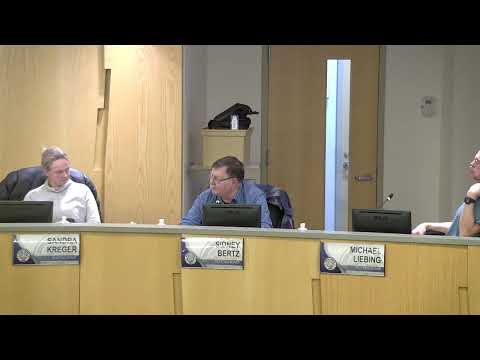
Planning board delays decision on ordinance to allow 30,000‑square‑foot single‑family lots; schedules special meeting

Matanuska-Susitna Borough Planning Commission · January 16, 2026

Loading...

AI-Generated Content: All content on this page was generated by AI to highlight key points from the meeting. For complete details and context, we recommend watching the full video. so we can fix them.

Summary

The planning board debated a proposed ordinance to allow lots as small as 30,000 square feet in single‑family residential zones, heard extensive technical and public testimony on septic, wells, density and enforcement, and voted to postpone action until a special meeting on Feb. 4 at 1 p.m.

The Matanuska-Susitna Borough planning board spent the bulk of the meeting discussing Resolution 26‑01, an advisory measure about an ordinance that would amend Chapter 43.2 subdivision standards to allow lots as small as 30,000 square feet in single‑family residential districts.

Alex Strahan, planning director, told the board the ordinance had been controversial and was referred to the planning commission by the assembly. Strahan summarized key provisions: a reduced lot must show 10,000 contiguous square feet of usable septic area on the plat unless served by municipal or community wastewater; certification by a professional engineer licensed by the State of Alaska must be submitted to the planning and land use department confirming compliance with ADEC on‑site wastewater installation manual and DEC requirements; and the ordinance allows a developer to identify septic reserve areas to avoid future septic conflicts.

Assembly member Maxwell Sumner, who introduced the ordinance, said he proposed the change after conversations with a realtor and a developer who said 40,000‑square‑foot minimums often made single‑family housing economically infeasible in core areas. "If we can preserve single‑family housing and make it more affordable, while protecting surrounding property owners," Sumner said, "that's the intent."

Opponents and technical speakers urged caution. Joel Stefanski, a licensed contractor, said shrinking lots "sets people up for failure" because the borough lacks tools to monitor septic systems, warned of stump‑dumping and leach‑field replacement problems and argued smaller lots will not reduce housing prices in practice. Kurt Holler, an engineer, and others questioned the 15‑minute‑per‑inch percolation threshold in the draft language, raised enforcement questions (including $500–$1,000 per‑day fine language), and suggested frontage, shape and well/septic separation clarifications.

Developers urged additional tools rather than prohibition. Kevin Sorensen described past 30,000‑square‑foot developments that functioned well when wells and septic systems were planned as part of the development, and urged options such as installing wells at the time of development so buyers know the site conditions in advance.

Board members discussed whether reductions could stack with existing open‑space incentives (a 25% reduction for open space), how the change would interact with Title 43 requirements, and whether the board should draft a substantive resolution opposing the ordinance or delay to allow more detailed work. Planning director Strahan advised the commission that its position should be forwarded to the assembly in a formal resolution explaining support or opposition and the reasons.

A motion to adopt a resolution recommending the ordinance was made, and a later amendment moved by a planning board member proposed postponement to allow a detailed special meeting. The board approved the amendment: action on Resolution 26‑01 was postponed and a special meeting was scheduled for February 4 at 1:00 p.m. for further discussion. Staff will prepare materials and the commissioners indicated they may develop a more detailed resolution to convey their recommendations and concerns to the assembly.

The discussion highlighted recurring concerns about groundwater quantity and quality, engineering certification, enforcement capacity, and whether the draft ordinance needs clearer definitions about septic protections, stacking of reductions, and frontage or shape minimums. The commission set the Feb. 4 meeting to allow time for staff research, public input and potential drafting of amendments to the resolution that will accompany their advisory recommendation to the assembly.