Lifetime Citizen Portal Access — AI Briefings, Alerts & Unlimited Follows
Alaska rushes to apply for $50B federal rural health transformation fund; officials flag tight timeline and spending limits
Loading...
Summary
Commissioner Hedberg told legislators the federal Rural Health Transformation program provides $50 billion (split evenly between guaranteed and competitive pools). Alaska has six weeks to submit an application and proposed about $200 million per year as a planning baseline; officials warned of strict caps on administrative and capital spending and clawback risk if milestones are missed.
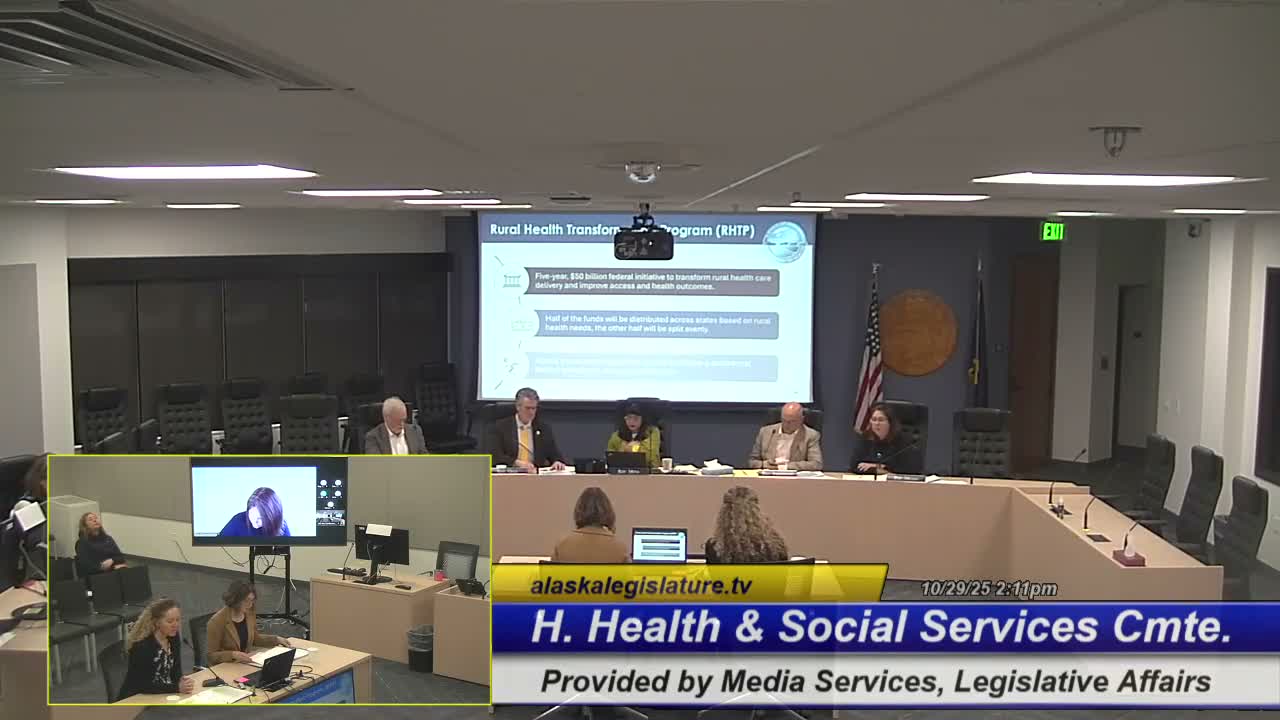
Anchorage — Department of Health officials described Alaska’s application strategy on Oct. 29 for the new federal Rural Health Transformation (RHT) program, saying the state is racing a compressed timeline to assemble an application that balances innovation, sustainability and strict federal spending rules.
Commissioner Heidi Hedberg said the RHT program provides $50 billion in one‑time federal funds: about $25 billion guaranteed (evenly allocated across states that submit a complete application) and $25 billion awarded competitively based on rural and technical scoring factors. Hedberg said Alaska is well positioned because of its rural makeup and limited local access to care.
The department issued a request for information in July and received roughly 160 respondents proposing more than 400 project ideas; that input helped the department develop six state initiatives aligned with CMS goals (improving rural access, sustainability, workforce, innovative care, technology and prevention). Hedberg said the department posted initiative summaries on its website and intends to issue RFPs for subgrantees if an award is granted.
Hedberg outlined several important constraints from CMS: the award is a five‑year cooperative agreement with accelerated spend‑down expectations for year one, a 10% cap on administrative costs, a 20% cap on capital projects (renovation allowed within limits but new construction is disallowed), and explicit prohibitions on supplanting existing Medicaid match or reimbursable clinical services. States must submit budgets (DOH said a planning baseline of about $200 million per year was used for the application) and the department said it will submit its application the following week.
Committee members expressed concern about speed and sustainability. Representative Gray warned that pouring large sums quickly could entrench inefficient systems and produce inflationary effects; Hedberg and Deputy Commissioner Emily Ricci said the department’s priority is creating sustainable models—pay‑for‑value initiatives and regional systems—that providers can maintain after federal funding ends.
Hedberg emphasized reporting and compliance: subgrantees and contractors will be held to the same standards as the department, and DOH plans to contract for reporting and compliance oversight to reduce the risk of federal clawbacks. Hedberg cautioned that CMS could reallocate funds after March 31, 2028 if states do not meet milestones.
The committee did not vote. Hedberg thanked stakeholders and said the department will continue community planning and post updates on the DOH website.