Get Full Government Meeting Transcripts, Videos, & Alerts Forever!
Get email alerts on the Green Jobs Center topic
No spam. Unsubscribe anytime.
Fordham and partners outline Bronx Green Jobs Center plans to train workers and grow green businesses
Summary
Fordham convened local banks, SBDCs, CDFIs and workforce groups at BronxNet to shape the Bronx Green Jobs Center, a proposed 2026 hub for green workforce training and entrepreneurship. Panelists emphasized partnership, youth-focused outreach, capital access and trust-building to connect residents to solar, EV charger, urban agriculture and retrofit opportunities.
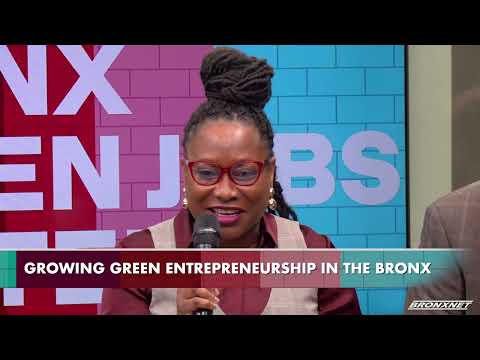
Fordham University hosted a roundtable at BronxNet in the South Bronx to map programming for the Bronx Green Jobs Center, a community-facing hub organizers expect to open in 2026 to support green workforce development and green-focused small businesses. Travis Prew, Fordham’s vice president of external affairs, said the center will combine classroom training, year-round gardens and business services to connect residents to the clean-energy economy.
"It is going to be the most significant green workforce development and entrepreneurship hub in The Bronx once it launches in 2026," Prew said, describing plans for event space, five learning classrooms, a greenhouse and five curriculum tracks including solar, EV charger installation and urban agriculture. Fordham has engaged hundreds of partners during design, he added, and panelists said the center should complement existing neighborhood services rather than replace them.
Panelists from Santander US, the New York State Small Business Development Center (SBDC), the Business Council of New York State, New York City Small Business Services (SBS), the Bronx Economic Development Corporation and local lenders described how Brooklyn- and Downstate-area organizations currently coordinate referrals, access to capital and technical assistance. Sonya Smith, state director of the NYS SBDC network, said the SBDC model provides ongoing advising, education and market research that entrepreneurs can return to as their businesses evolve.
"Our three pillars are advisement, education and research," Smith said, noting that SBDC centers can produce market analysis, competitor lists and cost studies that many early-stage entrepreneurs lack.
Panelists emphasized two recurring needs: awareness of existing services and simpler, more equitable access to capital. Vanessa Joseph, regional director of the Lehman College SBDC, pointed to Bronx SBDC social media efforts (a "Tuesday Tips" series) and in-person career-fair outreach as ways to meet younger residents where they are. Rafael Rogers, president of Business Initiative Corporation, described informal peer events such as a "Bankers Breakfast" where entrepreneurs can pose questions to lenders and providers in a nonjudgmental setting.
"Putting everybody in a room is magic," Rogers said, explaining that cross-sector conversations often surface practical solutions for business-buildout and financing.
The panel also addressed how the center should reach younger cohorts and communities distrustful of institutions. Speakers proposed K–12 career pathways, apprenticeships and partnerships with community organizations to build trust gradually through repeated in-person engagement. Al Bartosik of the Fordham Foundry and others said lowering bureaucratic barriers and expanding hands-on trades training (construction, electrical, welding) will make green career paths more accessible.
Panelists cited partnerships that could be expanded to support green entrepreneurship, including NYSERDA, the New York Power Authority and local workforce programs. Winston Peters Jr., interim president of the Bronx Economic Development Corporation, described cohort programs and partnerships with Santander and local tech hubs to train and place students in green-economy roles.
On funding, Leah Daley of Santander noted an early boost of funding tied to federal initiatives, and several speakers urged stable support for community lenders (CDFIs) and for SBA/CDFI-related programs that help entrepreneurs access low-cost capital. Panelists suggested creating a centralized resource hub — both digital and physical — so entrepreneurs can navigate grants, loans, training and compliance resources from a single portal.
Audience members asked about long-term retention and legal/permitting barriers. Gregory Hernandez, a Bronx filmmaker and entrepreneur, asked what metrics the center should use to measure graduate success and how many Gen Z Latinos the program should aim to serve. Panelists recommended combining outputs (number served) with outcomes (income/wealth building, business survival, employment retention) and allowing the community to help define success metrics.
An attendee working on circular-material microfactories raised permitting concerns. Sherry Lane of NYC SBS pointed to the city’s Business Express Service Team as a first-stop for regulatory consultations and said the center could include compliance support and legal advising for novel green-business models.
Prew closed by thanking partners and saying the project team expects a clearer launch plan by spring as the center’s programming is refined with community input. "We’re going to continue the conversation," he said, urging local groups to help shape evaluation goals and the center’s services.
The Bronx Green Jobs Center remains in development; panelists agreed that next steps should focus on consolidating existing services, securing stable capital partners and scaling youth-facing outreach so that residents gain practical access to green jobs and entrepreneurship pathways.