Get Full Government Meeting Transcripts, Videos, & Alerts Forever!
Get email alerts on the Traffic Safety topic
No spam. Unsubscribe anytime.
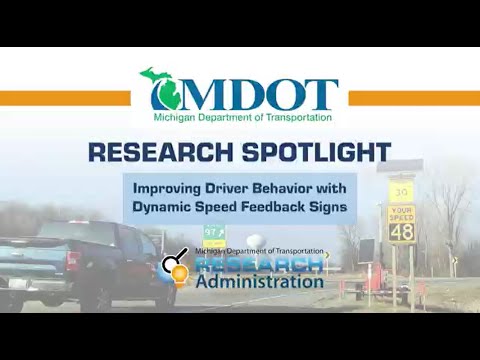
MDOT research: dynamic speed feedback signs reduce speeds by about 4 mph, to be tested in school zones
Summary
Michigan Department of Transportation research finds dynamic speed feedback signs can slow drivers about 4 mph; MDOT has developed placement and design specifications and plans a third research phase in late 2025 focused on school zones and high‑pedestrian areas.
The Michigan Department of Transportation has conducted a series of research studies on dynamic speed feedback signs and found they can slow drivers and reduce crashes, a speaker identified in the transcript as Speaker 1 said. "Dynamic speed feedback signs, which use radar to measure vehicle speeds in real time and issue targeted warning messages to drivers, are a proven strategy for slowing traffic and reducing crashes," Speaker 1 said.
The research examined how to design and install the signs so they are more visible and effective in different settings, Speaker 1 said. MDOT evaluated signs near freeway ramps in the first phase and tested them near mainline roads and roundabouts in the second phase. A third phase, Speaker 1 said, is scheduled to begin in late 2025 and will evaluate the signs in school zones and other areas with heavy pedestrian traffic.
Speaker 2, during the discussion, pressed on specific design details MDOT is studying. "What do we looking for is what type of fonts they need on the dynamic sign, you know, the size of the letter or the size of the number for the speed limit," Speaker 2 said, and asked what types of LED borders MDOT is considering.
Speaker 1 said the research produced specifications intended to give MDOT engineers consistent guidance for installing and maintaining the signs effectively and consistently across the state. Speaker 2 emphasized the importance of site selection, saying, "That's very important because you put it in the wrong location, they are worthless. They don't mean anything." She described trial placements on ramps—left, right, at the beginning and in curves—to find the best location.
Cost and targeting factored into MDOT's approach. Speaker 1 said each sign is relatively expensive and therefore the agency can "only use them in the most high risk areas," but added that when placed correctly the signs "influence driver behavior and get them to slow down by an average of 4 miles per hour." Speaker 2 reiterated the value: "We're happy to see that they are very useful when needed."
Speaker 1 concluded by directing listeners to MDOT's website for more information on the research and the developed specifications. The transcript does not include dollar figures for procurement or a rollout schedule beyond the planned late‑2025 phase for school zones.