Get Full Government Meeting Transcripts, Videos, & Alerts Forever!
Get email alerts on the Fleet Procurement topic
No spam. Unsubscribe anytime.
Navasota staff recommend buying fleet vehicles this year, citing cost and control
Summary
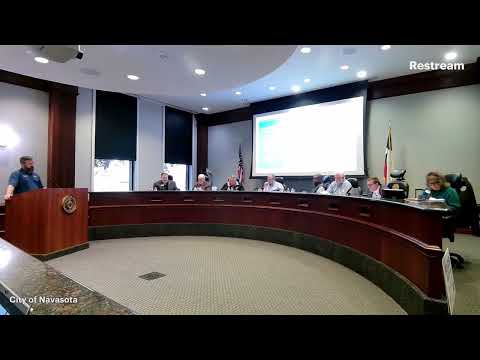
City staff told the Navasota City Council in a workshop that buying replacement vehicles outright this year — rather than adding to the Enterprise lease program — would be more economical and give the city greater control over titles, insurance outcomes and fleet disposal.
City staff recommended the Navasota City Council purchase replacement vehicles outright this year instead of adding new units to the city’s Enterprise lease program, saying ownership would be "more economically advantageous to the city to buy the vehicles outright."
The recommendation, presented during a workshop on fleet replacement, comes as staff outlined specific vehicles slated for replacement, estimates of proceeds from selling older units and the expected purchase costs for new police, fire and public-works vehicles. Staff emphasized existing enterprise leases would remain in place and the proposed change would apply only to new purchases this year.
Director of Maintenance Services Jay Chapelle walked council members through a list of city-owned and Enterprise-leased vehicles, saying three Enterprise vehicles from 2017 are now about nine years old and likely past their lease terms. Chapelle cited value estimates based on Kelley Blue Book and Enterprise-provided figures and described a conservative auction estimate of about $104,000 for the vehicles currently identified for disposition.
On replacement pricing, staff provided dealership quotes and cooperative-contract pricing. Chapelle said two Tahoe replacements were quoted at $56,387.50 each, a subtotal the packet lists as $112,007.75 for those two vehicles; combined with a single Silverado or similar fire vehicle, staff said the base prices for the three front-line units total roughly $155,000. Chapelle also flagged that the packet totals did not include upfitting charges (installation of service bodies, lights, radios and other equipment), which remain under discussion. For one service-body option, the presentation listed an installation-inclusive price of $12,805.
Council members asked whether the city still owes lease payments after a vehicle’s lease term ends and whether the city could buy titles outright from Enterprise. Staff said small maintenance fees have continued on some older vehicles and confirmed Enterprise will transfer title if the city purchases a leased vehicle; staff also noted a typical administrative fee for title transfer is about $400.
Staff recounted a recent case in which an insurance payout for a totaled Tahoe was delayed while Enterprise and the insurer both awaited title/payment steps, and argued that owning titles outright could reduce similar delays in the future. "Titles still all to all of our vehicles still remain with Enterprise," a staff speaker told the council, a detail staff cited as weighing toward ownership for greater operational control.
On disposal, staff said historically the city has used its GovDeals.com account for online surplus auctions and will add vehicles to that channel in February for surplus disposition; staff also noted Enterprise’s national resale network often realizes higher sale prices. "We would not get what they would for sale just because we don't run car auctions all day every day," a staff speaker said when explaining why letting Enterprise sell leased vehicles may return more proceeds.
Police and evidence-handling needs factored in the discussion. Staff described a proposed Chevrolet Equinox for records and evidence use as unmarked and more fuel-efficient than the older Expedition it would replace, and police staff cautioned against having employees use personal vehicles to transport evidence because of contamination and chain-of-custody risks. Chapelle also proposed reusing a previously built service bed (fabricated by inmates years earlier) on a new truck for airport duties and said the city might use local CTE students or TDCJ labor for light fabrication to save cost.
Staff told the council local dealerships recently acquired under new ownership are not yet set up to serve as fleet dealers and so could not currently match cooperative-contract pricing; staff said the cooperative contracts typically allow manufacturers' fleet pricing and custom-build options that often make new-brand purchases — even of current-year models — more cost-effective than buying a used model off the lot. A council member asked whether 2026 models were necessary; staff said cooperative purchases are typically custom orders that will be 2026 build-year units, though on-the-lot opportunities occasionally arise.
Staff also addressed in-house maintenance capacity: the city has limited lift and shop capacity now but a lift is budgeted and staff believe the current team can maintain an initial owned fleet of roughly 11–15 vehicles; larger ownership would require additional staff and facility upgrades over coming years.
Procedurally, staff noted two separate action items on the agenda to purchase vehicles from two different dealerships to keep procurement clean and aligned to the vendor programs. The packet includes a detailed list of every vehicle proposed for replacement and the associated vendor estimates and will return as action items for council consideration.
Next steps: staff will add surplus vehicles to GovDeals.com and bring procurement action items for council approval; upfitting costs and final funding allocation will be resolved before formal purchase orders are issued.