
Board reviews new staff‑conduct policy to tighten boundaries between staff and students
Get AI-powered insights, summaries, and transcripts
Subscribe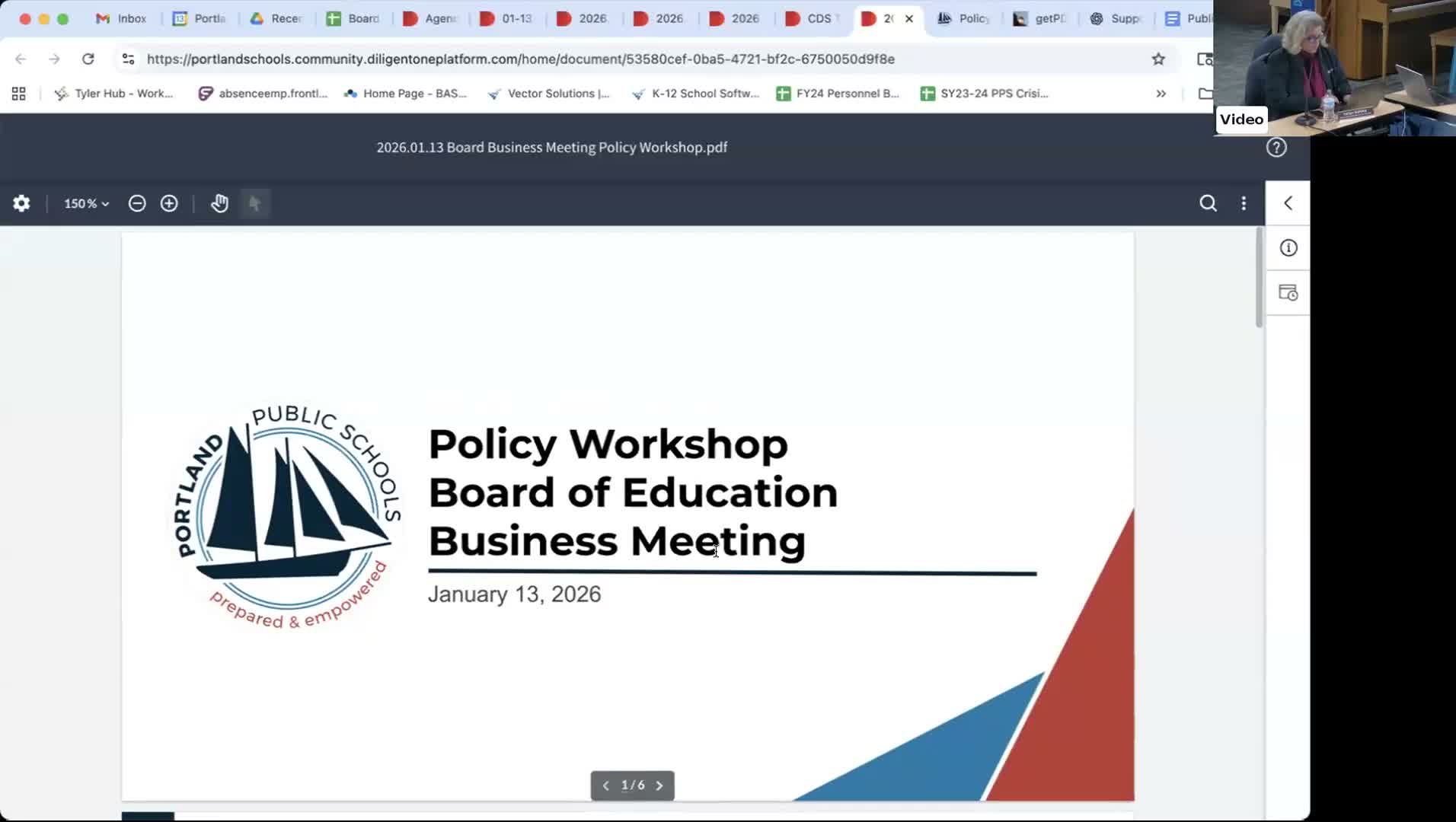
Summary
The board's policy committee introduced GBEB, a new policy aimed at setting boundaries for staff conduct with students — covering nicknames, private messaging, social media, physical spaces and one‑on‑one interactions — and said the policy will return as an amended item for a future vote.
The Portland Public Schools policy committee introduced a new staff‑conduct policy (GBEB) intended to clarify appropriate boundaries between staff and students. Committee members said the policy was adapted from a model provided by legal counsel and tailored to Portland’s community context.
The draft lists prohibited conduct — overly familiar nicknames that single out students, sharing personal sexual or family details with students, private social‑media communications, and encouraging secrecy or keeping secrets — and calls for staff to use school‑sanctioned communication platforms for student contact when possible. The policy also addresses situations that can be acceptable with supervisor knowledge, such as nurses or social workers meeting privately with students as part of their professional role, after‑school academic work that is scheduled and documented, and transportation that follows existing district policy on private‑vehicle use for school business.
Committee members emphasized the policy’s protective aims — reducing potential grooming risks and shielding both students and staff from ambiguous interactions — while acknowledging the need to preserve legitimate mentorship and support relationships. Board members discussed implementation details: how to define ‘‘out of public view’’ for physical spaces, when supervisors should be notified about one‑on‑one meetings, and how the policy should interact with existing transgender/gender‑expansive, privacy, and student‑safety policies.
The committee said it will accept suggested amendments and return the policy for a second reading and vote at a future meeting. Staff also said procedures and guidance documents will be developed to give practical examples and implementation steps that are more detailed than policy language alone.