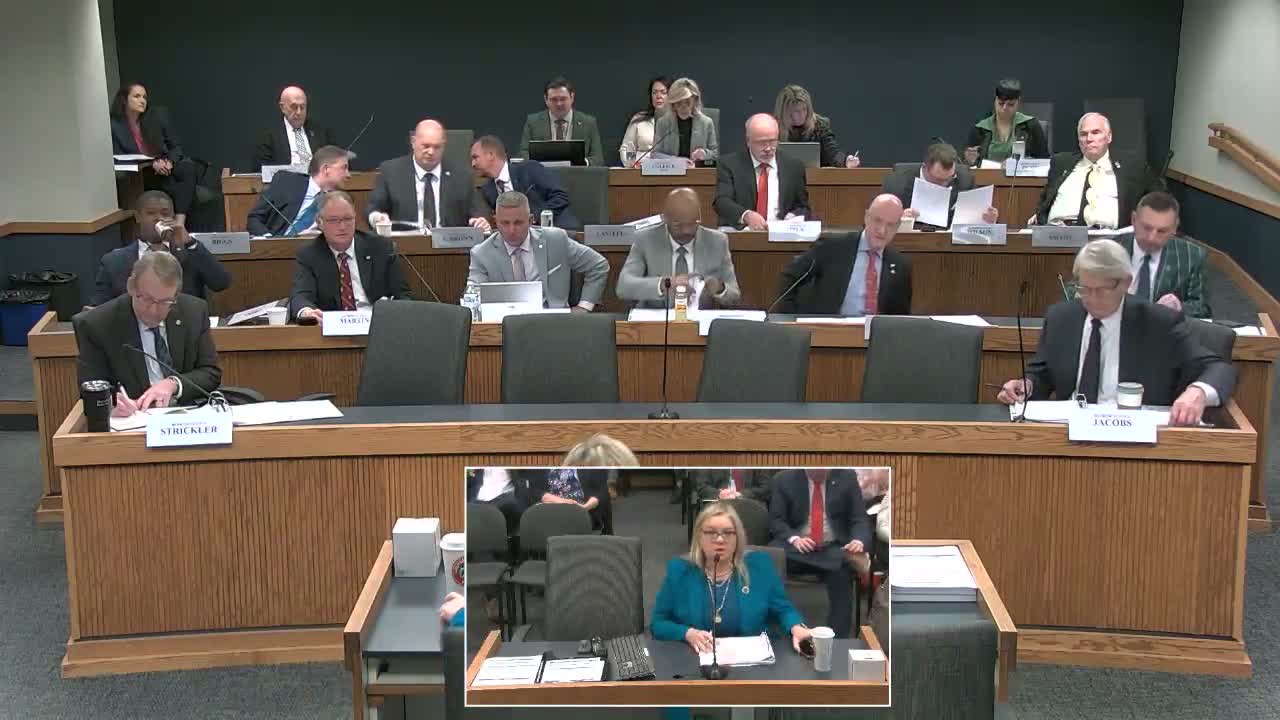
Committee hears dietitian compact bill that would allow six‑month temporary licensure
Loading...
Summary
Rep. Tara Peters said HB1961 would let newly graduated dietitians work under supervision for up to six months while taking the national exam and would authorize Missouri to join an interstate dietitian licensure compact to improve telehealth and rural access; supporters from hospitals and professional groups backed the bill, while an opponent raised constitutional concerns about interstate compacts.
Representative Tara Peters introduced House Bill 19‑61 as a workforce‑development measure aimed at rural health and telehealth access. Peters said the bill would create a temporary license for recent dietetics graduates and authorize Missouri to join an interstate licensure compact so qualified dietitians licensed in compact states could practice across state lines under a "compact privilege." "This is a workforce development and an open pipeline bill," Peters said.
Supporters described workforce shortages and practical barriers. Carolyn Skelton, a licensed dietitian and telehealth business owner, told the committee that state‑by‑state licensure imposes administrative and financial burdens that limit virtual services and complicate care for military families who relocate often. Amy Bolam, a vice president for a Missouri‑based nutrition company, said HB1961 preserves Missouri’s regulatory authority while improving access in long‑term care and specialized settings.
Several witnesses clarified technical details in committee questioning: the temporary license would allow a recent graduate who has completed education and supervised practice to work under supervision for up to six months and take the licensure exam every 45 days (roughly four attempts within six months); a supervising dietitian may only supervise one temporary licensee at a time, witnesses said. "Temporary licensure would be a great thing for new graduates," said Jean Howard, a 40‑year practitioner and member of the Missouri Academy of Nutrition and Dietetics.
Not all testimony was supportive. Lisa Pinette, who filed online testimony for Armor Vine, argued compacts raise constitutional and accountability issues and warned that compact commissions could issue rules "with the full force of law" outside direct legislative control, citing the Compact Clause (Article I, Section 10) during questioning. She told the committee she would consider legal action if she believed the compact caused injury.
The committee heard a mix of hospital, provider and association endorsements, including from CoxHealth and regional dietitian providers, and closed the hearing without a committee vote. Sponsors said technical drafting questions about the compact mechanism and temporary license parameters could be resolved with stakeholder input before future action.