Get Full Government Meeting Transcripts, Videos, & Alerts Forever!
Get email alerts on the Odds Adoption topic
No spam. Unsubscribe anytime.
Carmel-by-the-Sea consultants outline objective design standards, prioritize ADU rules and fire‑safety limits
Summary
City planners and Opticos Design explained state-required objective design and development standards (ODDS) at a community workshop, stressing measurable rules for ADUs and multifamily projects, coordination with fire‑safety rules, and a schedule that aims for ADU standards this year and full adoption by April 2027.
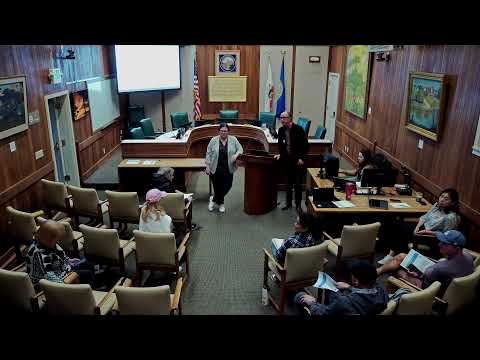
CARMEL-BY-THE-SEA — City planning staff and consultants from Opticos Design held a community workshop on objective design and development standards (ODDS) aimed at converting advisory design guidelines into measurable, administrable rules for new housing projects.
Marnie Waffle, the city's principal planner, opened the meeting and said the work on ODDS is an implementation measure of the city’s housing-element update. Tony Perez of Opticos Design gave the presentation, saying ODDS “involve no personal or subjective judgment by a public official” and must be “knowable beforehand,” meaning standards should include clear, measurable requirements such as a specified ground‑floor height or maximum façade length.
Why it matters: The state’s 2019 updates to the Housing Accountability Act require objective standards for qualifying multifamily and mixed‑use projects (typically two units or more). When an application meets ODDS, Perez said, it can proceed through a ministerial (administrative) review without discretionary hearings, which can shorten processing time and reduce uncertainty for applicants while enabling the city to retain local control over measurable elements.
What consultants proposed: Perez and his team presented examples of converting subjective guidance into objective rules — for instance, replacing a guideline that calls for a “tall ground floor” with a numeric minimum ceiling height, or limiting building length to a stated maximum. They stressed that ODDS need not be one‑size‑fits‑all: standards can vary by neighborhood context and be structured as a menu of objective options or ranges.
Fire and public‑safety limits: Multiple residents asked how ODDS would treat properties in state‑designated fire‑hazard zones. Consultants repeatedly said ODDS cannot override state or fire‑agency requirements; projects in zones with demonstrable public‑health or safety impacts may be ineligible to use the streamlined ODDS process. Perez said the team will coordinate with fire agencies and incorporate applicable safety rules so standards do not conflict with state fire protections.
ADUs and neighborhood character: The consultants confirmed ADU standards are the project priority. They described a two‑track approach: objective ADU standards will be developed first (expected to be drafted by August–September this year), followed by standards for mixed‑use and multifamily buildings. The overall project schedule targets April 2027 for completion, with hearings planned so ADU and multifamily standards could be adopted together.
Flexibility and discretionary path: Perez said applicants can choose the discretionary (subjective) review path instead of ODDS; the discretionary path allows more design flexibility but typically takes longer. Consultants also noted they will recommend a limited set of architectural “styles” to regulate in detail (the current contract scopes six styles) and advised the community to prioritize which styles to formalize.
Public participation and transparency: The team described their micro‑scale fieldwork — photographing and measuring local buildings to test whether proposed standards will produce outcomes that fit Carmel’s character — and encouraged residents to provide clear written feedback through city staff. Staff said meeting materials and examples (including Santa Barbara’s ODDS) will be posted online and that the next community meeting is targeted for early March.
What’s next: Staff asked attendees to leave contact information to receive updates and reiterated that drafts will be circulated for comment before hearings. The consultants said they will return recommended standards and supporting analysis to the city for consideration at public hearings.
Attribution: Quotes and attributions are drawn from the workshop presentation and Q&A by Marnie Waffle, principal planner, and Tony Perez of Opticos Design, as well as questions and comments from residents identified in the workshop.