Get Full Government Meeting Transcripts, Videos, & Alerts Forever!
Get email alerts on the Building Fire Safety topic
No spam. Unsubscribe anytime.
Carmel-by-the-Sea appeals board denies request to install exterior rooftop sprinklers
Summary
The Building Code Board of Appeals on Jan. 15 denied Matthew DeMars’s appeal to install exterior rooftop sprinklers at a single‑family home, citing the fire code official’s concerns about municipal water pressure, lack of state guidance and the absence of demonstrated equivalence to recognized systems.
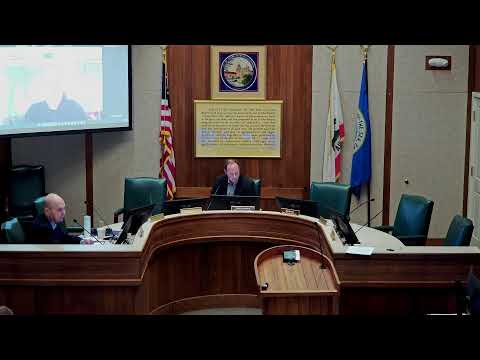
The Carmel-by-the-Sea Building Code Board of Appeals on Jan. 15 denied an appeal from homeowner Matthew DeMars to install a fixed exterior fire‑sprinkler system on the roof of a single‑family dwelling on Ocean Avenue.
City staff and the fire code official had recommended denying the request, saying the proposed rooftop sprinklers were not shown to be an equivalent alternative under the California Fire Code and that approval should await guidance from the State Board of Forestry. "Those exterior fire sprinklers shall not be installed until such time the State Board of Forestry approves such systems and provides guidance on their usage," staff said, summarizing the fire official’s determination.
DeMars told the board he had researched the systems and believes they can be a site‑specific mitigation that fits Carmel’s character. He argued the fire code contains no provision specifically prohibiting exterior systems and said staff had not presented technical evidence showing the proposed low‑flow intermittent system would impair municipal hydrant pressure. "The appellant does not feel that the basis is justified and wishes for a judgment from the appeals board rendering these systems feasible with standards and some basic oversight on a custom and site by site expeditious approval process," DeMars said.
A C‑16 fire protection contractor, Brent Sepulvedo, urged strict adherence to state fire codes and certified design engineering, warning that systems should be UL or FM listed and hydraulically calculated. "When you use the word fire sprinklers, there's a UL FM listed fire sprinklers... There's a reason for that to keep the public safe," Sepulvedo said.
Staff noted two written letters from the fire code official (dated Sept. 25 and Oct. 3) documenting concerns about potential municipal water‑supply or pressure impacts, the lack of recognized state approval, and the applicant’s failure to demonstrate required contractor licensing. Staff also said no formal permit application or fees had been filed and that the city’s written statement that the permit would not be approved was sufficient to support the denial.
Board members asked technical questions about comparative water use for interior versus exterior suppression and encouraged the appellant to return with engineered plans and clear calculations. Chair Adam Jeselnik said the panel must defer to the fire marshal on code interpretation and that proper permit review and engineering through the building and fire departments would be the appropriate path forward.
The board voted to approve a staff‑prepared resolution finding the denial is not subject to CEQA, denying appeal AP 25‑0597 and upholding the city’s denial. The motion to adopt the resolution was made by Chair Adam Jeselnik and seconded by a board member; roll call votes recorded Brown: yes; Jeselnik: yes, and the motion carried. The board described the action as the final city decision with no appeal to the city council.
The board closed the hearing after the vote. Members encouraged the applicant and city staff to continue technical discussions and to return with engineering documentation if the appellant seeks future review.