Get Full Government Meeting Transcripts, Videos, & Alerts Forever!
Get email alerts on the Enforcement topic
No spam. Unsubscribe anytime.
Tennessee funeral board increases fines, refers repeated unlicensed cases to district attorneys
Summary
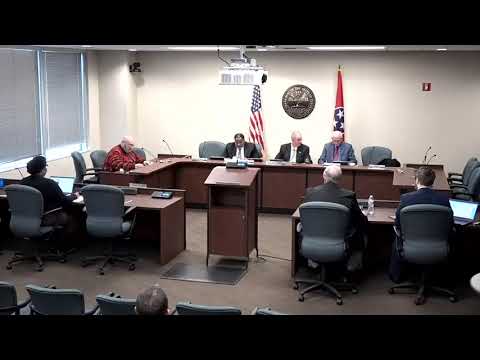
At its Jan. 14 meeting the Tennessee Board of Funeral Directors and Embalmers accepted legal recommendations on multiple complaints, raised civil penalties for several establishments and licensees for lapsed or unlicensed practice, and referred a set of recurring unlicensed-activity cases to local district attorneys.
The Tennessee Board of Funeral Directors and Embalmers on Jan. 14 accepted a series of legal recommendations resolving multiple complaints arising from expired licenses, unlicensed practice and disputed preneed arrangements, and voted to refer numerous recurring unlicensed-activity complaints to local district attorneys.
The board’s legal report reviewed more than a dozen cases opened after routine inspections from September and October 2024. Several matters involved funeral establishments or employees who permitted license renewals to lapse and continued to provide services during the unlicensed period. Legal staff recommended different remedies based on the facts in each file, including letters of warning, letters of instruction, civil penalties and, in repeated unlicensed-activity matters, referral for criminal prosecution.
Why it matters: Board members said lapsed licenses are a recurring enforcement burden and discussed raising penalties to deter repeat behavior. Board action on multiple individual complaints produced fines ranging from $250 to $1,000 and a formal referral to prosecutors in several jurisdictions for a former licensee accused of repeated unlicensed practice.
Most important actions and context
- Pattern of lapsed licenses: Legal staff said inspections showed employees or managers with licenses expired on June 30, 2024, and in some cases employees continued to sign contracts or meet with families before renewing. For cases where the evidence showed the individual signed contracts while unlicensed, the board moved from warnings to civil penalties to reflect the consumer-protection interest.
- Raised penalties in several cases: On multiple complaints that began with staff recommendations for $250 or $500 civil penalties, the board increased the assessed penalties after members noted the prevalence of license-lapse cases. In one instance the board approved a $750 civil penalty for an establishment that had been recommended for $500; in other individual cases the board approved $500 or $250 penalties depending on the facts presented.
- Referral to prosecutors: Legal staff identified a series of open complaints alleging continued unlicensed activity by a former licensed funeral director across multiple jurisdictions. The board accepted counsel’s recommendation to close those administrative files and refer the investigative materials and sworn statements to the district attorneys in the appropriate jurisdictions for possible criminal prosecution.
Votes at a glance (cases discussed and board outcomes)
- Complaint 2024-051451: accepted legal recommendation — letter of warning accepted by vote.
- Complaint 2024-051601: complaint closed (legal recommended closure; board voted to accept closure).
- Complaint 2024-052541: complaint closed (board accepted counsel’s recommendation).
- Complaint 2024-05321: establishment license expired June 30, 2024; inspector found the establishment open and 21 contracts written during the unlicensed period. Board accepted counsel’s recommendation of a $2,000 civil penalty authorized by consent order.
- Complaint 2024-053951 (establishment with lapsed establishment license): board increased counsel’s recommended $500 civil penalty to $750 and approved that penalty.
- Complaint 2024-053971 (the employee counterpart): board assessed a $250 civil penalty for unlicensed practice during the lapse and approved the penalty.
- Complaint 2024-053981 and 2024-053991 (manager/establishment pair where manager’s licenses lapsed and contracts were written): board increased staff’s $250 recommendation to $500 for each matter and approved those civil penalties.
- Complaint 2024-057471 (preneed/price-estimate dispute): legal recommended a letter of warning focused on pricing estimations; the board voted to issue a letter of instruction requiring clearer disclosure to consumers going forward.
- Complaint 2024-057081 / 2024-057091 (employee lapse, companion establishment cases): board increased a recommended $250 civil penalty to $500 for the establishment matter and approved a $250 civil penalty for the individual licensee.
- Complaint 2024-057941 (next-of-kin determination / death-certificate information): board accepted counsel’s recommendation of a $1,000 civil penalty for the establishment.
- Complaint 2024-065741 (preneed-related complaint): closed with a custom closure letter explaining the distinction between preneed‑registration matters and the board’s jurisdiction; board accepted counsel’s recommendation.
- A group of recurring complaints (multiple case numbers listed in the legal report) alleging repeated unlicensed activity by a former licensee: board accepted legal counsel’s recommendation to close the administrative matters and refer the investigation files to district attorneys in the appropriate jurisdictions for possible criminal charges.
Board discussion and enforcement rationale
Legal staff said the statutory reporting requirement for convictions rests with the licensee, not the employer, and opened separate investigations when appropriate; staff recommended civil penalties, letters of warning or letters of instruction based on the prior disciplinary history, the number of offenses and whether the unlicensed activity involved direct consumer contact and signed contracts. Board members expressed frustration at recurring license-lapse complaints and discussed whether stiffer penalties would deter repeat offenses and better cover the administrative cost of enforcement.
The board’s actions were taken by voice votes; meeting minutes record motions, seconds and unanimous “aye” responses in each instance where the transcript records the vote.
Ending
The board’s enforcement decisions and the referral to prosecutors close the administrative path for the most serious recurring unlicensed-activity allegations and signal a willingness by the board to increase civil penalties in lapsed-license cases. Legal staff said they will continue to monitor outstanding consent orders and pursue collection or formal hearings when necessary.