Get Full Government Meeting Transcripts, Videos, & Alerts Forever!
Get email alerts on the Roads topic
No spam. Unsubscribe anytime.
Washington County moves road-fund shortfall to full court after heavy maintenance year
Summary
County roads director told the finance quorum court the department spent above budget to stabilize failing pavement; justices voted to send an ordinance to the full court to appropriate road-fund reserves to cover escalated costs including leased equipment and outsourced slurry work.
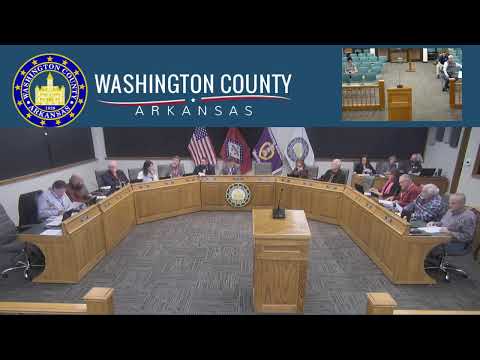
Washington County’s finance quorum court on Thursday voted to send an ordinance to the full court that would appropriate additional money from the county’s road fund reserves to cover cost escalations from this year’s large road maintenance program.
The ordinance would cover work the county already performed this year and a series of unexpected costs, County Road Director Jeff Crowder told the court. “We did everything that was in our power to make sure that we try to stay within the money that was allotted,” Crowder said, adding that seasonal windows and fluctuating costs made final projections difficult.
The measure would move money from the unappropriated reserves of the road fund rather than from County General. Crowder said the county used a pavement condition index (PCI) to prioritize work and that many roads had slipped into the 40–50 PCI range because of years of under-maintenance. He described this year’s work as largely stabilizing roads — “putting life back in our pavement” — and said the county completed roughly 200 miles of work that helped avoid costlier replacement projects later.
Why it matters: Crowder and several justices framed the spending as preventative: stabilizing roads now, even at higher near-term cost, reduces the risk of full roadway replacement later. Justices and residents cited concerns about bridges, equipment leases and the operational effects of an intensive maintenance season.
Key details and support: Crowder told the court the department overspent an itemized line by about $395,854 and that the crusher lease and other leased equipment contributed to the shortfall. He said producing crushed rock in-house saved the county more than $1,000,000 compared with buying aggregate off-site, but equipment breakdowns and extra maintenance on leased rollers and crushers increased lease-related costs.
Crowder also explained an outsourcing decision: because many subdivision roads have curb-and-gutter and cannot be swept like rural roads, the county contracted an outside company to manage chip-seal cleanup and pavement-preservation work. The contracted pavement-preservation work was bid at roughly $349,000, he said.
Justices asked specific operational questions: Justice Koger confirmed the $395,854 had already been spent; Justice Lemming raised bridge maintenance concerns and Crowder described the county’s ongoing bridge crew work and a January construction start for the Cincinnati bridge. Justice Rio Stafford and others praised the road department’s effort and asked whether next year’s workload would match this year’s extraordinary effort; Crowder said next year’s plan is closer to maintenance and shoulder work and estimated about 65 miles of work next year after stabilizing this year’s backlog.
Vote and next steps: Justice Segg moved to pass the ordinance to the full quorum court with a “due pass” recommendation; the motion passed by voice and the item will go to the full court for final appropriation.
Ending note: Crowder thanked county road crews and said the department shifted from reactive maintenance toward a more continuous maintenance program now that many roads have been stabilized.