Get Full Government Meeting Transcripts, Videos, & Alerts Forever!
Get email alerts on the Environment Nature topic
No spam. Unsubscribe anytime.
Noxious-weed director warns proposed Amur honeysuckle listing could burden county if treatment plan unclear
Summary
Riley County's noxious-weed director told commissioners the proposed state listing of Amur honeysuckle raises treatment and resource concerns; staff said much of the infestation is in city park and tree-line areas and that effective control may be labor-intensive.
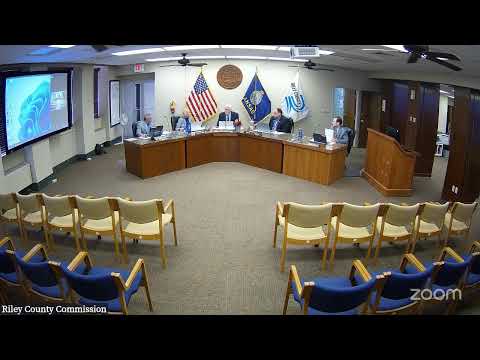
Mike Boller, the county's noxious-weed director, briefed the Riley County Commission on concerns about a pending proposal to add Amur honeysuckle to the state noxious-weed list. Boller described the plant as an invasive shrub or small tree that is widespread in parks and tree lines across the county, and he urged the board to consider the operational implications if the state lists it.
"It is invasive," Boller said. "However, in order to make it a noxious weed, you have to give us a reasonable treatment plan." He explained that broadcast spraying with glyphosate (Roundup) -- the standard treatment used for many weeds -- is not practical for plants that grow 15 to 20 feet high in tree lines and park edges. Instead, Boller said, effective control typically requires cutting the plants and treating stumps or conducting much more labor-intensive, hands-on removal.
Boller noted the county's concern is the scale and location of the infestation: he estimated that about 85% of the Amur honeysuckle infestation in the county is inside the Manhattan city limits, particularly along park edges and tree lines. That matters because the species was widely planted as an ornamental and some residents transplant it deliberately; one resident observed at the meeting that neighbors sometimes plant honeysuckle for its blooms.
"The way it really should be taken care of is cut down and the stumps treated," Boller said, adding that the county currently lacks the equipment and manpower to carry out large-scale forestry-level removals. He told the board he had raised the issue with the Kansas Department of Agriculture and regional peers and that other counties expressed similar concerns.
Commissioners asked staff about potential education efforts and how treatment responsibilities would be split between municipal and county jurisdictions. Boller said the state meeting he attended was receptive to county input but that a final decision by the state would need to include a feasible treatment plan before counties could reasonably be expected to implement controls without major new resources.
No formal county action was taken on the Amur honeysuckle listing during the meeting. Separately on the agenda, the commission did approve the county's annual roadside-treatment contract with the Kansas Department of Transportation (a routine staff-recommended contract that helps ensure state rights-of-way are treated) and voted to open an RFQ for bridge and culvert work under the 2022 sales-tax program.
Boller said he will keep the board apprised of rule-making developments and recommended the county consider coordinating an educational program to discourage residents from transplanting the invasive shrub into residential yards.
Ending: Staff will monitor the state rule-making process and report back; commissioners indicated interest in more information on feasible treatment methods and potential cost-sharing with municipal partners.