Get Full Government Meeting Transcripts, Videos, & Alerts Forever!
Get email alerts on the Animal Welfare topic
No spam. Unsubscribe anytime.
Residents and animal-welfare volunteers urge Rutherford County to overhaul animal control
Summary
Multiple residents, rescue volunteers and nonprofit leaders pressed the Rutherford County Board of Commissioners during public comment for immediate changes to animal control practices, citing unreturned calls, enforcement failures and recent high-profile cruelty cases.
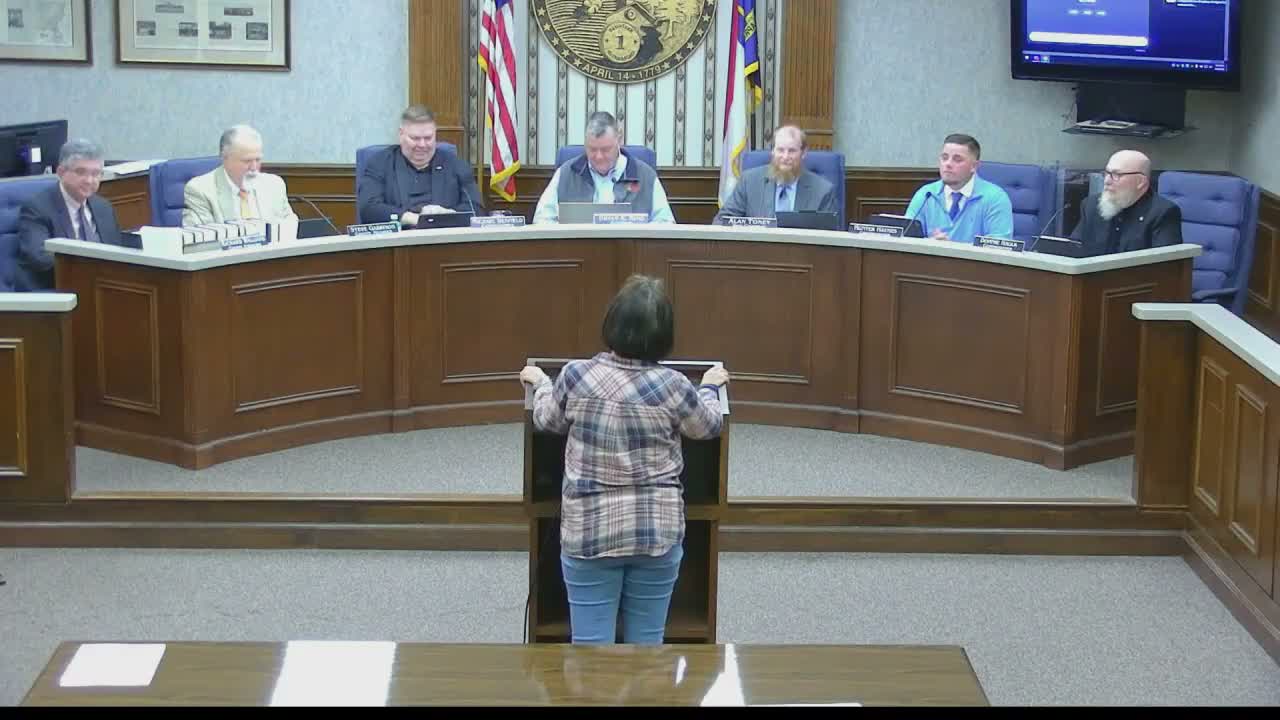
Hundreds of Rutherford County residents and animal‑welfare volunteers used the public‑comment period of the Rutherford County Board of Commissioners meeting to press elected officials for immediate changes to how the county handles animal cruelty, stray intake and shelter operations.
Speakers described repeated failed attempts to reach county animal control, lengthy delays in investigations and what they called a pattern of neglect at the county shelter. “These cases fall on deaf ears, and they are not being taken seriously,” said Debbie Anderson, vice president of the Humane Society, recounting volunteers’ experiences reporting abuse and finding little follow‑up.
Volunteers and nonprofit directors outlined a list of operational and legal concerns and proposed remedies. Heidi Williams, a retired Michigan animal‑control director who said she was in Rutherford County to consult on shelter operations, told commissioners: “Take control of animal control away from the health department. Make them a stand‑alone agency department within Rutherford County. Fund it. Staff it appropriately.” Williams said a stand‑alone agency with competitive wages and a qualified director is needed to restore public confidence.
Multiple speakers cited specific service gaps. Debbie Anderson and others said animal control regularly fails to answer phone calls; volunteers reported that callers are instructed to leave voicemail and then receive no response. Claudia Charles, a foster volunteer for Heart of the Foothills shelter, described repeated reports of emaciated and abandoned animals that, she said, were not investigated despite photos and other documentation.
Speakers also raised concerns about investigative practices. Southern Paws Animal Rescue founder Debbie McLawhorn cited a 2024 North Carolina Court of Appeals decision, State v. Johnson, and urged deputies and animal control officers to use existing legal authority to investigate: “This is absurd and untrue for the state of North Carolina and the Fourth Amendment,” McLawhorn said, urging law‑enforcement familiarity with the ruling and with state statutes allowing cruelty investigators to enter property when appropriate.
Rescue leaders proposed specific changes to county practice: a dedicated, professional animal‑control agency or department; recruitment of an experienced director by nationwide search; better staffing and competitive wages; and formalized partnerships with local nonprofits for spay/neuter and intake assistance. Heart of the Foothills director Tara Parker — who said her organization is a brick‑and‑mortar licensed shelter that has taken in animals from the county shelter — urged the board to allow volunteers and proven partners to assist operations rather than being sidelined.
Several speakers offered operational examples and numbers: Heart of the Foothills volunteers said they took in roughly 600 animals last year and adopted about 500; other volunteer groups reported conducting hundreds of spay and neuter surgeries in the last two years. Speakers also said Rutherford County Animal Control receives an annual budget in excess of $500,000 but that funding is not translating into timely enforcement or adequate shelter care.
Commissioners did not take immediate action during the meeting. Multiple commissioners acknowledged the scale of complaints and invited further discussion; one commissioner asked to place the topic on the board’s upcoming goal‑setting session to allow more time to review proposals and budget implications.
Community advocates asked for rapid next steps, including better complaint triage, formal deployment of volunteer cruelty investigators under North Carolina law and a public timeline for changes. “We need leaders who are willing to take a stand and say no more animal abuse and neglect will occur in this county,” said a representative of the Animal Welfare Alliance of Rutherford.
The public‑comment period produced dozens of testimonial accounts, multiple calls for accountability, and detailed proposals that the board said it would consider during follow‑up budget and policy discussions.