Get Full Government Meeting Transcripts, Videos, & Alerts Forever!
Get email alerts on the City Budget topic
No spam. Unsubscribe anytime.
Manhattan adopts 2026 budget with 1.35-mill levy increase after heated public hearing
Summary
The Manhattan City Commission approved the 2026 budget and 2026–2030 CIP, adopting Ordinance No. 7,772 and levying a mill-levy increase of 1.35 mills (4.5%–6% effective residential impacts were discussed); the ordinance passed 4–1 after hours of public comment about affordability and displacement.
The Manhattan City Commission adopted the 2026 city budget and the 2026–2030 capital improvement program (Ordinance No. 7,772; Resolution No. 091625-C) following a public hearing in which dozens of residents urged fiscal restraint and warned of displacement.
City manager/staff presented a recommended budget built around a proposed 1.35-mill levy increase, which staff described as composed of 1.088 mills for the RCPD fund (to account for anticipated delinquencies), 0.216 mills to fund a 2.4% cost-of-living adjustment (COLA) for city employees, and 0.046 mills for the library. Staff projected property-tax revenue of about $42.6 million, utility fees around $37 million and total anticipated revenues of roughly $167 million, while noting the general fund margin was tight—about a 1% cushion.
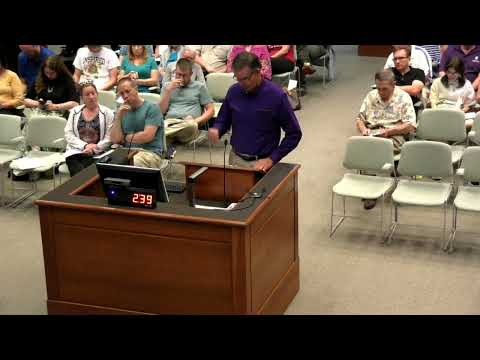
Residents at the hearing pressed the commission on housing affordability, fixed-income burdens and priorities for capital spending. Gary Oles urged the commission to reconsider raising taxes and warned voters would respond at the ballot box; Elizabeth Parker, a 35‑year resident, said her property taxes are about $7,000 annually and warned of retiree out-migration; others criticized proposed amenities such as a riverwalk and indoor natatorium as premature. Public commenters repeatedly asked whether alternative cost savings (employee wage freezes, drawing down reserves, or trimming capital projects) had been fully explored.
Commissioners debated competing priorities: some argued the shift of delinquency coverage into property-tax-funded RCPD revenues is a transparency improvement and necessary to stabilize collections; others said the reallocation essentially functions as a property-tax increase and urged a lower overall package (one commissioner recommended a 4.5% overall target). Staff said prior-year shortfalls, rising insurance and materials costs, and the need to preserve service levels informed the proposal.
A motion to adopt the 2026 budget and CIP passed on a roll-call vote, 4–1, with Commissioner Mota casting the only no vote. The ordinance and resolution adopted the revenue and spending plan as presented; commissioners who opposed elements urged additional scrutiny of future projects and the funding policy for delinquencies.
The commission set no additional amendments in the meeting; next steps are implementation under the adopted budget and ongoing attention to cost control and public engagement as the fiscal year begins.