Get Full Government Meeting Transcripts, Videos, & Alerts Forever!
Get email alerts on the Public Safety Radio topic
No spam. Unsubscribe anytime.
Okanogan County outlines $3M USDA-backed plan to modernize emergency radio network
Summary
Mike Wharton of the county 911/dispatch told commissioners the county has been allocated $3 million routed through USDA to expand and modernize its public-safety radio network, with an estimated project cost of about $3.73 million and local match coming from sales-tax revenue and prior radio purchases.
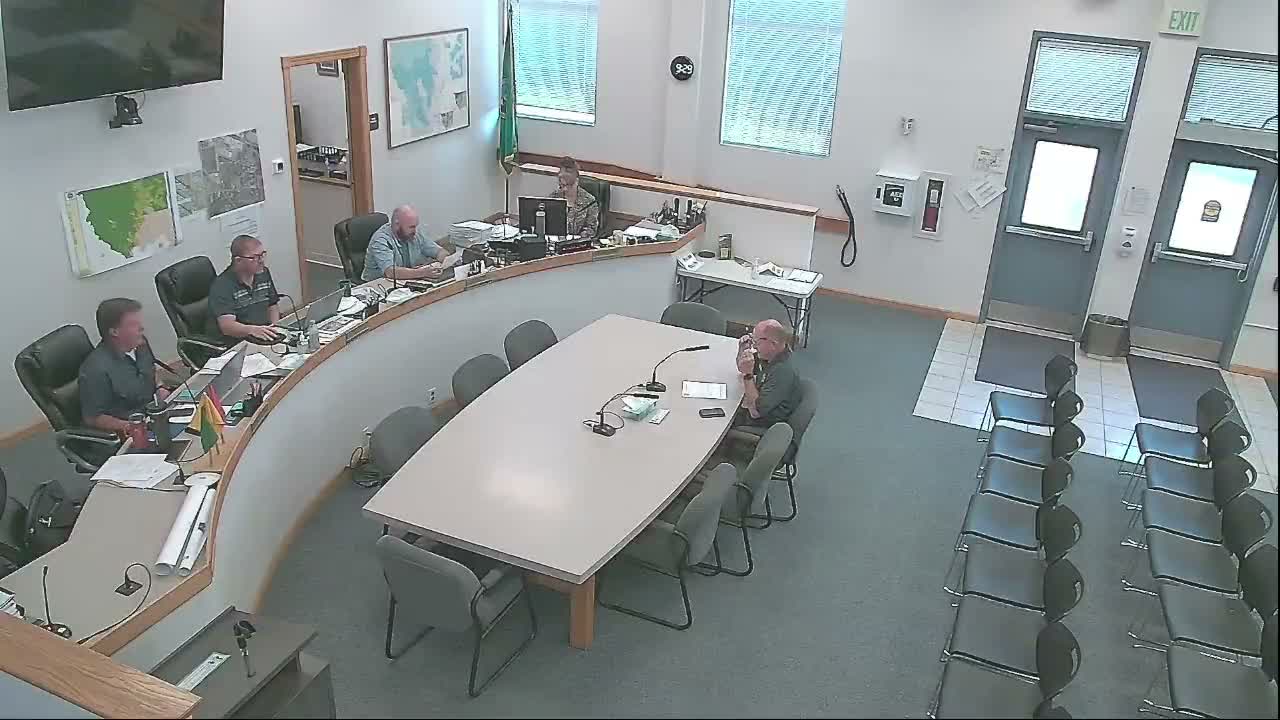
Mike Wharton, who runs Okanogan County’s 911 dispatch, presented the county’s USDA Rural Development grant application and answered commissioners’ questions about a proposed upgrade to the county’s public-safety radio network.
Wharton said the county in late 2023 was awarded $3,000,000 in congressionally directed spending that would be managed through USDA Rural Development and applied to a project to merge the county’s public-safety radio network with Washington State Department of Transportation (DOT) infrastructure. “The end result is that we’ll have a much, more modern radio system with capacity and features,” Wharton said, describing added features such as radio IDs, aliasing (Fire51-style naming) and GPS/triangulation for units.
Wharton told the board the county has project quotes roughly in the $3.73 million range and intends to fund most of the cost through the USDA grant; remaining costs will be covered by sales-tax revenue collected since early 2020 and by equipment purchases the county has already made. “This grant will pay for the vast majority of that work,” Wharton said, adding the county has already spent about $3.5 million on subscriber radios (250 portables and 335 mobiles) and related console hardware.
Wharton said the project is primarily hardware and software additions to existing DOT or DOT-collocated sites, and that roughly half the new or expanded sites will be on DOT towers. He said the migration will include “call‑in” repeaters so visiting or mutual‑aid resources can connect, and that the system’s structure will reduce relay‑through‑dispatch bottlenecks during major incidents. Wharton also said the county will be able to monetize or release some older VHF frequencies once the migration is complete.
County staff confirmed the presentation met USDA public‑meeting requirements and that no public comments were received at the meeting. Commissioners did not take formal action at the session; Wharton said staff will continue the grant process and return with any required follow‑up materials.
What’s next: staff will file required USDA documentation, provide affidavits of public notice as requested, and return to the board with contract documents and any funding or match updates as the grant application proceeds.