Get Full Government Meeting Transcripts, Videos, & Alerts Forever!
Get email alerts on the Discretionary Funding topic
No spam. Unsubscribe anytime.
Residents and Circle of Brotherhood speakers urge commissioners to fund discretionary violence-prevention and youth programs
Summary
More than two dozen public speakers, many representing Circle of Brotherhood and partner groups, urged Miami-Dade commissioners to award discretionary funds to violence-prevention, foster-care and youth programs. Speakers described program results and asked for more sustained funding; commissioners listened but made no immediate awards during the 1
Miami-Dade County commissioners heard a large group of public speakers on Jan. 22 urging the board to direct discretionary funds to community-based violence-prevention programs, services for children in foster care and reentry supports for returning citizens.
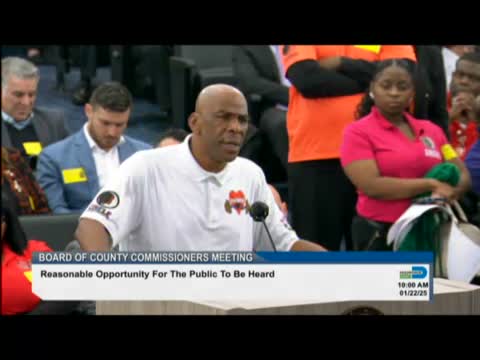
The public-comment block drew dozens of speakers, many affiliated with the Circle of Brotherhood, a community-based nonprofit. Speakers described outreach work in high-risk neighborhoods and asked commissioners to fund summer programming, mentoring, reentry coaching and trauma-informed care for youth.
The request was made during “reasonable opportunity for the public to be heard,” when the commission heard many speakers on item 383 and related discretionary-funding items. Several speakers described on-the-ground work and cited specific program results and needs. “Trauma is invisible but its impact is not,” said John Acosta of the Circle of Brotherhood, who testified that addressing trauma is “the root” of violence-prevention work. “When we help individuals release the inherited pain and reconnect with their families, we create a ripple effect of change.”
Other speakers likewise described services and shortfalls. Olivia Eason, a Circle of Brotherhood facilitator, said the group responded to an accidental shooting of an 11-year-old last summer and that lack of summer programming left families scrambling. Multiple speakers — including Lamar McNair, Ernest Hardy and Brandon Jones — described mentoring, safe-passage programs and summer camps that they said require more sustained funding to scale.
Speakers also included employees and volunteers who provide job-readiness and reentry services for people returning from incarceration, and representatives who said the organizations conduct court and jail outreach. Several speakers noted federal and state public-health declarations about gun violence and framed county discretionary grants as a timely local investment.
Commissioners did not take final action on the requested funding during the public-comment period. Commissioners and staff responded to some questions from the dais about program metrics, how funds are routed and how the county evaluates grantee performance. Vice Chair Keon McGee and other commissioners said the administration would provide more detail about grant schedules and the contract or grant sources supporting these programs.
Why this matters: Speakers told commissioners they are providing direct services that, they said, reduce violence and connect high-risk youth to summer employment and reentry supports. The testimony emphasized the demand for continuing operating support rather than one-off payments.
What’s next: The public testimony was entered into the meeting record and commissioners directed staff to include the requests in the packet of budget and discretionary items under consideration; no new, immediate county awards were announced during the hearing.
Sources: Testimony at the Jan. 22, 2025 Miami-Dade BCC meeting from Circle of Brotherhood speakers and allied community organizations, as recorded in the meeting transcript.